TEST BANK
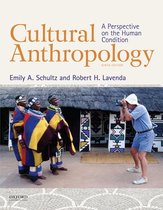
Cultural Anthropology: A Perspective on the Human Condition
SCHULTZ, EMILY A.; LAVENDA, ROBERT H.
Tenth Edition
,Test Bank for Cultural Anthropology, 10e
by Emily Schultz, Robert Lavenda
(All Chapters)
Chapter 1: What Is the Anthropological Perspective?
Multiple-Choice Questions
1. In the textbook, anthropology is defined as the study of
* a. Human nature, human society, and the human past.
b. The remains of earlier societies and peoples.
c. The ways of life of contemporary peoples.
d. The physical and mental capacities of human beings.
2. Holism in anthropology is defined in the text as
a. Trying to study everything possible about a people during the course of a research
trip.
* b. Integrating what is known about human beings and their activities at an inclusive
level.
c. Studying human biology and culture at the same time.
d. Fitting together economics, political science, religious studies, and biology.
3. To say that anthropology is comparative means that
a. Each anthropologist studies many different societies and cultures during his or her
career.
* b. Anthropological generalizations must draw on evidence from many different
societies and cultures.
c. Anthropologists use data from many different academic fields of study when
they do their research.
1
, d. There is no one way for an anthropologist to do research.
4. Which of the following is NOT an element of the anthropological perspective?
a. Holism.
b. Comparison.
c. An evolutionary approach.
* d. Learning dependent.
5. A study that examines how economics, politics, religion, and kinship shape one
another in a specific society would be
a. Detailed.
b. Cultural.
* c. Holistic.
d. Comparative.
6. An anthropologist studying a social group observes that people shake hands when
greeting one another and concludes that handshaking is universal among human
beings. This study is faulty because the anthropologist has not been
a. Holistic.
b. Evolutionary.
c. Ethnocentric.
* d. Comparative.
7. According to the text, evolution may be understood broadly as
a. Attributes and behaviors that are passed on by the genes.
b. Beliefs and behaviors that are passed on by teaching and learning.
2
, * c. Change over time.
d. Transformations of species over time.
8. According to the text, culture consists of
* a. Sets of learned behaviors and ideas that human beings acquire as members of society.
b. Those elements of the human experience that require education and good taste, such
as art, music, and dance.
c. Sets of innate instincts that enable human beings to function in a complex world.
d. Those sets of behaviors and ideas that enable human beings to appreciate
differences between one society and another.
9. To claim that members of a particular social group do not typically eat insects
because they have learned to label insects as inedible is to use an explanation
based on
* a. Culture.
b. Biology.
c. Ethnocentrism.
d. Genetic programming.
10. To emphasize that human beings are biocultural organisms means that
a. Human biology and culture both contribute to human behavior.
b. Human biology makes culture possible and human culture makes human
biological survival possible.
c. Instinct must be recognized as an important part of any explanation of human
behavior.
* d. Both a and b.
11. When anthropologists say that human beings are biocultural organisms, they mean that
3
Cultural Anthropology: A Perspective on the Human Condition
SCHULTZ, EMILY A.; LAVENDA, ROBERT H.
Tenth Edition
,Test Bank for Cultural Anthropology, 10e
by Emily Schultz, Robert Lavenda
(All Chapters)
Chapter 1: What Is the Anthropological Perspective?
Multiple-Choice Questions
1. In the textbook, anthropology is defined as the study of
* a. Human nature, human society, and the human past.
b. The remains of earlier societies and peoples.
c. The ways of life of contemporary peoples.
d. The physical and mental capacities of human beings.
2. Holism in anthropology is defined in the text as
a. Trying to study everything possible about a people during the course of a research
trip.
* b. Integrating what is known about human beings and their activities at an inclusive
level.
c. Studying human biology and culture at the same time.
d. Fitting together economics, political science, religious studies, and biology.
3. To say that anthropology is comparative means that
a. Each anthropologist studies many different societies and cultures during his or her
career.
* b. Anthropological generalizations must draw on evidence from many different
societies and cultures.
c. Anthropologists use data from many different academic fields of study when
they do their research.
1
, d. There is no one way for an anthropologist to do research.
4. Which of the following is NOT an element of the anthropological perspective?
a. Holism.
b. Comparison.
c. An evolutionary approach.
* d. Learning dependent.
5. A study that examines how economics, politics, religion, and kinship shape one
another in a specific society would be
a. Detailed.
b. Cultural.
* c. Holistic.
d. Comparative.
6. An anthropologist studying a social group observes that people shake hands when
greeting one another and concludes that handshaking is universal among human
beings. This study is faulty because the anthropologist has not been
a. Holistic.
b. Evolutionary.
c. Ethnocentric.
* d. Comparative.
7. According to the text, evolution may be understood broadly as
a. Attributes and behaviors that are passed on by the genes.
b. Beliefs and behaviors that are passed on by teaching and learning.
2
, * c. Change over time.
d. Transformations of species over time.
8. According to the text, culture consists of
* a. Sets of learned behaviors and ideas that human beings acquire as members of society.
b. Those elements of the human experience that require education and good taste, such
as art, music, and dance.
c. Sets of innate instincts that enable human beings to function in a complex world.
d. Those sets of behaviors and ideas that enable human beings to appreciate
differences between one society and another.
9. To claim that members of a particular social group do not typically eat insects
because they have learned to label insects as inedible is to use an explanation
based on
* a. Culture.
b. Biology.
c. Ethnocentrism.
d. Genetic programming.
10. To emphasize that human beings are biocultural organisms means that
a. Human biology and culture both contribute to human behavior.
b. Human biology makes culture possible and human culture makes human
biological survival possible.
c. Instinct must be recognized as an important part of any explanation of human
behavior.
* d. Both a and b.
11. When anthropologists say that human beings are biocultural organisms, they mean that
3