

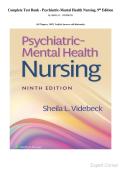
Complete Test Bank - Psychiatric-Mental Health Nursing, 9th Edition
By SHEILA L. VIDEBECK
(All Chapters, 100% Verified Answers with Rationales)
, Table of Contents
UNIT 1 — Current Theories and Practice
1. Foundations of Psychiatric–Mental Health Nursing .......... 1
2. Neurobiologic Theories and Psychopharmacology .......... 15
3. Psychosocial Theories and Therapy .......... 41
4. Treatment Settings and Therapeutic Programs .......... 64
UNIT 2 — Building the Nurse–Client Relationship
5. Therapeutic Relationships .......... 79
6. Therapeutic Communication .......... 96
7. Client’s Response to Illness .......... 118
8. Assessment .......... 130
UNIT 3 — Current Social and Emotional Concerns
9. Legal and Ethical Issues .......... 145
10. Grief and Loss .......... 155
11. Anger, Hostility, and Aggression .......... 175
12. Abuse and Violence .......... 188
UNIT 4 — Nursing Practice for Psychiatric Disorders
13. Trauma and Stressor-Related Disorders .......... 205
14. Anxiety and Anxiety Disorders .......... 222
15. Obsessive–Compulsive and Related Disorders .......... 241
16. Schizophrenia .......... 254
17. Mood Disorders and Suicide .......... 284
18. Personality Disorders .......... 328
19. Addiction .......... 356
20. Eating Disorders .......... 382
21. Somatic Symptom Illnesses .......... 403
22. Neurodevelopmental Disorders .......... 420
23. Disruptive Behavior Disorders .......... 437
24. Cognitive Disorders .......... 451
,Chapter 1, Foundations of Psychiatric–Mental Health Nursing
1. The nurse is assessing a newly admitted client with cholecystitis. When performing the admission
assessment, which statement by the client is an indicator of optimal mental health?
A. “I don’t need anyone in my life, I manage well on my own.”
B. “I practice yoga regularly since it helps manage any stress I am feeling.”
C. “My family has several people with mental health problems.”
D. “I had a history of alcohol use disorder and have been sober for 2 months.”
Answer: B
Rationale: Individual factors influencing mental health include coping or stress management abilities.
Interpersonal factors such as intimacy and a balance of separateness and connectedness are both needed for
good mental health, and therefore a healthy person would need others for companionship. A family history of
mental illness could relate to the biologic makeup of an individual, which may have a negative impact on an
individual’s mental health. A recent history of the use of maladaptive coping mechanisms such as alcohol does
not indicate that the client is mentally healthy.
Question format: Multiple Choice
Chapter 1: Foundations of Psychiatric–Mental Health Nursing Cognitive Level: Apply
Client Needs: Safe and Effective Care Environment: Management of Care Integrated Process: Communication
and Documentation
Learning Objective: 1
Reference: p. 2, Mental Health and Mental Illness,
2. The nurse is performing an admission assessment for a client admitted to the behavioral health unit.
Which social/cultural category will the nurse document that may be contributing to the client’s degree of mental
illness? Select all that apply.
A. The client is unable to find work and does not have enough money for housing.
B. The client states that they are discriminated against due to their country of origin.
C. The client attributes life’s problems to being without family support.
D. The client reports being unable to find anything meaningful within their life.
, E. The client reports not belonging anywhere and is without family support.
Answer: A, B
Rationale: Social or cultural categories relate to a lack of resources, poverty, negative view of the world, and
discrimination and may result in isolation and violent or criminal behavior. The client that attributes life’s
problems to being without family support is not able to find meaning in life. Being without support is
interpersonal determinant of mental illness.
Question format: Multiple Select
Chapter 1: Foundations of Psychiatric–Mental Health Nursing Cognitive Level: Analyze
Client Needs: Safe and Effective Care Environment: Management of Care Integrated Process: Nursing Process
Learning Objective: 1 Reference: p. 2, Mental Illness
3. A client grieving the recent loss of a spouse, asks, “Am I becoming mentally ill? I feel so sad” Which is
the nurse’s best response?
A. “You may have a temporary mental illness because you are experiencing so much pain.”
B. “You are not mentally ill. This is an expected reaction to the loss you have experienced.”
C. “Were you generally dissatisfied with your relationship before your husband’s death?”
D. “Try not to worry about that right now. You never know what the future brings.”
Answer: B
Rationale: Acute grief reactions are expected and therefore not considered mental illness. Downplaying the
client’s grief does not appropriately address the client’s concerns. The quality of the relationship does not
determine the presence of absence of mental illness. Question format: Multiple Choice
Chapter 1: Foundations of Psychiatric–Mental Health Nursing Cognitive Level: Apply Client Needs:
Psychosocial Integrity
By SHEILA L. VIDEBECK
(All Chapters, 100% Verified Answers with Rationales)
, Table of Contents
UNIT 1 — Current Theories and Practice
1. Foundations of Psychiatric–Mental Health Nursing .......... 1
2. Neurobiologic Theories and Psychopharmacology .......... 15
3. Psychosocial Theories and Therapy .......... 41
4. Treatment Settings and Therapeutic Programs .......... 64
UNIT 2 — Building the Nurse–Client Relationship
5. Therapeutic Relationships .......... 79
6. Therapeutic Communication .......... 96
7. Client’s Response to Illness .......... 118
8. Assessment .......... 130
UNIT 3 — Current Social and Emotional Concerns
9. Legal and Ethical Issues .......... 145
10. Grief and Loss .......... 155
11. Anger, Hostility, and Aggression .......... 175
12. Abuse and Violence .......... 188
UNIT 4 — Nursing Practice for Psychiatric Disorders
13. Trauma and Stressor-Related Disorders .......... 205
14. Anxiety and Anxiety Disorders .......... 222
15. Obsessive–Compulsive and Related Disorders .......... 241
16. Schizophrenia .......... 254
17. Mood Disorders and Suicide .......... 284
18. Personality Disorders .......... 328
19. Addiction .......... 356
20. Eating Disorders .......... 382
21. Somatic Symptom Illnesses .......... 403
22. Neurodevelopmental Disorders .......... 420
23. Disruptive Behavior Disorders .......... 437
24. Cognitive Disorders .......... 451
,Chapter 1, Foundations of Psychiatric–Mental Health Nursing
1. The nurse is assessing a newly admitted client with cholecystitis. When performing the admission
assessment, which statement by the client is an indicator of optimal mental health?
A. “I don’t need anyone in my life, I manage well on my own.”
B. “I practice yoga regularly since it helps manage any stress I am feeling.”
C. “My family has several people with mental health problems.”
D. “I had a history of alcohol use disorder and have been sober for 2 months.”
Answer: B
Rationale: Individual factors influencing mental health include coping or stress management abilities.
Interpersonal factors such as intimacy and a balance of separateness and connectedness are both needed for
good mental health, and therefore a healthy person would need others for companionship. A family history of
mental illness could relate to the biologic makeup of an individual, which may have a negative impact on an
individual’s mental health. A recent history of the use of maladaptive coping mechanisms such as alcohol does
not indicate that the client is mentally healthy.
Question format: Multiple Choice
Chapter 1: Foundations of Psychiatric–Mental Health Nursing Cognitive Level: Apply
Client Needs: Safe and Effective Care Environment: Management of Care Integrated Process: Communication
and Documentation
Learning Objective: 1
Reference: p. 2, Mental Health and Mental Illness,
2. The nurse is performing an admission assessment for a client admitted to the behavioral health unit.
Which social/cultural category will the nurse document that may be contributing to the client’s degree of mental
illness? Select all that apply.
A. The client is unable to find work and does not have enough money for housing.
B. The client states that they are discriminated against due to their country of origin.
C. The client attributes life’s problems to being without family support.
D. The client reports being unable to find anything meaningful within their life.
, E. The client reports not belonging anywhere and is without family support.
Answer: A, B
Rationale: Social or cultural categories relate to a lack of resources, poverty, negative view of the world, and
discrimination and may result in isolation and violent or criminal behavior. The client that attributes life’s
problems to being without family support is not able to find meaning in life. Being without support is
interpersonal determinant of mental illness.
Question format: Multiple Select
Chapter 1: Foundations of Psychiatric–Mental Health Nursing Cognitive Level: Analyze
Client Needs: Safe and Effective Care Environment: Management of Care Integrated Process: Nursing Process
Learning Objective: 1 Reference: p. 2, Mental Illness
3. A client grieving the recent loss of a spouse, asks, “Am I becoming mentally ill? I feel so sad” Which is
the nurse’s best response?
A. “You may have a temporary mental illness because you are experiencing so much pain.”
B. “You are not mentally ill. This is an expected reaction to the loss you have experienced.”
C. “Were you generally dissatisfied with your relationship before your husband’s death?”
D. “Try not to worry about that right now. You never know what the future brings.”
Answer: B
Rationale: Acute grief reactions are expected and therefore not considered mental illness. Downplaying the
client’s grief does not appropriately address the client’s concerns. The quality of the relationship does not
determine the presence of absence of mental illness. Question format: Multiple Choice
Chapter 1: Foundations of Psychiatric–Mental Health Nursing Cognitive Level: Apply Client Needs:
Psychosocial Integrity

