Page 1 of 188
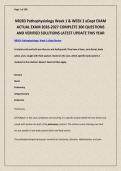
NR283 Pathophysiology Week 1 & WEEK 2 eDapt EXAM
ACTUAL EXAM 2026-2027 COMPLETE 300 QUESTIONS
AND VERIFIED SOLUTIONS LATEST UPDATE THIS YEAR
NR283- Pathophysiology- Week 1 eDapt Review
A relative calls and tells you they are not feeling well. They have a fever, sore throat, body
aches, and a cough with thick sputum. Based on the cues, which specific body system is
involved in the relative's illness? Select all that apply.
Sensory
Renal
Pulmonary
Integumentary
Endocrine
Pulmonary
RATIONALE: In this case, symptoms are occurring in a specific location (both the sore throat and
cough with sputum are part of the pulmonary system). The relative is also showing cues that
are not specific to one body system (fever and body aches).
The pathophysiological processes involved are immunity, infection, inflammation, and pain.
,Page 2 of 188
A relative calls and tells you they are not feeling well. They have a fever, sore throat, body
aches, and a cough with thick sputum. Based on the body systems involved and the suspected
pathophysiological changes, which type of tests can be used to confirm what is happening?
Select all that apply.
Depression screening
Snellen eye test
Imaging tests
Pregnancy test
Laboratory analysis
Laboratory analysis
Imaging tests
RATIONALE: Based on the body systems and suspected pathophysiological
alterations, laboratory analysis of blood, a throat culture, and sputum are appropriate. The
blood results will show increased white blood cells if an infection is present. The throat and
sputum cultures will identify if an infectious organism is present.
Imaging tests, specifically an x-ray of the chest, will show if the lungs are infected.
Tests that gather information about body systems not currently displaying cues are not needed.
Snellen eye testing measures vision.
,Page 3 of 188
Depression screening determines if a mental health alteration is present.
Pregnancy testing confirms if a woman is pregnant.
Which statement is the most inclusive definition of a risk factor?
Something that increases a person's chances of developing a disease
Pollutants in the environment
Choices someone makes about how they live their life
A genetic alteration that can negatively impact someone's health
Something that increases a person's chances of developing a disease
RATIONALE: The most inclusive definition of a risk factor is something that increases a person’s
chances of developing a disease.
Risk factors can be genetic, environmental, lifestyle choices, or a combination of them.
Understanding risk factors and taking steps to limit their impact on health helps prevent the
disease or lessen the impact of disease on health.
Which are better steps to health? Select all that apply.
Eat 5 to 10 servings of vegetables and fruit daily.
Visit your healthcare provider if you notice any change in your normal state of health.
Be physically active on a regular basis.
Smoke a pack of cigarettes daily.
, Page 4 of 188
Follow cancer screening guidelines.
Follow safety instructions at home when using, storing, and disposing of hazardous materials.
Protect yourself and your family from the sun.
All these things can make anyone healthy except for smoking. To maintain your health, you
should be a non-smoker and avoid secondhand smoke.
For each listed item below, click to specify if it is a body system or pathophysiological process.
Neurologic
Immunity
Oxygenation
Hematological
Tissue integrity
Neurologic- BODY SYSTEM
Immunity- PATHO
Oxygenation- PATHO
Hematological- BODY SYSTEM
Tissue integrity- PATHO
What benefits are gained by asking questions when someone has clinical manifestations of
altered homeostasis? Select all that apply.
NR283 Pathophysiology Week 1 & WEEK 2 eDapt EXAM
ACTUAL EXAM 2026-2027 COMPLETE 300 QUESTIONS
AND VERIFIED SOLUTIONS LATEST UPDATE THIS YEAR
NR283- Pathophysiology- Week 1 eDapt Review
A relative calls and tells you they are not feeling well. They have a fever, sore throat, body
aches, and a cough with thick sputum. Based on the cues, which specific body system is
involved in the relative's illness? Select all that apply.
Sensory
Renal
Pulmonary
Integumentary
Endocrine
Pulmonary
RATIONALE: In this case, symptoms are occurring in a specific location (both the sore throat and
cough with sputum are part of the pulmonary system). The relative is also showing cues that
are not specific to one body system (fever and body aches).
The pathophysiological processes involved are immunity, infection, inflammation, and pain.
,Page 2 of 188
A relative calls and tells you they are not feeling well. They have a fever, sore throat, body
aches, and a cough with thick sputum. Based on the body systems involved and the suspected
pathophysiological changes, which type of tests can be used to confirm what is happening?
Select all that apply.
Depression screening
Snellen eye test
Imaging tests
Pregnancy test
Laboratory analysis
Laboratory analysis
Imaging tests
RATIONALE: Based on the body systems and suspected pathophysiological
alterations, laboratory analysis of blood, a throat culture, and sputum are appropriate. The
blood results will show increased white blood cells if an infection is present. The throat and
sputum cultures will identify if an infectious organism is present.
Imaging tests, specifically an x-ray of the chest, will show if the lungs are infected.
Tests that gather information about body systems not currently displaying cues are not needed.
Snellen eye testing measures vision.
,Page 3 of 188
Depression screening determines if a mental health alteration is present.
Pregnancy testing confirms if a woman is pregnant.
Which statement is the most inclusive definition of a risk factor?
Something that increases a person's chances of developing a disease
Pollutants in the environment
Choices someone makes about how they live their life
A genetic alteration that can negatively impact someone's health
Something that increases a person's chances of developing a disease
RATIONALE: The most inclusive definition of a risk factor is something that increases a person’s
chances of developing a disease.
Risk factors can be genetic, environmental, lifestyle choices, or a combination of them.
Understanding risk factors and taking steps to limit their impact on health helps prevent the
disease or lessen the impact of disease on health.
Which are better steps to health? Select all that apply.
Eat 5 to 10 servings of vegetables and fruit daily.
Visit your healthcare provider if you notice any change in your normal state of health.
Be physically active on a regular basis.
Smoke a pack of cigarettes daily.
, Page 4 of 188
Follow cancer screening guidelines.
Follow safety instructions at home when using, storing, and disposing of hazardous materials.
Protect yourself and your family from the sun.
All these things can make anyone healthy except for smoking. To maintain your health, you
should be a non-smoker and avoid secondhand smoke.
For each listed item below, click to specify if it is a body system or pathophysiological process.
Neurologic
Immunity
Oxygenation
Hematological
Tissue integrity
Neurologic- BODY SYSTEM
Immunity- PATHO
Oxygenation- PATHO
Hematological- BODY SYSTEM
Tissue integrity- PATHO
What benefits are gained by asking questions when someone has clinical manifestations of
altered homeostasis? Select all that apply.