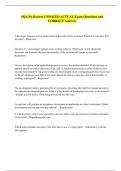
RASMUSSEN MENTAL HEALTH EXAM 2
ANTIDEPRESSANT SIDE EFFECT
PRINCIPLES TERMINAL ASSESSMENT
SUCCESS WORKBOOK 2026.
◍ 2) A patient with suicidal impulses is placed on the highest level of
suicide precautions. Which measures should be incorporated into the
plan of care by the nurse caring for the patient? (More than one
answer is correct.) Answer: A.Maintain arm's-length, one-on-one
nursing observation around the clock.
b. Allow no glass or metal on meal trays.
f. Remove all potentially harmful objects from the patient's
possession.
◍ 3) A patient diagnosed with schizophrenia anxiously says, "I can
see the left side of my body merging with the wall, then my face
appears and disappears in the mirror." While listening, the nurse
should: Answer: maintain a normal social interaction distance from
the patient.
◍ 4) Which statement indicates a patient with major depression is
most likely outlook on life during the acute phase of the illness?
Answer: During an acute phase of major depression, the client may
feel worthless and deserve bad things to happen personally.
, ◍ 5) A patient diagnosed with bipolar disorder is in the maintenance
phase of treatment. The patient asks, "Do I have to keep taking this
lithium even though my mood is stable now?" Select the nurse's
appropriate response. Answer: b. "Taking the medication every day
helps reduce the risk of a relapse."
◍ 6) A person has had difficulty keeping a job because of arguing
with co-workers and accusing them of conspiracy. Today the person
shouts, "They're all plotting to destroy me. Isn't that true?" Select the
nurse's most therapeutic response. Answer: b. "Feeling that people
want to destroy you must be very frightening."
◍ 7) A patient is undergoing a series of diagnostic tests. The patient
says, "Nothing is wrong with me except a stubborn chest cold." The
spouse reports the patient smokes and coughs a lot, has lost 15
pounds, and is easily fatigued. Which defense mechanism is the
patient using? Answer: Denial
◍ 8) A cab driver, stuck in traffic, becomes lightheaded, tremulous,
diaphoretic, tachycardia and dyspneic. A workup in an emergency
department reveals no pathology. Which medical diagnosis should a
nurse suspect, and what nursing diagnosis should be the nurse's first
priority? Answer: Panic disorder and a nursing diagnosis of anxiety
◍ 9) The nurse is providing health teaching for a patient who has
been prescribed Phenelzine (Nardil) for depression and provides a
written list of foods that should not be eaten while taking this
medication. What is the potential problem if the patient is not
compliant with these dietary restrictions? Answer: hypertensive crisis
, ◍ foods with tyramine in it Answer: Aged meats or aged cheeses,
protein extracts, sour cream, alcohol, anchovies, liver, sausages,
overripe figs, bananas, avocados, chocolate, soy sauce, bean curd,
natural yogurt, fava beans—tyramine-containing foods—may
precipitate hypertensive crisis. Avoid chocolate or caffeine.
Herbal: Ginseng, ephedra, ma huang, St. John's wort may cause
hypertensive crisis.
◍ For depression that is refractory to TCAs. Avoid certain foods
such as Answer: cheese, sour cream, wine, beer, figs, anchovies,
shrimp, bananas, and chocolate, and avoid drugs (e.g., TCAs).
◍ Risk for hypertensive crisis:
Avoid self-medication. WHY? Answer: OTC preparations containing
dextromethorphan, sympathomimetic agents, or antihistamines (e.g.,
cough, cold, and hay fever remedies, appetite suppressants) can
precipitate severe hypertensive reactions if taken during therapy or
within 2-3 wk after discontinuation of an MAO inhibitor.
◍ 10) Which piece of subjective data obtained during the nurse's
psychosocial assessment of a client experiencing severe anxiety
would indicate the possibility of obsessive-compulsive disorder?
Answer: a. "I have to keep checking to see where my car keys are."
◍ 11) The nurse is evaluating the effectiveness of psychotropic
medication on negative symptoms of psychosis. The nurse looks for a
decrease in which of the following? Answer: A: Affective flattening.
ANTIDEPRESSANT SIDE EFFECT
PRINCIPLES TERMINAL ASSESSMENT
SUCCESS WORKBOOK 2026.
◍ 2) A patient with suicidal impulses is placed on the highest level of
suicide precautions. Which measures should be incorporated into the
plan of care by the nurse caring for the patient? (More than one
answer is correct.) Answer: A.Maintain arm's-length, one-on-one
nursing observation around the clock.
b. Allow no glass or metal on meal trays.
f. Remove all potentially harmful objects from the patient's
possession.
◍ 3) A patient diagnosed with schizophrenia anxiously says, "I can
see the left side of my body merging with the wall, then my face
appears and disappears in the mirror." While listening, the nurse
should: Answer: maintain a normal social interaction distance from
the patient.
◍ 4) Which statement indicates a patient with major depression is
most likely outlook on life during the acute phase of the illness?
Answer: During an acute phase of major depression, the client may
feel worthless and deserve bad things to happen personally.
, ◍ 5) A patient diagnosed with bipolar disorder is in the maintenance
phase of treatment. The patient asks, "Do I have to keep taking this
lithium even though my mood is stable now?" Select the nurse's
appropriate response. Answer: b. "Taking the medication every day
helps reduce the risk of a relapse."
◍ 6) A person has had difficulty keeping a job because of arguing
with co-workers and accusing them of conspiracy. Today the person
shouts, "They're all plotting to destroy me. Isn't that true?" Select the
nurse's most therapeutic response. Answer: b. "Feeling that people
want to destroy you must be very frightening."
◍ 7) A patient is undergoing a series of diagnostic tests. The patient
says, "Nothing is wrong with me except a stubborn chest cold." The
spouse reports the patient smokes and coughs a lot, has lost 15
pounds, and is easily fatigued. Which defense mechanism is the
patient using? Answer: Denial
◍ 8) A cab driver, stuck in traffic, becomes lightheaded, tremulous,
diaphoretic, tachycardia and dyspneic. A workup in an emergency
department reveals no pathology. Which medical diagnosis should a
nurse suspect, and what nursing diagnosis should be the nurse's first
priority? Answer: Panic disorder and a nursing diagnosis of anxiety
◍ 9) The nurse is providing health teaching for a patient who has
been prescribed Phenelzine (Nardil) for depression and provides a
written list of foods that should not be eaten while taking this
medication. What is the potential problem if the patient is not
compliant with these dietary restrictions? Answer: hypertensive crisis
, ◍ foods with tyramine in it Answer: Aged meats or aged cheeses,
protein extracts, sour cream, alcohol, anchovies, liver, sausages,
overripe figs, bananas, avocados, chocolate, soy sauce, bean curd,
natural yogurt, fava beans—tyramine-containing foods—may
precipitate hypertensive crisis. Avoid chocolate or caffeine.
Herbal: Ginseng, ephedra, ma huang, St. John's wort may cause
hypertensive crisis.
◍ For depression that is refractory to TCAs. Avoid certain foods
such as Answer: cheese, sour cream, wine, beer, figs, anchovies,
shrimp, bananas, and chocolate, and avoid drugs (e.g., TCAs).
◍ Risk for hypertensive crisis:
Avoid self-medication. WHY? Answer: OTC preparations containing
dextromethorphan, sympathomimetic agents, or antihistamines (e.g.,
cough, cold, and hay fever remedies, appetite suppressants) can
precipitate severe hypertensive reactions if taken during therapy or
within 2-3 wk after discontinuation of an MAO inhibitor.
◍ 10) Which piece of subjective data obtained during the nurse's
psychosocial assessment of a client experiencing severe anxiety
would indicate the possibility of obsessive-compulsive disorder?
Answer: a. "I have to keep checking to see where my car keys are."
◍ 11) The nurse is evaluating the effectiveness of psychotropic
medication on negative symptoms of psychosis. The nurse looks for a
decrease in which of the following? Answer: A: Affective flattening.