Page 1 of 34
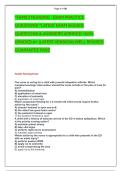
“MATERNITY & PEDIATRIC NURSING EXAM
PRACTICE QUESTIONS ”LATEST EXAM SOLVED
QUESTIONS & ANSWERS VERIFIED 100%
GRADED A+ (LATEST VERSION) WELL REVISED
GUARANTEE PASS
Maternity & Pediatric Nursing Exam Practice Questions
1. The nurse is teaching a group of students about the differences between a
full-term newborn and a preterm newborn. The nurse determines that the
teaching is effective when the students state that the preterm newborn has:
A) Fewer visible blood vessels through the skin
B) More subcutaneous fat in the neck and abdomen
C) Well-developed flexor muscles in the extremities
D) Greater surface area in proportion to weight
D
2. When assessing a postterm newborn, which of the following would the
nurse correlate with this gestational age variation?
A) Moist, supple, plum skin appearance
B) Abundant lanugo and vernix
C) Thin umbilical cord
D) Absence of sole creases
C
, Page 2 of 34
3. The parents of a preterm newborn being cared for in the neonatal intensive
care unit (NICU. are coming to visit for the first time. The newborn is receiving
mechanical ventilation and intravenous fluids and medications and is being
monitored electronically by various devices. Which action by the nurse would
be most appropriate?
A) Suggest that the parents stay for just a few minutes to reduce their anxiety.
B) Reassure them that their newborn is progressing well.
C) Encourage the parents to touch their preterm newborn.
D) Discuss the care they will be giving the newborn upon discharge.
C
4. When performing newborn resuscitation, which action would the nurse do
first?
A) Intubate with an appropriate-sized endotracheal tube.
B) Give chest compressions at a rate of 80 times per minute. C) Administer
epinephrine intravenously.
D) Suction the mouth and then the nose.
D
5. The nurse frequently assesses the respiratory status of a preterm newborn
based on the understanding that the newborn is at increased risk for
respiratory distress syndrome because of which of the following?
A) Inability to clear fluids
B) Immature respiratory control center
C) Deficiency of surfactant
D) Smaller respiratory passages
C
6. The nurse prepares to assess a newborn who is considered to be large for
gestational age (LGA). Which of the following would the nurse correlate with
this gestational age variation?
A) Strong, brisk motor skills
B) Difficulty in arousing to a quiet alert state
C) Birth weight of 7 lb 14 oz
D) Wasted appearance of extremities
B
, Page 3 of 34
7. An LGA newborn has a blood glucose level of 30 mg/dL and is exhibiting
symptoms of hypoglycemia. Which of the following would the nurse do next?
A) Administer intravenous glucose immediately.
B) Feed the newborn 2 ounces of formula.
C) Initiate blow-by oxygen therapy.
D) Place the newborn under a radiant warmer.
A
8. A group of pregnant women are discussing high-risk newborn conditions as
part of a prenatal class. When describing the complications that can occur in
these newborns to the group, which would the nurse include as being at
lowest risk?
A) Small-for-gestational-age (SGA. newborns
B) Large-for-gestational-age (LGA. newborns
C) Appropriate-for-gestational-age (AGA. newborns
D) Low-birth-weight newborns
C
9. While caring for a preterm newborn receiving oxygen therapy, the nurse
monitors the oxygen therapy duration closely based on the understanding that
the newborn is at risk for which of the following?
A) Retinopathy of prematurity
B) Metabolic acidosis
C) Infection
D) Cold stress
A
10. When planning the care for an SGA newborn, which action would the nurse
determine as a priority?
A) Preventing hypoglycemia with early feedings
B) Observing for respiratory distress syndrome
C) Promoting bonding between the parents and the newborn
D) Monitoring vital signs every 2 hours
A
11. A woman gives birth to a newborn at 36 weeks' gestation. She tells the
nurse, "I'm so glad that my baby isn't premature."
Which response by the nurse would be most appropriate?
, Page 4 of 34
A) "You are lucky to have given birth to a term newborn."
B) "We still need to monitor him closely for problems."
C) "How do you feel about delivering your baby at 36 weeks?"
D) "Your baby is premature and needs monitoring in the NICU."
B
12. Which of the following would be most appropriate for the nurse to do when
assisting parents who have experienced the loss of their preterm newborn?
A) Avoid using the terms "death" or "dying."
B) Provide opportunities for them to hold the newborn.
C) Refrain from initiating conversations with the parents.
D) Quickly refocus the parents to a more pleasant topic.
B
13. Which of the following, if noted in the maternal history, would the nurse
identify as possibly contributing to the birth of an LGA newborn?
A) Drug abuse
B) Diabetes
C) Preeclampsia
D) Infection
B
14. Which of the following would alert the nurse to suspect that a preterm
newborn is in pain?
A) Bradycardia
B) Oxygen saturation level of 94%
C) Decreased muscle tone
D) Sudden high-pitched cry
D
15. When describing newborns with birth-weight variations to a group of
nursing students, the instructor identifies which variation if the newborn
weighs 5.2 lb at any gestational age?
A) Small for gestational age
B) Low birth weight
C) Very low birth weight
D) Extremely low birth weight
B
“MATERNITY & PEDIATRIC NURSING EXAM
PRACTICE QUESTIONS ”LATEST EXAM SOLVED
QUESTIONS & ANSWERS VERIFIED 100%
GRADED A+ (LATEST VERSION) WELL REVISED
GUARANTEE PASS
Maternity & Pediatric Nursing Exam Practice Questions
1. The nurse is teaching a group of students about the differences between a
full-term newborn and a preterm newborn. The nurse determines that the
teaching is effective when the students state that the preterm newborn has:
A) Fewer visible blood vessels through the skin
B) More subcutaneous fat in the neck and abdomen
C) Well-developed flexor muscles in the extremities
D) Greater surface area in proportion to weight
D
2. When assessing a postterm newborn, which of the following would the
nurse correlate with this gestational age variation?
A) Moist, supple, plum skin appearance
B) Abundant lanugo and vernix
C) Thin umbilical cord
D) Absence of sole creases
C
, Page 2 of 34
3. The parents of a preterm newborn being cared for in the neonatal intensive
care unit (NICU. are coming to visit for the first time. The newborn is receiving
mechanical ventilation and intravenous fluids and medications and is being
monitored electronically by various devices. Which action by the nurse would
be most appropriate?
A) Suggest that the parents stay for just a few minutes to reduce their anxiety.
B) Reassure them that their newborn is progressing well.
C) Encourage the parents to touch their preterm newborn.
D) Discuss the care they will be giving the newborn upon discharge.
C
4. When performing newborn resuscitation, which action would the nurse do
first?
A) Intubate with an appropriate-sized endotracheal tube.
B) Give chest compressions at a rate of 80 times per minute. C) Administer
epinephrine intravenously.
D) Suction the mouth and then the nose.
D
5. The nurse frequently assesses the respiratory status of a preterm newborn
based on the understanding that the newborn is at increased risk for
respiratory distress syndrome because of which of the following?
A) Inability to clear fluids
B) Immature respiratory control center
C) Deficiency of surfactant
D) Smaller respiratory passages
C
6. The nurse prepares to assess a newborn who is considered to be large for
gestational age (LGA). Which of the following would the nurse correlate with
this gestational age variation?
A) Strong, brisk motor skills
B) Difficulty in arousing to a quiet alert state
C) Birth weight of 7 lb 14 oz
D) Wasted appearance of extremities
B
, Page 3 of 34
7. An LGA newborn has a blood glucose level of 30 mg/dL and is exhibiting
symptoms of hypoglycemia. Which of the following would the nurse do next?
A) Administer intravenous glucose immediately.
B) Feed the newborn 2 ounces of formula.
C) Initiate blow-by oxygen therapy.
D) Place the newborn under a radiant warmer.
A
8. A group of pregnant women are discussing high-risk newborn conditions as
part of a prenatal class. When describing the complications that can occur in
these newborns to the group, which would the nurse include as being at
lowest risk?
A) Small-for-gestational-age (SGA. newborns
B) Large-for-gestational-age (LGA. newborns
C) Appropriate-for-gestational-age (AGA. newborns
D) Low-birth-weight newborns
C
9. While caring for a preterm newborn receiving oxygen therapy, the nurse
monitors the oxygen therapy duration closely based on the understanding that
the newborn is at risk for which of the following?
A) Retinopathy of prematurity
B) Metabolic acidosis
C) Infection
D) Cold stress
A
10. When planning the care for an SGA newborn, which action would the nurse
determine as a priority?
A) Preventing hypoglycemia with early feedings
B) Observing for respiratory distress syndrome
C) Promoting bonding between the parents and the newborn
D) Monitoring vital signs every 2 hours
A
11. A woman gives birth to a newborn at 36 weeks' gestation. She tells the
nurse, "I'm so glad that my baby isn't premature."
Which response by the nurse would be most appropriate?
, Page 4 of 34
A) "You are lucky to have given birth to a term newborn."
B) "We still need to monitor him closely for problems."
C) "How do you feel about delivering your baby at 36 weeks?"
D) "Your baby is premature and needs monitoring in the NICU."
B
12. Which of the following would be most appropriate for the nurse to do when
assisting parents who have experienced the loss of their preterm newborn?
A) Avoid using the terms "death" or "dying."
B) Provide opportunities for them to hold the newborn.
C) Refrain from initiating conversations with the parents.
D) Quickly refocus the parents to a more pleasant topic.
B
13. Which of the following, if noted in the maternal history, would the nurse
identify as possibly contributing to the birth of an LGA newborn?
A) Drug abuse
B) Diabetes
C) Preeclampsia
D) Infection
B
14. Which of the following would alert the nurse to suspect that a preterm
newborn is in pain?
A) Bradycardia
B) Oxygen saturation level of 94%
C) Decreased muscle tone
D) Sudden high-pitched cry
D
15. When describing newborns with birth-weight variations to a group of
nursing students, the instructor identifies which variation if the newborn
weighs 5.2 lb at any gestational age?
A) Small for gestational age
B) Low birth weight
C) Very low birth weight
D) Extremely low birth weight
B