Page 1 of 58
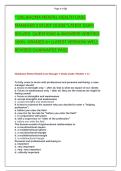
“NURS 330 APEA ACTUAL EXAM ”LATEST EXAM
SOLVED QUESTIONS & ANSWERS VERIFIED
100% GRADED A+ (LATEST VERSION) WELL
REVISED GUARANTEE PASS
NURS 330 Final Exam
SATA: Obesity places patients at an increased surgical risk because of which
of the following factors?
A. Risk for bleeding is increased.
B. Ventilatory capacity is reduced.
C. Fatty tissue has a poor blood supply.
D. Metabolic demands are increased.
(Ch 50)
Ventilatory capacity is reduced.
Fatty tissue has a poor blood supply.
The primary reason that family members should be included when the nurse
teaches the patient preoperative exercises is so they can:
A. Coach and encourage the patient after surgery.
B. Demonstrate to the patient at home.
C. Relieve the nurse by getting the patient to do the exercises every 2 hours.
D. Practice with the patient while he or she is waiting to be taken to the
operating room.
(Ch 50)
Coach and encourage the patient after surgery.
In the postanesthesia care unit (PACU) the nurse notes that the patient is
having difficulty breathing and suspects an upper airway obstruction. The
nurse would first:
A. Suction the pharynx and bronchial tree.
, Page 2 of 58
B. Give oxygen through a mask at 4 L/min.
C. Ask the patient to use an incentive spirometer.
D. Position the patient on one side with the face down and the neck slightly
extended so the tongue falls forward.
(Ch 50)
Position the patient on one side with the face down and the neck slightly extended so
the tongue falls forward.
Because an older adult is at increased risk for respiratory complications after
surgery, the nurse should:
A. Withhold pain medications and ambulate the patient every 2 hours.
B. Monitor fluid and electrolyte status every shift and vital signs with
temperature every 4 hours.
C. Orient the patient to the surrounding environment frequently and ambulate
the patient every 2 hours.
D. Encourage the patient to turn, deep breathe, and cough frequently and
ensure adequate pain control.
(Ch 50)
Encourage the patient to turn, deep breathe, and cough frequently and ensure
adequate pain control.
SATA: You are caring for a patient after surgery who underwent a liver
resection. His prothrombin time (PT) or an activated partial thromboplastin
time (APTT) is greater than normal. He has low blood pressure; tachycardia;
thready pulse; and cool, clammy, pale skin, and he is restless. You assess his
surgical wound, and the dressing is saturated with blood. Which immediate
interventions should you perform?
A. Notify the surgeon.
B. Maintain intravenous (IV) fluid infusion and prepare to give volume
replacement.
C. Monitor the patient's vital signs every 15 minutes or more frequently until
his condition stabilizes.
D. Wean oxygen therapy.
E. Provide comfort through bathing.
(Ch 50)
Notify the surgeon.
Maintain intravenous (IV) fluid infusion and prepare to give volume replacement.
Monitor the patient's vital signs every 15 minutes or more frequently until his
condition stabilizes.
You are a nurse in the postanesthesia care unit (PACU), and you note that your
patient has a heart rate of 130 beats/min and a respiratory rate of 32
breaths/min; you also assess jaw muscle rigidity and rigidity of limbs,
abdomen, and chest. What do you suspect, and which intervention is
indicated?
, Page 3 of 58
A. Infection: Notify surgeon and anticipate administration of antibiotics.
B. Pneumonia: Listen to breath sounds, notify surgeon, and anticipate order
for chest radiography.
C. Hypertension: Check blood pressure, notify surgeon, and anticipate
administration of antihypertensives.
D. Malignant hyperthermia: Notify surgeon/anesthesia provider immediately,
prepare to administer dantrolene sodium (Dantrium), and monitor vital signs
frequently.
(Ch 50)
Malignant hyperthermia: Notify surgeon/anesthesia provider immediately, prepare to
administer dantrolene sodium (Dantrium), and monitor vital signs frequently.
After a surgical patient has been given preoperative sedatives, which safety
precaution should a nurse take?
A. Reinforce to the patient to remain in bed or on the stretcher
B. Raise the side rails and keep the bed or stretcher in the high position
C. Determine if the patient has any allergies to latex
D. Obtain informed consent immediately after sedative administration
(Ch 50)
Reinforce to the patient to remain in bed or on the stretcher
SATA: The operating room (OR) and postanesthesia care unit (PACU) are high-
risk environments for patients with a latex allergy. Which safety measures to
prevent a latex reaction should the nurse implement?
A. Screening patients about food allergies known to have a cross-reactivity to
latex such as kiwis and bananas
B. Having a latex allergy cart available at all times
C. Communicating with the operating room (OR) team as soon as 24 to 48
hours in advance of the surgery when a latex-sensitive patient is identified
D. Scheduling the latex-sensitive patient for the last operative case of the day
(Ch 50)
Screening patients about food allergies known to have a cross-reactivity to latex
such as kiwis and bananas
Having a latex allergy cart available at all times
Communicating with the operating room (OR) team as soon as 24 to 48 hours in
advance of the surgery when a latex-sensitive patient is identified
A nurse is recovering a patient who received conscious sedation for cosmetic
surgery. Which of the following is an advantage that conscious sedation has
over general anesthesia?
A. Loss of sensation at the surgical site
B. Reduction of fear and anxiety and need for assistance with airway patency
and ventilation
C. Amnesia and relief of pain
D. Monitoring in phase I recovery
, Page 4 of 58
(Ch 50)
Amnesia and relief of pain
You have been given the following postoperative patients to care for on your
shift. Based on the information provided, which patient should you see first?
A. A 75-year-old following hip replacement surgery who is complaining of
moderate pain in the surgical site, with a heart rate of 92
B. A 57-year-old following hip replacement 6 hours earlier who is receiving
intravenous patient-controlled analgesia (PCA) with a history of OSA. The
pulse oximeter has been alarming and reading 85%
C. A 36-year-old following bladder neck suspension who is 30 minutes late to
receive her postoperative dose of antibiotic
D. A 48-year-old following total knee replacement who needs help
repositioning in bed
(Ch 50)
A 57-year-old following hip replacement 6 hours earlier who is receiving intravenous
patient-controlled analgesia (PCA) with a history of OSA. The pulse oximeter has
been alarming and reading 85%
SATA: Hand-off communications that occur between the postanesthesia care
unit (PACU) nurse and the nurse on the postoperative nursing unit should be
done when a patient returns to the nursing unit. Select appropriate
components of a safe and effective hand-off.
A. Vital signs, the type of anesthesia provided, blood loss, and level of
consciousness
B. Uninterrupted time to review the recent pertinent events and ask questions
C. Verification of the patient using one identifier and the type of surgery
performed
D. Review of pertinent events occurring in the operating room
E. (OR) while at the nurses' station
(Ch 50)
Vital signs, the type of anesthesia provided, blood loss, and level of consciousness
Uninterrupted time to review the recent pertinent events and ask questions
A nurse is working in the preoperative holding area and is assigned to care for
a patient who is having a prosthetic aortic valve placed. The nurse inserts an
intravenous (IV) line and obtains vital signs. The patient has a temperature of
39°C (102°F), heart rate of 120, blood pressure (BP) of 84/50, and an elevated
white blood cell (WBC) count. The nurse immediately notifies the surgeon of
the patient's vital signs because:
A. They need to get the patient into the operating room (OR) quickly to start
the surgery because of the low blood pressure.
B. The surgery may need to be delayed to check the patient's WBC count and
investigate the source of fever before surgery.
C. The nurse anticipates the need for a fluid bolus to increase the patient's BP.
D. The nurse anticipates an order for a sedative to help calm the patient and
“NURS 330 APEA ACTUAL EXAM ”LATEST EXAM
SOLVED QUESTIONS & ANSWERS VERIFIED
100% GRADED A+ (LATEST VERSION) WELL
REVISED GUARANTEE PASS
NURS 330 Final Exam
SATA: Obesity places patients at an increased surgical risk because of which
of the following factors?
A. Risk for bleeding is increased.
B. Ventilatory capacity is reduced.
C. Fatty tissue has a poor blood supply.
D. Metabolic demands are increased.
(Ch 50)
Ventilatory capacity is reduced.
Fatty tissue has a poor blood supply.
The primary reason that family members should be included when the nurse
teaches the patient preoperative exercises is so they can:
A. Coach and encourage the patient after surgery.
B. Demonstrate to the patient at home.
C. Relieve the nurse by getting the patient to do the exercises every 2 hours.
D. Practice with the patient while he or she is waiting to be taken to the
operating room.
(Ch 50)
Coach and encourage the patient after surgery.
In the postanesthesia care unit (PACU) the nurse notes that the patient is
having difficulty breathing and suspects an upper airway obstruction. The
nurse would first:
A. Suction the pharynx and bronchial tree.
, Page 2 of 58
B. Give oxygen through a mask at 4 L/min.
C. Ask the patient to use an incentive spirometer.
D. Position the patient on one side with the face down and the neck slightly
extended so the tongue falls forward.
(Ch 50)
Position the patient on one side with the face down and the neck slightly extended so
the tongue falls forward.
Because an older adult is at increased risk for respiratory complications after
surgery, the nurse should:
A. Withhold pain medications and ambulate the patient every 2 hours.
B. Monitor fluid and electrolyte status every shift and vital signs with
temperature every 4 hours.
C. Orient the patient to the surrounding environment frequently and ambulate
the patient every 2 hours.
D. Encourage the patient to turn, deep breathe, and cough frequently and
ensure adequate pain control.
(Ch 50)
Encourage the patient to turn, deep breathe, and cough frequently and ensure
adequate pain control.
SATA: You are caring for a patient after surgery who underwent a liver
resection. His prothrombin time (PT) or an activated partial thromboplastin
time (APTT) is greater than normal. He has low blood pressure; tachycardia;
thready pulse; and cool, clammy, pale skin, and he is restless. You assess his
surgical wound, and the dressing is saturated with blood. Which immediate
interventions should you perform?
A. Notify the surgeon.
B. Maintain intravenous (IV) fluid infusion and prepare to give volume
replacement.
C. Monitor the patient's vital signs every 15 minutes or more frequently until
his condition stabilizes.
D. Wean oxygen therapy.
E. Provide comfort through bathing.
(Ch 50)
Notify the surgeon.
Maintain intravenous (IV) fluid infusion and prepare to give volume replacement.
Monitor the patient's vital signs every 15 minutes or more frequently until his
condition stabilizes.
You are a nurse in the postanesthesia care unit (PACU), and you note that your
patient has a heart rate of 130 beats/min and a respiratory rate of 32
breaths/min; you also assess jaw muscle rigidity and rigidity of limbs,
abdomen, and chest. What do you suspect, and which intervention is
indicated?
, Page 3 of 58
A. Infection: Notify surgeon and anticipate administration of antibiotics.
B. Pneumonia: Listen to breath sounds, notify surgeon, and anticipate order
for chest radiography.
C. Hypertension: Check blood pressure, notify surgeon, and anticipate
administration of antihypertensives.
D. Malignant hyperthermia: Notify surgeon/anesthesia provider immediately,
prepare to administer dantrolene sodium (Dantrium), and monitor vital signs
frequently.
(Ch 50)
Malignant hyperthermia: Notify surgeon/anesthesia provider immediately, prepare to
administer dantrolene sodium (Dantrium), and monitor vital signs frequently.
After a surgical patient has been given preoperative sedatives, which safety
precaution should a nurse take?
A. Reinforce to the patient to remain in bed or on the stretcher
B. Raise the side rails and keep the bed or stretcher in the high position
C. Determine if the patient has any allergies to latex
D. Obtain informed consent immediately after sedative administration
(Ch 50)
Reinforce to the patient to remain in bed or on the stretcher
SATA: The operating room (OR) and postanesthesia care unit (PACU) are high-
risk environments for patients with a latex allergy. Which safety measures to
prevent a latex reaction should the nurse implement?
A. Screening patients about food allergies known to have a cross-reactivity to
latex such as kiwis and bananas
B. Having a latex allergy cart available at all times
C. Communicating with the operating room (OR) team as soon as 24 to 48
hours in advance of the surgery when a latex-sensitive patient is identified
D. Scheduling the latex-sensitive patient for the last operative case of the day
(Ch 50)
Screening patients about food allergies known to have a cross-reactivity to latex
such as kiwis and bananas
Having a latex allergy cart available at all times
Communicating with the operating room (OR) team as soon as 24 to 48 hours in
advance of the surgery when a latex-sensitive patient is identified
A nurse is recovering a patient who received conscious sedation for cosmetic
surgery. Which of the following is an advantage that conscious sedation has
over general anesthesia?
A. Loss of sensation at the surgical site
B. Reduction of fear and anxiety and need for assistance with airway patency
and ventilation
C. Amnesia and relief of pain
D. Monitoring in phase I recovery
, Page 4 of 58
(Ch 50)
Amnesia and relief of pain
You have been given the following postoperative patients to care for on your
shift. Based on the information provided, which patient should you see first?
A. A 75-year-old following hip replacement surgery who is complaining of
moderate pain in the surgical site, with a heart rate of 92
B. A 57-year-old following hip replacement 6 hours earlier who is receiving
intravenous patient-controlled analgesia (PCA) with a history of OSA. The
pulse oximeter has been alarming and reading 85%
C. A 36-year-old following bladder neck suspension who is 30 minutes late to
receive her postoperative dose of antibiotic
D. A 48-year-old following total knee replacement who needs help
repositioning in bed
(Ch 50)
A 57-year-old following hip replacement 6 hours earlier who is receiving intravenous
patient-controlled analgesia (PCA) with a history of OSA. The pulse oximeter has
been alarming and reading 85%
SATA: Hand-off communications that occur between the postanesthesia care
unit (PACU) nurse and the nurse on the postoperative nursing unit should be
done when a patient returns to the nursing unit. Select appropriate
components of a safe and effective hand-off.
A. Vital signs, the type of anesthesia provided, blood loss, and level of
consciousness
B. Uninterrupted time to review the recent pertinent events and ask questions
C. Verification of the patient using one identifier and the type of surgery
performed
D. Review of pertinent events occurring in the operating room
E. (OR) while at the nurses' station
(Ch 50)
Vital signs, the type of anesthesia provided, blood loss, and level of consciousness
Uninterrupted time to review the recent pertinent events and ask questions
A nurse is working in the preoperative holding area and is assigned to care for
a patient who is having a prosthetic aortic valve placed. The nurse inserts an
intravenous (IV) line and obtains vital signs. The patient has a temperature of
39°C (102°F), heart rate of 120, blood pressure (BP) of 84/50, and an elevated
white blood cell (WBC) count. The nurse immediately notifies the surgeon of
the patient's vital signs because:
A. They need to get the patient into the operating room (OR) quickly to start
the surgery because of the low blood pressure.
B. The surgery may need to be delayed to check the patient's WBC count and
investigate the source of fever before surgery.
C. The nurse anticipates the need for a fluid bolus to increase the patient's BP.
D. The nurse anticipates an order for a sedative to help calm the patient and