

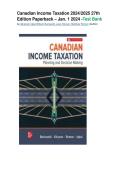
Canadian Income Taxation 2024/2025 27th
Edition Paperback – Jan. 1 2024 -Test Bank
by Abraham Iqbal William Buckwold, Joan Kitunen, Matthew Roman (Author)
,Table of Contents
1. Chapter 1: Taxation—Its Role in Decision Making
2. Chapter 1 Introduction
3. Taxation—Its Role in Decision Making
4. I. Taxation and the Financial Decision Process
5. A. Taxation–A Controllable Cost
6. B. Cash Flow after Tax
7. II. The Fundamental Income Tax Structure and Its Complexity
8. III. Conclusion
9. Review Questions
10. Chapter 2: Fundamentals of Tax Planning
11. Chapter 2 Introduction
12. I. What Is Tax Planning?
13. A. Tax Planning Defined
14. B. Tax Evasion
15. C. Tax Avoidance
16. II. Types of Tax Planning
17. A. Shifting Income from One Time Period to Another
18. B. Transferring Income to Another Entity
19. C. Converting Income from One Type to Another
20. III. Skills Required for Tax Planning
21. IV. Restrictions to Tax Planning
22. A. Specific Anti-Avoidance Rules
23. B. The General Anti-Avoidance Rule—GAAR
24. V. Summary and Conclusion
25. Review Questions
,26. Key Concept Questions
27. Chapter 3: Liability for Tax, Income Determination, and Administration of the Income
Tax System
28. Chapter 3 Introduction
29. Liability for Tax, Income Determination, and Administration of the Income Tax
System
30. I. Sources of Canadian Tax Law
31. A. Statute Law
32. B. Common Law
33. C. International Tax Conventions
34. II. Liability for Tax
35. A. The Entities
36. B. Resident Individuals and Corporations
37. C. Non-Resident Individuals and Corporations
38. D. Decision Making and the Residence Issue
39. III. Determination of Income
40. A. The Taxation Year
41. B. Types of Income
42. C. Net Income for Tax Purposes—The Aggregating Formula
43. D. Taxable Income
44. IV. Administration of the Income Tax System
45. A. Filing of Returns
46. B. Assessment
47. C. Objection and Appeal
48. D. Payment of Tax
49. E. Penalties and Offences
50. V. Tax Planning Checklist
, 51. VI. Summary and Conclusion
52. Residents of Canada
53. Non-residents of Canada
54. Demonstration Questions
55. Review Questions
56. Key Concept Questions
57. Problems
58. Cases
59. Chapter 4: Income from Employment
60. Chapter 4 Introduction
61. I. Scope and Structure of Employment Income
62. A. Definition of “Employed”
63. B. Employment Income—Fundamental Rules and Basic Formula
64. II. Cash Basis
65. A. Scope
66. B. Salary Deferrals
67. III. Employee Benefits
68. A. Taxable Benefits
69. B. Non-Taxable and Tax-Deferred Benefits
70. IV. Allowances
71. A. Definition
72. B. Exceptions
73. V. Deductions from Employment Income
74. A. Travel Expenses
75. B. Motor Vehicle Expenses
76. C. Cost of Supplies Consumed
Edition Paperback – Jan. 1 2024 -Test Bank
by Abraham Iqbal William Buckwold, Joan Kitunen, Matthew Roman (Author)
,Table of Contents
1. Chapter 1: Taxation—Its Role in Decision Making
2. Chapter 1 Introduction
3. Taxation—Its Role in Decision Making
4. I. Taxation and the Financial Decision Process
5. A. Taxation–A Controllable Cost
6. B. Cash Flow after Tax
7. II. The Fundamental Income Tax Structure and Its Complexity
8. III. Conclusion
9. Review Questions
10. Chapter 2: Fundamentals of Tax Planning
11. Chapter 2 Introduction
12. I. What Is Tax Planning?
13. A. Tax Planning Defined
14. B. Tax Evasion
15. C. Tax Avoidance
16. II. Types of Tax Planning
17. A. Shifting Income from One Time Period to Another
18. B. Transferring Income to Another Entity
19. C. Converting Income from One Type to Another
20. III. Skills Required for Tax Planning
21. IV. Restrictions to Tax Planning
22. A. Specific Anti-Avoidance Rules
23. B. The General Anti-Avoidance Rule—GAAR
24. V. Summary and Conclusion
25. Review Questions
,26. Key Concept Questions
27. Chapter 3: Liability for Tax, Income Determination, and Administration of the Income
Tax System
28. Chapter 3 Introduction
29. Liability for Tax, Income Determination, and Administration of the Income Tax
System
30. I. Sources of Canadian Tax Law
31. A. Statute Law
32. B. Common Law
33. C. International Tax Conventions
34. II. Liability for Tax
35. A. The Entities
36. B. Resident Individuals and Corporations
37. C. Non-Resident Individuals and Corporations
38. D. Decision Making and the Residence Issue
39. III. Determination of Income
40. A. The Taxation Year
41. B. Types of Income
42. C. Net Income for Tax Purposes—The Aggregating Formula
43. D. Taxable Income
44. IV. Administration of the Income Tax System
45. A. Filing of Returns
46. B. Assessment
47. C. Objection and Appeal
48. D. Payment of Tax
49. E. Penalties and Offences
50. V. Tax Planning Checklist
, 51. VI. Summary and Conclusion
52. Residents of Canada
53. Non-residents of Canada
54. Demonstration Questions
55. Review Questions
56. Key Concept Questions
57. Problems
58. Cases
59. Chapter 4: Income from Employment
60. Chapter 4 Introduction
61. I. Scope and Structure of Employment Income
62. A. Definition of “Employed”
63. B. Employment Income—Fundamental Rules and Basic Formula
64. II. Cash Basis
65. A. Scope
66. B. Salary Deferrals
67. III. Employee Benefits
68. A. Taxable Benefits
69. B. Non-Taxable and Tax-Deferred Benefits
70. IV. Allowances
71. A. Definition
72. B. Exceptions
73. V. Deductions from Employment Income
74. A. Travel Expenses
75. B. Motor Vehicle Expenses
76. C. Cost of Supplies Consumed


