

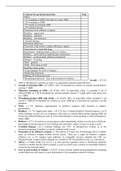
Contents for permitted materials Page
Affray
s.18 wounding or GBH with intent to cause GBH
s.20 wounding or GBH
s.47 assault occasioning ABH
s.39 common assault
Possession of an offensive weapon
Burglary—aggravated
Burglary—domestic
Burglary—non-domestic
Criminal damage
Disorderly behaviour
Possession with intent to supply/offering to supply
Possession of a controlled drug
Harassment—putting people in fear of violence
Robbery—street and less sophisticated commercial
Robbery—professionally planned commercial
Robbery—dwelling
Theft—general
Theft—from shop or stall
Handling stolen goods
Going equipped for theft or burglary
Abstracting electricity
Making off without payment
Threatening behaviour—fear or provocation of violence
Assault: s.39 CJA
1988. D intended/was reckless to cause V to apprehend imminent unlawful force.
Assault occasioning ABH: s.47 OAPA 1861. D intended/was reckless to commit assault/battery
causing V ABH.
Malicious wounding or GBH: s.20 OAPA 1861. D unlawfully either 1) wounded V or 2)
inflicted GBH on V & D intended/was reckless/actually foresaw V might suffer some harm (not
nec. GBH).
Wounding/causing GBH with intent: s.18 OAPA 1861. D unlawfully either wounded V or
caused V GBH & D intended/was reckless to cause GBH or to resist/prevent someone’s lawful
detention.
Theft: s.1 TA: dishonest appropriation of another’s property with intention to deprive
permanently.
Burglary: s.9 TA (aggravated under s.10 if D has a firearm/imitation firearm/weapon). (a) D
enters building (or part of it) as trespasser with intent to commit theft/criminal damage/GBH or
(b) having entered building (or part of it) he steals/attempts to steal anything or inflicts/attempts to
inflict GBH.
Robbery: s.8 TA. D used force on any person either immediately before or at the time of theft or
put/sought to put any person in fear of being, then and there, subject to force in order to steal.
Criminal damage: s.1(1) Criminal Damage Act 1971. D intended/was reckless as to the
destruction/damage of another’s property without lawful excuse.
Possession of an offensive weapon: s.1 Prevention of Crime Act. D knowingly has in a public
place an offensive weapon without lawful excuse. There are 3 types of offensive weapon:
offensive per se (D requires legal authority or reasonable excuse); adapted into OW e.g.
sharpened stick; weapon neither adapted nor created as OW but intended as one e.g. screwdriver.
Affray: s.3 Public Order Act: D (or 2 or more persons together) use(s) or threaten(s) unlawful
violence to another and his (their) conduct is such as would cause a person of reasonable firmness
to fear for his personal safety.
Fear or provocation of violence: s.4 POA. D uses towards another threatening/abusive/insulting
words/behaviour with intent to cause that person to fear immediate unlawful violence.
, Defence of self-defence must be reasonable in circumstances for purpose of: self-defence;
defence of another; defence of property; prevention of crime; lawful arrest. See s.76 CJIA 2008
(p88).
Defences for Misuse of Drugs Act on p106 & p108.
Magistrates’ or Crown?
There are two courts of first instance which determine D’s guilt: magistrates’ court & Crown
Court. MC = three lay magistrates (the bench) or a full time DJ. CC = circuit judge & jury.
If a case is indictable only, it’s immediately sent from MC to CC (s.51 Crime & Disorder Act
1998).
If a case is either way:
1. Plea before venue hearing: D is invited to indicate a plea (s.17A Magistrates’ Courts Act
1980). D is told he may be sent up to CC under s.3 Powers of Criminal Courts (Sentencing)
Act 2000.
2. If D indicates guilty plea, he’s dealt with as if convicted & magistrates will sentence him
unless:
on hearing about the offence & previous convictions, magistrates’ powers are insufficient
so the matter is committed to CC under s.3 PCC(S)A.
3. If D indicates not guilty plea, prosecution & defence submit which venue is most appropriate
(MC or CC) i.e. allocation under s.19 MCA. Key test: are sentencing powers adequate?
The more serious the offence the more likely the case is sent up. Sentencing powers under
s.78 PCC(S)A & s.133 MCA: 6 months unless >1 either way offence = 12 months.
Under the Allocation Guideline (p203), E/W offences are tried summarily unless:
1. the outcome would exceed MC’s sentencing powers, even with mitigation or
discount;
2. for reasons of unusual legal, procedural, or factual complexity.
Note: If sentencing powers are inadequate, MC can try D & then send him to CC.
THEN: assess culpability and harm of offence, highlight the starting point & range,
and consider any aggravating or mitigating factors (incl. pp185-6), and finally apply the
test.
4. If MC decides case will be tried summarily, explain this to D. D can request indication of
sentence (i.e. custodial or non-custodial) (s.20 & s.20A MCA), but MC is under no
obligation.
If MC gives indication, D is asked if he’d like to change earlier plea:
a. if he pleads guilty, MC bound to deliver sentence indicated. Note: if he doesn’t
change his plea and is found guilty, MC not bound by indication of sentence.
b. If D maintains a not guilty plea, he’ll be asked whether he consents to summary
trial:
i. if so, case is adjourned to prepare for trial in MC;
ii. if not, he will be sent to CC under CDA.
5. If MC accepts jurisdiction, case proceeds to a case management hearing. If it doesn’t
(s.51(1) CDA/s.21 MCA) D will proceed to a Plea & Trial Preparation hearing within 28
days.
MC = less expensive, quicker, softer sentences but all evidence heard & higher conviction rate.
CC = higher acquittal rates & voir dire excludes evidence but harder sentences, costly, & long.
Professional conduct and the defence solicitor
ISSUES—PRINCIPLES—CCS—DISCUSSION (including part of LSPN)
1. Can I attend a police station to represent a detainee if asked by a third party or relative?
CCS 1.1: free to decide whether to take on clients, but no unlawful discrimination. But:
, CCS 3.1: only act for clients on their instructions, or someone properly authorised. If there’s
reason to believe instructions don’t represent client’s wishes, before acting ensure they do.
But:
PACE COP C Annex B para 4: access to a solicitor can’t be delayed on the grounds the
solicitor was initially asked to attend the police station by someone else. In such a case, the
detainee must be told the solicitor has come at another’s request and must be asked to sign
the custody record to signify whether they want to see the solicitor.
Therefore, contact police station & advise them you’ve been contacted. Ask police to speak
to the suspect and confirm whether he wishes to instruct you. If he does:
Police contact the Defence Solicitor Call Centre (DSCC) and—assuming firm is contracted to
undertake publically funded work—the DSCC will instruct you to attend and advise the
client.
Bear in mind, the suspect has been informed of his right to consult with a solicitor under s.58
PACE. DSCC may already have been contacted & either his solicitor of choice or the duty
solicitor may already have been retained.
2. What if I’m instructed by two clients on the same matter and one client blames the other?
CCS 6.2: do not act if there’s a client conflict i.e. an actual or significant risk of a new
client’s interest conflicting with the interests of another client in relation to the same or a
related matter.
Principle 7: fundamental professional obligation to act in each client’s best interests. So:
1. Can I act in the interests of both clients? First client takes precedent over subsequent
ones.
2. If not, can I act for either, given confidentiality and duty of disclosure?
Under para 2.2 LSPNCI (p4) duty to avoid such conflicts of interest apply to detainees and
Ds.
See para 2.1 LSPNCI (p4) for examples of a clear conflict. Less obvious indicators include
inequality between co-Ds which suggest that one client is acting under the influence of
another, often where clients are related or living together (LSPNCI 2.3.1).
If you act for D1 and then asked to act for D2, take the following steps:
1. Take instructions from D1. Advise him may act for D2 but only if there is no conflict.
2. Ask D1 if he is aware of a conflict. If he is, ask for details. If they amount to a conflict,
you can’t act for D2. If they do not, act for both.
3. Inform D1 that if you come into possession of information confidential to D1 & relevant
to D2, you will have to disclose it to D2 but will require D1’s consent.
4. Take instructions from D2 & advice that you also act for D1. Repeat steps 2 & 3 to D2.
3. Can I use information from one client’s case to help another?
a. CCS 6.3: current & former clients’ affairs are confidential unless disclosure
required/permitted.
b. CCS 6.4: must disclose material information to client. Exceptions 6.5(a) & (b) don’t apply.
c. To disclose D1’s confidential information to D2, D1 must give consent:
If he doesn’t, cease acting for D2: duty of confidentiality overrides duty of disclosure.
Don’t disclose reasons for ceasing to act. Only continue acting for D1 if the duty of
confidentiality to D2 isn’t put at risk. If he does, continue acting for both.
4. A solicitor’s duty to the court.
Solicitor duty is as an officer of the court (s.50(1) Solicitors Act 1974).
Further, see principles to act with integrity & honesty, but these can conflict with Principle 7.
Solicitor’s duty to the court overrides his duty to the client.
CCS 1.4: do not mislead or attempt to mislead client or court through acts or omissions.
If during proceedings a solicitor inadvertently mislead the court, he must, with his client’s
consent, immediately inform the court. If no consent is given, cease acting for the client.
You will mislead the court if you breach any of the following:
a. do not misuse or tamper evidence or attempt to (CCS 2.1);
b. do not seek to influence the substance of evidence (CCS 2.2);
Affray
s.18 wounding or GBH with intent to cause GBH
s.20 wounding or GBH
s.47 assault occasioning ABH
s.39 common assault
Possession of an offensive weapon
Burglary—aggravated
Burglary—domestic
Burglary—non-domestic
Criminal damage
Disorderly behaviour
Possession with intent to supply/offering to supply
Possession of a controlled drug
Harassment—putting people in fear of violence
Robbery—street and less sophisticated commercial
Robbery—professionally planned commercial
Robbery—dwelling
Theft—general
Theft—from shop or stall
Handling stolen goods
Going equipped for theft or burglary
Abstracting electricity
Making off without payment
Threatening behaviour—fear or provocation of violence
Assault: s.39 CJA
1988. D intended/was reckless to cause V to apprehend imminent unlawful force.
Assault occasioning ABH: s.47 OAPA 1861. D intended/was reckless to commit assault/battery
causing V ABH.
Malicious wounding or GBH: s.20 OAPA 1861. D unlawfully either 1) wounded V or 2)
inflicted GBH on V & D intended/was reckless/actually foresaw V might suffer some harm (not
nec. GBH).
Wounding/causing GBH with intent: s.18 OAPA 1861. D unlawfully either wounded V or
caused V GBH & D intended/was reckless to cause GBH or to resist/prevent someone’s lawful
detention.
Theft: s.1 TA: dishonest appropriation of another’s property with intention to deprive
permanently.
Burglary: s.9 TA (aggravated under s.10 if D has a firearm/imitation firearm/weapon). (a) D
enters building (or part of it) as trespasser with intent to commit theft/criminal damage/GBH or
(b) having entered building (or part of it) he steals/attempts to steal anything or inflicts/attempts to
inflict GBH.
Robbery: s.8 TA. D used force on any person either immediately before or at the time of theft or
put/sought to put any person in fear of being, then and there, subject to force in order to steal.
Criminal damage: s.1(1) Criminal Damage Act 1971. D intended/was reckless as to the
destruction/damage of another’s property without lawful excuse.
Possession of an offensive weapon: s.1 Prevention of Crime Act. D knowingly has in a public
place an offensive weapon without lawful excuse. There are 3 types of offensive weapon:
offensive per se (D requires legal authority or reasonable excuse); adapted into OW e.g.
sharpened stick; weapon neither adapted nor created as OW but intended as one e.g. screwdriver.
Affray: s.3 Public Order Act: D (or 2 or more persons together) use(s) or threaten(s) unlawful
violence to another and his (their) conduct is such as would cause a person of reasonable firmness
to fear for his personal safety.
Fear or provocation of violence: s.4 POA. D uses towards another threatening/abusive/insulting
words/behaviour with intent to cause that person to fear immediate unlawful violence.
, Defence of self-defence must be reasonable in circumstances for purpose of: self-defence;
defence of another; defence of property; prevention of crime; lawful arrest. See s.76 CJIA 2008
(p88).
Defences for Misuse of Drugs Act on p106 & p108.
Magistrates’ or Crown?
There are two courts of first instance which determine D’s guilt: magistrates’ court & Crown
Court. MC = three lay magistrates (the bench) or a full time DJ. CC = circuit judge & jury.
If a case is indictable only, it’s immediately sent from MC to CC (s.51 Crime & Disorder Act
1998).
If a case is either way:
1. Plea before venue hearing: D is invited to indicate a plea (s.17A Magistrates’ Courts Act
1980). D is told he may be sent up to CC under s.3 Powers of Criminal Courts (Sentencing)
Act 2000.
2. If D indicates guilty plea, he’s dealt with as if convicted & magistrates will sentence him
unless:
on hearing about the offence & previous convictions, magistrates’ powers are insufficient
so the matter is committed to CC under s.3 PCC(S)A.
3. If D indicates not guilty plea, prosecution & defence submit which venue is most appropriate
(MC or CC) i.e. allocation under s.19 MCA. Key test: are sentencing powers adequate?
The more serious the offence the more likely the case is sent up. Sentencing powers under
s.78 PCC(S)A & s.133 MCA: 6 months unless >1 either way offence = 12 months.
Under the Allocation Guideline (p203), E/W offences are tried summarily unless:
1. the outcome would exceed MC’s sentencing powers, even with mitigation or
discount;
2. for reasons of unusual legal, procedural, or factual complexity.
Note: If sentencing powers are inadequate, MC can try D & then send him to CC.
THEN: assess culpability and harm of offence, highlight the starting point & range,
and consider any aggravating or mitigating factors (incl. pp185-6), and finally apply the
test.
4. If MC decides case will be tried summarily, explain this to D. D can request indication of
sentence (i.e. custodial or non-custodial) (s.20 & s.20A MCA), but MC is under no
obligation.
If MC gives indication, D is asked if he’d like to change earlier plea:
a. if he pleads guilty, MC bound to deliver sentence indicated. Note: if he doesn’t
change his plea and is found guilty, MC not bound by indication of sentence.
b. If D maintains a not guilty plea, he’ll be asked whether he consents to summary
trial:
i. if so, case is adjourned to prepare for trial in MC;
ii. if not, he will be sent to CC under CDA.
5. If MC accepts jurisdiction, case proceeds to a case management hearing. If it doesn’t
(s.51(1) CDA/s.21 MCA) D will proceed to a Plea & Trial Preparation hearing within 28
days.
MC = less expensive, quicker, softer sentences but all evidence heard & higher conviction rate.
CC = higher acquittal rates & voir dire excludes evidence but harder sentences, costly, & long.
Professional conduct and the defence solicitor
ISSUES—PRINCIPLES—CCS—DISCUSSION (including part of LSPN)
1. Can I attend a police station to represent a detainee if asked by a third party or relative?
CCS 1.1: free to decide whether to take on clients, but no unlawful discrimination. But:
, CCS 3.1: only act for clients on their instructions, or someone properly authorised. If there’s
reason to believe instructions don’t represent client’s wishes, before acting ensure they do.
But:
PACE COP C Annex B para 4: access to a solicitor can’t be delayed on the grounds the
solicitor was initially asked to attend the police station by someone else. In such a case, the
detainee must be told the solicitor has come at another’s request and must be asked to sign
the custody record to signify whether they want to see the solicitor.
Therefore, contact police station & advise them you’ve been contacted. Ask police to speak
to the suspect and confirm whether he wishes to instruct you. If he does:
Police contact the Defence Solicitor Call Centre (DSCC) and—assuming firm is contracted to
undertake publically funded work—the DSCC will instruct you to attend and advise the
client.
Bear in mind, the suspect has been informed of his right to consult with a solicitor under s.58
PACE. DSCC may already have been contacted & either his solicitor of choice or the duty
solicitor may already have been retained.
2. What if I’m instructed by two clients on the same matter and one client blames the other?
CCS 6.2: do not act if there’s a client conflict i.e. an actual or significant risk of a new
client’s interest conflicting with the interests of another client in relation to the same or a
related matter.
Principle 7: fundamental professional obligation to act in each client’s best interests. So:
1. Can I act in the interests of both clients? First client takes precedent over subsequent
ones.
2. If not, can I act for either, given confidentiality and duty of disclosure?
Under para 2.2 LSPNCI (p4) duty to avoid such conflicts of interest apply to detainees and
Ds.
See para 2.1 LSPNCI (p4) for examples of a clear conflict. Less obvious indicators include
inequality between co-Ds which suggest that one client is acting under the influence of
another, often where clients are related or living together (LSPNCI 2.3.1).
If you act for D1 and then asked to act for D2, take the following steps:
1. Take instructions from D1. Advise him may act for D2 but only if there is no conflict.
2. Ask D1 if he is aware of a conflict. If he is, ask for details. If they amount to a conflict,
you can’t act for D2. If they do not, act for both.
3. Inform D1 that if you come into possession of information confidential to D1 & relevant
to D2, you will have to disclose it to D2 but will require D1’s consent.
4. Take instructions from D2 & advice that you also act for D1. Repeat steps 2 & 3 to D2.
3. Can I use information from one client’s case to help another?
a. CCS 6.3: current & former clients’ affairs are confidential unless disclosure
required/permitted.
b. CCS 6.4: must disclose material information to client. Exceptions 6.5(a) & (b) don’t apply.
c. To disclose D1’s confidential information to D2, D1 must give consent:
If he doesn’t, cease acting for D2: duty of confidentiality overrides duty of disclosure.
Don’t disclose reasons for ceasing to act. Only continue acting for D1 if the duty of
confidentiality to D2 isn’t put at risk. If he does, continue acting for both.
4. A solicitor’s duty to the court.
Solicitor duty is as an officer of the court (s.50(1) Solicitors Act 1974).
Further, see principles to act with integrity & honesty, but these can conflict with Principle 7.
Solicitor’s duty to the court overrides his duty to the client.
CCS 1.4: do not mislead or attempt to mislead client or court through acts or omissions.
If during proceedings a solicitor inadvertently mislead the court, he must, with his client’s
consent, immediately inform the court. If no consent is given, cease acting for the client.
You will mislead the court if you breach any of the following:
a. do not misuse or tamper evidence or attempt to (CCS 2.1);
b. do not seek to influence the substance of evidence (CCS 2.2);

