Introduction Formula Mass Concentration Terms
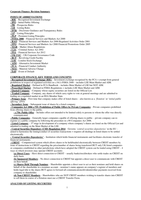
Matter: Anything that has mass and occupies space. Formula mass = Sum of atomic masses of all atoms Mass percentage (w/w) = (Mass of solute /
Types of Matter: Pure Substances (Elements & present in a formula unit of an ionic compound. Mass of solution) × 100.
Compounds), Mixtures (Homogeneous & Heterogeneous). Example: NaCl = 23 + 35.5 = 58.5 u. Volume percentage (v/v) = (Volume of solute
/ Volume of solution) × 100.
Law of Conservation of Mass Percentage Composition Mole fraction (x) = Moles of one component /
Mass can neither be created nor destroyed in a ·% of element = (n × Atomic mass of element / Molecular Total moles of all components.
chemical reaction. mass of compound) × 100. Molarity (M) = Moles of solute / Volume of
Total mass of reactants = Total mass of products. It represents the percentage by mass of each element solution in litres.
present in a compound. Molality (m) = Moles of solute / Mass of
Law of Definite Proportion solvent in kg.
Empirical Formula
A given compound always contains the same elements
combined in the same proportion by mass. It gives the simplest whole number ratio of atoms of
Avogadro’s Number and Molar Volume
various elements present in a compound. Mole of any gas at STP occupies 22.4 L (22400 mL).
Law of Multiple Proportions Steps to calculate empirical formula: Avogadro’s Number (NA) = 6.022 × 10^23 particles/mol.
When two elements combine to form two or more Element Mass% Atomic Mass Mass / Atomic Mass Simplest Whole Number Ratio Element
compounds, the masses of one element that combine Carbon 24% 12 = 2 2/1=2 Carbon
with a fixed mass of another element are in a simple Oxygen 16% 16 = 1 1/1=1 Oxygen Question:
whole-number ratio. Nitrogen 28% 14 = 2 2/1=2 Nitrogen How many molecules are present in 2 moles of water (H₂O)?
Sulphur 32% 32 = 1 1/1=1 Sulphur
Solution:
Avogadro’s Law We know,
Equal volumes of all gases under the same conditions
of temperature and pressure contain an equal number Molecular Formula So,
of molecules. Molecular mass = (Empirical formula) × n. 2 moles of H₂O = 2 × 6.022 × 1023
n = Molecular mass / Empirical formula mass. = 1.2044 x 1024 molecules of water.
Mole Concept
1 mole = 6.022 × 10^23 particles (atoms, molecules, or ions). Stoichiometry
1 mole of gas at STP = 22.4 L. ·It deals with the quantitative relationship between
Number of moles (n) = Given mass (g) / Molar mass (g/mol). reactants and products.
Number of particles = n × 6.022 × 10^23. ·Based on the balanced chemical equation.
·Helps calculate the amount of reactants required or
Atomic Mass products formed.
Atomic mass = The total number of protons and neutrons
in a single atom’s nucleus. Limiting Reagent
Example: Atomic mass of Chlorine = (35 × 75/100) + (37 × The reactant that gets completely consumed first, thus
25/100) = 35.5 u. limiting the amount of product formed.
Once limiting reagent is used up, the reaction stops.
Molecular Mass
Molecular mass = Sum of atomic masses of all atoms
present in a molecule.
Example: H2O = (2×1) + (16) = 18 u. Get One shot Video
@Nexttoppers_SCIENCE
of this chapter
Matter: Anything that has mass and occupies space. Formula mass = Sum of atomic masses of all atoms Mass percentage (w/w) = (Mass of solute /
Types of Matter: Pure Substances (Elements & present in a formula unit of an ionic compound. Mass of solution) × 100.
Compounds), Mixtures (Homogeneous & Heterogeneous). Example: NaCl = 23 + 35.5 = 58.5 u. Volume percentage (v/v) = (Volume of solute
/ Volume of solution) × 100.
Law of Conservation of Mass Percentage Composition Mole fraction (x) = Moles of one component /
Mass can neither be created nor destroyed in a ·% of element = (n × Atomic mass of element / Molecular Total moles of all components.
chemical reaction. mass of compound) × 100. Molarity (M) = Moles of solute / Volume of
Total mass of reactants = Total mass of products. It represents the percentage by mass of each element solution in litres.
present in a compound. Molality (m) = Moles of solute / Mass of
Law of Definite Proportion solvent in kg.
Empirical Formula
A given compound always contains the same elements
combined in the same proportion by mass. It gives the simplest whole number ratio of atoms of
Avogadro’s Number and Molar Volume
various elements present in a compound. Mole of any gas at STP occupies 22.4 L (22400 mL).
Law of Multiple Proportions Steps to calculate empirical formula: Avogadro’s Number (NA) = 6.022 × 10^23 particles/mol.
When two elements combine to form two or more Element Mass% Atomic Mass Mass / Atomic Mass Simplest Whole Number Ratio Element
compounds, the masses of one element that combine Carbon 24% 12 = 2 2/1=2 Carbon
with a fixed mass of another element are in a simple Oxygen 16% 16 = 1 1/1=1 Oxygen Question:
whole-number ratio. Nitrogen 28% 14 = 2 2/1=2 Nitrogen How many molecules are present in 2 moles of water (H₂O)?
Sulphur 32% 32 = 1 1/1=1 Sulphur
Solution:
Avogadro’s Law We know,
Equal volumes of all gases under the same conditions
of temperature and pressure contain an equal number Molecular Formula So,
of molecules. Molecular mass = (Empirical formula) × n. 2 moles of H₂O = 2 × 6.022 × 1023
n = Molecular mass / Empirical formula mass. = 1.2044 x 1024 molecules of water.
Mole Concept
1 mole = 6.022 × 10^23 particles (atoms, molecules, or ions). Stoichiometry
1 mole of gas at STP = 22.4 L. ·It deals with the quantitative relationship between
Number of moles (n) = Given mass (g) / Molar mass (g/mol). reactants and products.
Number of particles = n × 6.022 × 10^23. ·Based on the balanced chemical equation.
·Helps calculate the amount of reactants required or
Atomic Mass products formed.
Atomic mass = The total number of protons and neutrons
in a single atom’s nucleus. Limiting Reagent
Example: Atomic mass of Chlorine = (35 × 75/100) + (37 × The reactant that gets completely consumed first, thus
25/100) = 35.5 u. limiting the amount of product formed.
Once limiting reagent is used up, the reaction stops.
Molecular Mass
Molecular mass = Sum of atomic masses of all atoms
present in a molecule.
Example: H2O = (2×1) + (16) = 18 u. Get One shot Video
@Nexttoppers_SCIENCE
of this chapter