Lecture videos week 1-6
Week 1
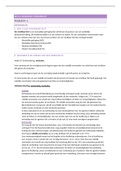
Language – a system of signs, and a system for publicly expressing our
thoughts to help others imaginatively reconstruct them.
- Language cannot reference all aspects of reality, it is only cues to
an interpretation. Speakers rely on listeners’ interpretation
communication is approximate.
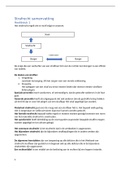
Communication – A sender encodes a message through a channel
(voice), that the receiver has to decode to receive the message.
o Statement
o Request
o Command
o Complaint
o Protest
o Conclusion
- Informative intentions and communicative intentions
Why communicate?
1. Requesting
2. Informing
3. Sharing
Why is communication cultural?
- Meaning involves inference making, inferences are contextual and
context is cultural
Pragmatics: the study of language in context; focus on conversational
inference.
Cross-cultural pragmatics: investigating the speech behaviour and
norms of different cultures, focusing on contextually derived meaning, the
appropriateness of language usage in differing cultural contexts, and the
complexities and challenges tied to acquisition of pragmatic competence.
Context shaping meaning, language shaping context, common
ground
Rules and norms associated with a particular language, comparing
language interactions.
Intercultural communication: a field of inquiry is concerned with how
people from different cultural and ethnic backgrounds interact with each
other, and what impact such interactions have on group relations, as well
as individuals’ identity, attitudes, and behaviour.
Focuses on meaning construction and understanding between
people with different first language communicating in a common
language.
Why study this topic?
The message received is not always the one intended by the speaker or
writer. An understanding of how [pragmatic and sociocultural] principles
,interact in a given language, and in intercultural communication, is crucial
to the development of mutual understanding in the global world.
Miscommunication is usually blamed on the ‘alien’
- Negative stereotyping: over exaggeration of a difference
1. Single dimension contrast
2. Problem for communication
3. ‘we’ are right, ‘they’ do it wrong
4. Applies to all group members overgeneralisation
- Positive stereotyping: over exaggeration of a similarity
1. Solidarity fallacy: assuming common ground based on a single
dimension
2. Lumping fallacy: grouping together 2 other groups (often) based
on a single dimension ‘Africa’ or ‘Asians’.
Advantages of cross-cultural pragmatics
- Personal growth
- Cultural synergy
- International reach
- Understanding human interaction
- Finding language usage patterns
- Analysing recurrences systematically
- Recognizing differences and similarities
- Explaining meaning-making
- Anticipating communicative behaviour
Sociolinguistics vs pragmatics
- Sociolinguistics: the study of the relationship between language and
society. Accounting for how language is used in a community.
- Society/community oriented
- Norms and choices
- Process of social practice and variation
- Language use in a (societal) context
- Pragmatics: the study of language use in context/interaction as
individuals.
- Individual oriented
- Inferences and constraints
- Process of meaning-making
- Language use in context
Us in a community vs Us as individuals
, Week 2
Communication: a joint effort.
- Inferential model of communications: ability to make inferences
requires Theory of Mind.
o Making inferences: Assuming what information the other knows
already
o Resource for making inferences is common ground
- Common ground: 2 people’s common ground is the sum of their
mutual, common, or joint knowledge, beliefs, and suppositions.
1. Communal common ground: related to membership of cultural
communities
2. Personal common ground: related to people’s direct personal
experience with each other
o Can be both
- Common ground is not necessarily openly addressed, rather
participants assume that what they themselves notice, experience,
see, hear, etc. is also noticeable/available to others.
o It is based on individual information, leading to assumed common
information
o Joint attention is the strongest cue that participants have that
there is indeed a shared basis between them. (Both seeing a bird;
you can say ‘it is pretty’)
- Joint activity: activity with more than one participant, with a (shared)
dominant goal.
o A date, band performance, wedding ceremony, lecture.
- Joint action: coordination and completion of a single action through
combined individual actions by two or more people.
o Singular things that are the building blocks to build a joint activity.
o It needs at least 2 people to cooperate (passing a ball (Action) in
a football game (activity))
- You need to communicate to carry out a joint activity; language use
and joint activity are inseparable whenever people use language,
they are taking joint actions
o two or more people must come to mutually believe they are
participating in the same joint activity; for it to work.
Participants rely on their common ground for the interpretation of their
actions and their joint actions accumulate common ground between them!
Cooperative principle: Speaker tries, as best they can, to convey the
message as truthfully, informatively, relevantly, and appropriately
as possible given the situation. Hearer tries, as best they can, to interpret
the message as truthfully, informatively, relevantly, and
appropriately as possible given the situation.
Week 1
Language – a system of signs, and a system for publicly expressing our
thoughts to help others imaginatively reconstruct them.
- Language cannot reference all aspects of reality, it is only cues to
an interpretation. Speakers rely on listeners’ interpretation
communication is approximate.
Communication – A sender encodes a message through a channel
(voice), that the receiver has to decode to receive the message.
o Statement
o Request
o Command
o Complaint
o Protest
o Conclusion
- Informative intentions and communicative intentions
Why communicate?
1. Requesting
2. Informing
3. Sharing
Why is communication cultural?
- Meaning involves inference making, inferences are contextual and
context is cultural
Pragmatics: the study of language in context; focus on conversational
inference.
Cross-cultural pragmatics: investigating the speech behaviour and
norms of different cultures, focusing on contextually derived meaning, the
appropriateness of language usage in differing cultural contexts, and the
complexities and challenges tied to acquisition of pragmatic competence.
Context shaping meaning, language shaping context, common
ground
Rules and norms associated with a particular language, comparing
language interactions.
Intercultural communication: a field of inquiry is concerned with how
people from different cultural and ethnic backgrounds interact with each
other, and what impact such interactions have on group relations, as well
as individuals’ identity, attitudes, and behaviour.
Focuses on meaning construction and understanding between
people with different first language communicating in a common
language.
Why study this topic?
The message received is not always the one intended by the speaker or
writer. An understanding of how [pragmatic and sociocultural] principles
,interact in a given language, and in intercultural communication, is crucial
to the development of mutual understanding in the global world.
Miscommunication is usually blamed on the ‘alien’
- Negative stereotyping: over exaggeration of a difference
1. Single dimension contrast
2. Problem for communication
3. ‘we’ are right, ‘they’ do it wrong
4. Applies to all group members overgeneralisation
- Positive stereotyping: over exaggeration of a similarity
1. Solidarity fallacy: assuming common ground based on a single
dimension
2. Lumping fallacy: grouping together 2 other groups (often) based
on a single dimension ‘Africa’ or ‘Asians’.
Advantages of cross-cultural pragmatics
- Personal growth
- Cultural synergy
- International reach
- Understanding human interaction
- Finding language usage patterns
- Analysing recurrences systematically
- Recognizing differences and similarities
- Explaining meaning-making
- Anticipating communicative behaviour
Sociolinguistics vs pragmatics
- Sociolinguistics: the study of the relationship between language and
society. Accounting for how language is used in a community.
- Society/community oriented
- Norms and choices
- Process of social practice and variation
- Language use in a (societal) context
- Pragmatics: the study of language use in context/interaction as
individuals.
- Individual oriented
- Inferences and constraints
- Process of meaning-making
- Language use in context
Us in a community vs Us as individuals
, Week 2
Communication: a joint effort.
- Inferential model of communications: ability to make inferences
requires Theory of Mind.
o Making inferences: Assuming what information the other knows
already
o Resource for making inferences is common ground
- Common ground: 2 people’s common ground is the sum of their
mutual, common, or joint knowledge, beliefs, and suppositions.
1. Communal common ground: related to membership of cultural
communities
2. Personal common ground: related to people’s direct personal
experience with each other
o Can be both
- Common ground is not necessarily openly addressed, rather
participants assume that what they themselves notice, experience,
see, hear, etc. is also noticeable/available to others.
o It is based on individual information, leading to assumed common
information
o Joint attention is the strongest cue that participants have that
there is indeed a shared basis between them. (Both seeing a bird;
you can say ‘it is pretty’)
- Joint activity: activity with more than one participant, with a (shared)
dominant goal.
o A date, band performance, wedding ceremony, lecture.
- Joint action: coordination and completion of a single action through
combined individual actions by two or more people.
o Singular things that are the building blocks to build a joint activity.
o It needs at least 2 people to cooperate (passing a ball (Action) in
a football game (activity))
- You need to communicate to carry out a joint activity; language use
and joint activity are inseparable whenever people use language,
they are taking joint actions
o two or more people must come to mutually believe they are
participating in the same joint activity; for it to work.
Participants rely on their common ground for the interpretation of their
actions and their joint actions accumulate common ground between them!
Cooperative principle: Speaker tries, as best they can, to convey the
message as truthfully, informatively, relevantly, and appropriately
as possible given the situation. Hearer tries, as best they can, to interpret
the message as truthfully, informatively, relevantly, and
appropriately as possible given the situation.