JIBC GSO SEGMENT 8 REVIEW 2026
COMPLETE QUESTIONS AND ANSWERS
GRADED A+
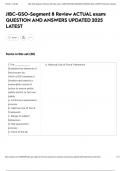
⩥ 2. A GSO may choose to disengage from a situation if there is no
imminent
danger to anyone and there is no compelling reason to control a subject
immediately.
a. True
b. False. Answer: a. True
⩥ 3. The steps in the assessment cycle are: Plan, Negotiate, Act.
a. True
b. False. Answer: b. False
⩥ 4. GSOs should begin assessing a situation
a. While en route to the scene
b. When directed to do so by the supervisor
c. When directed to do so by the police
d. Upon arrival at the scene. Answer: b. When directed to do so by the
supervisor
, ⩥ 5. When assessing a situation, GSOs should consider the availability
of
escape routes.
a. True
b. False. Answer: a. True
⩥ 6. When assessing a situation, GSOs should consider their own overall
fitness only if there are two or more subjects.
a. True
b. False. Answer: b. False
⩥ 7. When assessing time and distance, GSOs should consider
a. The seriousness of the situation
b. The need for immediate action
c. The availability of escape routes
d. All of the above
e. (a) and (b). Answer: d. All of the above
⩥ 8. Increasing the distance between the GSO and the subject
a. Is a sign of fear and weakness on the part of the GSO
b. Is always an appropriate response when there is a serious and
pressing threat to public safety
COMPLETE QUESTIONS AND ANSWERS
GRADED A+
⩥ 2. A GSO may choose to disengage from a situation if there is no
imminent
danger to anyone and there is no compelling reason to control a subject
immediately.
a. True
b. False. Answer: a. True
⩥ 3. The steps in the assessment cycle are: Plan, Negotiate, Act.
a. True
b. False. Answer: b. False
⩥ 4. GSOs should begin assessing a situation
a. While en route to the scene
b. When directed to do so by the supervisor
c. When directed to do so by the police
d. Upon arrival at the scene. Answer: b. When directed to do so by the
supervisor
, ⩥ 5. When assessing a situation, GSOs should consider the availability
of
escape routes.
a. True
b. False. Answer: a. True
⩥ 6. When assessing a situation, GSOs should consider their own overall
fitness only if there are two or more subjects.
a. True
b. False. Answer: b. False
⩥ 7. When assessing time and distance, GSOs should consider
a. The seriousness of the situation
b. The need for immediate action
c. The availability of escape routes
d. All of the above
e. (a) and (b). Answer: d. All of the above
⩥ 8. Increasing the distance between the GSO and the subject
a. Is a sign of fear and weakness on the part of the GSO
b. Is always an appropriate response when there is a serious and
pressing threat to public safety