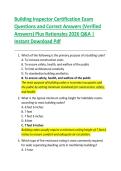
Building Inspector Certification Exam
Questions and Correct Answers (Verified
Answers) Plus Rationales 2026 Q&A |
Instant Download Pdf
1. Which of the following is the primary purpose of a building code?
A. To increase construction costs
B. To ensure safety, health, and welfare of the public
C. To limit architectural creativity
D. To standardize building aesthetics
B. To ensure safety, health, and welfare of the public
The main purpose of building codes is to protect occupants and
the public by setting minimum standards for construction, safety,
and health.
2. What is the typical minimum ceiling height for habitable rooms
according to most building codes?
A. 6 feet 6 inches
B. 7 feet
C. 7 feet 6 inches
D. 8 feet
C. 7 feet 6 inches
Building codes usually require a minimum ceiling height of 7 feet 6
inches to ensure comfort and adequate air circulation.
3. Which type of fire-resistance rating is most commonly required
for walls separating dwelling units in multifamily buildings?
A. 1-hour
, B. 2-hour
C. 3-hour
D. 4-hour
B. 2-hour
Two-hour fire-rated walls are commonly required between
dwelling units to limit fire spread.
4. What is the maximum allowable slope for an accessible ramp?
A. 1:8
B. 1:12
C. 1:16
D. 1:20
B. 1:12
Accessible ramps must have a maximum slope of 1:12, meaning 1
inch of rise for every 12 inches of run, to accommodate
wheelchairs.
5. Which of the following is considered a primary structural element
of a building?
A. Interior partitions
B. Load-bearing walls
C. Ceiling tiles
D. Window trims
B. Load-bearing walls
Load-bearing walls support structural loads and are critical to a
building's stability.
6. When inspecting a foundation, a building inspector should check
for:
A. Proper ventilation only
B. Cracks, water intrusion, and settlement
C. Interior paint quality
, D. Roofing material type
B. Cracks, water intrusion, and settlement
Foundations must be inspected for structural integrity, including
signs of cracking, water damage, and uneven settling.
7. What is the purpose of a vapor barrier in building construction?
A. To prevent air leaks
B. To prevent moisture penetration
C. To enhance insulation color
D. To increase structural strength
B. To prevent moisture penetration
A vapor barrier prevents moisture from entering walls, floors, and
ceilings, reducing mold and material deterioration.
8. Which type of construction is defined as Type I in the
International Building Code (IBC)?
A. Wood-frame construction
B. Heavy timber construction
C. Fire-resistive construction
D. Noncombustible construction
C. Fire-resistive construction
Type I construction is highly fire-resistant, typically using concrete
and protected steel.
9. What is the minimum stair tread depth required in most building
codes?
A. 8 inches
B. 9 inches
C. 10 inches
D. 11 inches
B. 9 inches
, Building codes typically require a minimum tread depth of 9 inches
to ensure safe footing.
10. What is the primary purpose of flashing in roof
construction?
A. To enhance roof aesthetics
B. To prevent water penetration at joints
C. To provide structural support
D. To hold insulation in place
B. To prevent water penetration at joints
Flashing directs water away from roof joints, chimneys, and
openings to prevent leaks.
11. Which of the following is a common sign of termite damage
in wood structures?
A. Cracks in concrete
B. Hollow-sounding wood
C. Rusted nails
D. Peeling paint
B. Hollow-sounding wood
Termite damage often causes wood to sound hollow when tapped
due to internal tunneling.
12. What is the minimum width for a residential hallway
according to most building codes?
A. 30 inches
B. 36 inches
C. 42 inches
D. 48 inches
B. 36 inches
Residential hallways must be at least 36 inches wide for safe
passage and accessibility.
Questions and Correct Answers (Verified
Answers) Plus Rationales 2026 Q&A |
Instant Download Pdf
1. Which of the following is the primary purpose of a building code?
A. To increase construction costs
B. To ensure safety, health, and welfare of the public
C. To limit architectural creativity
D. To standardize building aesthetics
B. To ensure safety, health, and welfare of the public
The main purpose of building codes is to protect occupants and
the public by setting minimum standards for construction, safety,
and health.
2. What is the typical minimum ceiling height for habitable rooms
according to most building codes?
A. 6 feet 6 inches
B. 7 feet
C. 7 feet 6 inches
D. 8 feet
C. 7 feet 6 inches
Building codes usually require a minimum ceiling height of 7 feet 6
inches to ensure comfort and adequate air circulation.
3. Which type of fire-resistance rating is most commonly required
for walls separating dwelling units in multifamily buildings?
A. 1-hour
, B. 2-hour
C. 3-hour
D. 4-hour
B. 2-hour
Two-hour fire-rated walls are commonly required between
dwelling units to limit fire spread.
4. What is the maximum allowable slope for an accessible ramp?
A. 1:8
B. 1:12
C. 1:16
D. 1:20
B. 1:12
Accessible ramps must have a maximum slope of 1:12, meaning 1
inch of rise for every 12 inches of run, to accommodate
wheelchairs.
5. Which of the following is considered a primary structural element
of a building?
A. Interior partitions
B. Load-bearing walls
C. Ceiling tiles
D. Window trims
B. Load-bearing walls
Load-bearing walls support structural loads and are critical to a
building's stability.
6. When inspecting a foundation, a building inspector should check
for:
A. Proper ventilation only
B. Cracks, water intrusion, and settlement
C. Interior paint quality
, D. Roofing material type
B. Cracks, water intrusion, and settlement
Foundations must be inspected for structural integrity, including
signs of cracking, water damage, and uneven settling.
7. What is the purpose of a vapor barrier in building construction?
A. To prevent air leaks
B. To prevent moisture penetration
C. To enhance insulation color
D. To increase structural strength
B. To prevent moisture penetration
A vapor barrier prevents moisture from entering walls, floors, and
ceilings, reducing mold and material deterioration.
8. Which type of construction is defined as Type I in the
International Building Code (IBC)?
A. Wood-frame construction
B. Heavy timber construction
C. Fire-resistive construction
D. Noncombustible construction
C. Fire-resistive construction
Type I construction is highly fire-resistant, typically using concrete
and protected steel.
9. What is the minimum stair tread depth required in most building
codes?
A. 8 inches
B. 9 inches
C. 10 inches
D. 11 inches
B. 9 inches
, Building codes typically require a minimum tread depth of 9 inches
to ensure safe footing.
10. What is the primary purpose of flashing in roof
construction?
A. To enhance roof aesthetics
B. To prevent water penetration at joints
C. To provide structural support
D. To hold insulation in place
B. To prevent water penetration at joints
Flashing directs water away from roof joints, chimneys, and
openings to prevent leaks.
11. Which of the following is a common sign of termite damage
in wood structures?
A. Cracks in concrete
B. Hollow-sounding wood
C. Rusted nails
D. Peeling paint
B. Hollow-sounding wood
Termite damage often causes wood to sound hollow when tapped
due to internal tunneling.
12. What is the minimum width for a residential hallway
according to most building codes?
A. 30 inches
B. 36 inches
C. 42 inches
D. 48 inches
B. 36 inches
Residential hallways must be at least 36 inches wide for safe
passage and accessibility.