
Olivia Jones Concept Map Worksheet. Case Study. Complete Solution.
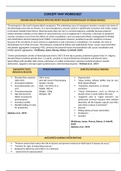
CONCEPT MAP WORKSHEET DESCRIBE DISEASE PROCESS AFFECTING PATIENT (INCLUDE PATHOPHYSIOLOGY OF DISEASE PROCESS) “Preeclampsia is the result of generalized vasospasms. The underlying cause of vasospasm remains a mystery, but some of the physiologic processes are known. In a normal pregnancy, vascular volume is significantly increased, and cardiac output is increased. Despite these factors, blood pressure does not rise in a normal pregnancy, probably because pregnant women develop resistance to the effects of vasoconstrictors such as angiotensin II. Moreover, a decrease in peripheral vascular resistance occurs from the effects of certain vasodilators, such as prostacyclin (PGI2), prostaglandin E2 (PGE2), and endothelium-derived relaxing factor (EDRF). In preeclampsia, however, peripheral vascular resistance increases because of the sensitivity of some women to angiotensin II and a decrease in vasodilators. For example, the ratio of thromboxane A2 to PGI2 increases. Thromboxane, produced by kidney and trophoblastic tissue, causes vasoconstriction and platelet aggregation (clumping)/ PGI2, produced by placental tissue and endothelial cells causes vasodilation and inhibits platelet aggregation.” (McKinney, James, Murray, Nelson, & Ashwill, 2018) “Severe preeclampsia consists of blood pressure that is 160/110 mm Hg or greater, proteinuria greater than 3+, oliguria, elevated blood creatinine greater than 1.1 mg/dL, cerebral or visual disturbances (headache and blurred vision, hyperreflexia with possible ankle clonus, pulmonary or cardiac involvement, extensive peripheral edema, hepatic dysfunction, epigastric and right upper-quadrant pain, and thrombocytopenia.” (Holman et al., 2019) DIAGNOSTIC TESTS (REASON & RESULTS) PATIENT INFORMATION EXPECTED PHYSICAL FINDINGS Elevated liver enzymes (LDH, AST) Increased creatinine Increased plasma uric acid Thrombocytopenia Hgb (decreased in HELLP, increased in preeclampsia) Chemistry profile Dipstick testing of urine for proteinuria (Holman et al., 2019) Olivia Jones Adm DX: Severe Preeclampsia Gender: Female DOB: 7/6/1996 (23 y) Height: 168 cm Weight: 110kg Allergies: NA Hypertension “Deep tendon reflexes (DTRs) may be very brisk (hyperreflexia) “headache, drowsiness, or mental confusion.” “Visual disturbances, such as blurred or double vision or spots before the eyes.” “epigastric pain or “upset stomach”, are particularly ominous because they indicate distention off the hepatic capsule and often warn that a seizure is imminent.” Seizures Pitting edema of lower extremities Proteinuria Jaundice (McKinney, James, Murray, Nelson, & Ashwill, 2018) (Holman et al., 2019) ANTICIPATED NURSING INTERVENTIONS “Preform actions that reduce the risk of seizures and prevent maternal or fetal injury if seizures do occur.” “Monitor for signs of impending seizures.” Keeping the lights low and visitors at a minimum. “assess level of consciousness”
Información del documento
- Subido en
- 18 de marzo de 2021
- Número de páginas
- 11
- Escrito en
- 2020/2021
- Tipo
- Caso
- Profesor(es)
- Prof.
- Grado
- A+

