1
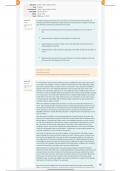
Unit Test: Cultures in Conflict
Q1: In the “Shooting an Elephant,” Orwell faces an inner battle of upholding the image of
a colonial officer that is expected to exercise power over the people while in his heart and mind
he knows that it is wrong. He does not wish to shoot the elephant but he feels the pressure of the
Burmese people to perform as the British Empire is expected to perform. This is the revelation
that colonialism is a vice that affects both the subjugated and the subjugator; the former gets to
understand that he is a mere pawn in the eyes of imperialism. On the other hand, Gideon in “No
Witchcraft for Sale” has a conflict in culture. He is a native African servant with the knowledge
of traditional African medicine and decides to withhold a useful medicine for the white scientists
who are demanding for it. His decision is a way of fighting colonialism and asserting his
indigenous people’s worth and humanity. Orwell is coerced into performing an action that is
against his principles, while Gideon, although he is powerless, maintains control by not speaking
up and thus asserting his dominance and cultural superiority.
Q2: The conflict of the modern world and the traditional culture is also evident in the
short story “Marriage Is a Private Affair” by Chinua Achebe and the excerpt from Nectar in a
Sieve by Kamala Markandaya. As for the conflict, it is evident that the main conflict of the story
is between the generations and cultural expectations of marriage. Nnaemeka, a young man with a
self-reliant attitude of the modern world, decides to marry a woman he loves rather than do what
his father expects him to do, marry a woman who has been chosen for him. This leads to a
conflict with his father, who disapproves of the relationship in the beginning. Likewise, in Nectar
in a Sieve, modernization is represented by industrialization, a tannery that interferes with the
rural village’s lifestyle. The agrarian lifestyle of the characters, especially Rukmani and her
Unit Test: Cultures in Conflict
Q1: In the “Shooting an Elephant,” Orwell faces an inner battle of upholding the image of
a colonial officer that is expected to exercise power over the people while in his heart and mind
he knows that it is wrong. He does not wish to shoot the elephant but he feels the pressure of the
Burmese people to perform as the British Empire is expected to perform. This is the revelation
that colonialism is a vice that affects both the subjugated and the subjugator; the former gets to
understand that he is a mere pawn in the eyes of imperialism. On the other hand, Gideon in “No
Witchcraft for Sale” has a conflict in culture. He is a native African servant with the knowledge
of traditional African medicine and decides to withhold a useful medicine for the white scientists
who are demanding for it. His decision is a way of fighting colonialism and asserting his
indigenous people’s worth and humanity. Orwell is coerced into performing an action that is
against his principles, while Gideon, although he is powerless, maintains control by not speaking
up and thus asserting his dominance and cultural superiority.
Q2: The conflict of the modern world and the traditional culture is also evident in the
short story “Marriage Is a Private Affair” by Chinua Achebe and the excerpt from Nectar in a
Sieve by Kamala Markandaya. As for the conflict, it is evident that the main conflict of the story
is between the generations and cultural expectations of marriage. Nnaemeka, a young man with a
self-reliant attitude of the modern world, decides to marry a woman he loves rather than do what
his father expects him to do, marry a woman who has been chosen for him. This leads to a
conflict with his father, who disapproves of the relationship in the beginning. Likewise, in Nectar
in a Sieve, modernization is represented by industrialization, a tannery that interferes with the
rural village’s lifestyle. The agrarian lifestyle of the characters, especially Rukmani and her