

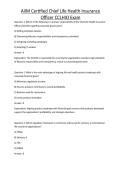
AIIM Certified Chief Life Health Insurance
Officer CCLHIO Exam
Question 1. Which of the following is a primary responsibility of the Chief Life Health Insurance
Officer (CCLHIO) regarding corporate governance?
A) Setting employee salaries
B) Overseeing fiduciary responsibilities and transparency standards
C) Designing marketing campaigns
D) Selecting IT vendors
Answer: B
Explanation: The CCLHIO is responsible for ensuring the organization maintains high standards
of fiduciary responsibility and transparency, critical to corporate governance.
Question 2. What is the main advantage of aligning life and health product roadmaps with
corporate financial goals?
A) Minimizes regulatory scrutiny
B) Ensures products contribute to overall profitability
C) Reduces need for reinsurance
D) Limits product innovation
Answer: B
Explanation: Aligning product roadmaps with financial goals ensures that products developed
support the organization's profitability and strategic objectives.
Question 3. Which regulatory framework is commonly referenced for solvency in international
life insurance organizations?
A) HIPAA
B) Solvency II
C) FSA
D) FINRA
Answer: B
, AIIM Certified Chief Life Health Insurance
Officer CCLHIO Exam
Explanation: Solvency II is an international regulatory framework aimed at ensuring insurance
companies hold enough capital to reduce insolvency risk.
Question 4. When managing relationships with national insurance regulators, what is a key
component of compliance for the CCLHIO?
A) Ignoring changes in regulations
B) Regular reporting and transparency
C) Minimizing communication
D) Outsourcing compliance entirely
Answer: B
Explanation: Regular reporting and transparency help maintain compliance and build trust with
regulators.
Question 5. What is a critical ethical standard for sales practices in life and health insurance?
A) Maximizing sales at any cost
B) Misrepresenting policy features
C) Treating policyholders fairly and honestly
D) Withholding risk information
Answer: C
Explanation: Ethical sales practices require fairness and honesty in all interactions with
policyholders.
Question 6. In developing multi-year strategic plans, which factor is essential for accurate
forecasting in life insurance?
A) Personal bias
B) Market trends and demographic shifts
C) Ignoring economic indicators
, AIIM Certified Chief Life Health Insurance
Officer CCLHIO Exam
D) Using outdated models
Answer: B
Explanation: Market trends and demographic shifts provide the data needed for accurate long-
term strategic planning.
Question 7. What is the primary purpose of board-level reporting on profitability?
A) To obscure financial losses
B) To ensure accountability and informed decision-making
C) To confuse shareholders
D) To avoid regulatory oversight
Answer: B
Explanation: Board-level reporting ensures accountability and enables the board to make
informed decisions about company strategy.
Question 8. Which of the following is a key component of anti-money laundering (AML)
oversight in insurance?
A) Ignoring suspicious transactions
B) Implementation of Know Your Customer (KYC) protocols
C) Allowing anonymous policy purchases
D) Focusing only on premium payments
Answer: B
Explanation: KYC protocols are essential for AML oversight, helping to prevent illegal financial
activities.
Question 9. What distinguishes Treaty from Facultative reinsurance in life insurance?
A) Treaty covers individual policies only
, AIIM Certified Chief Life Health Insurance
Officer CCLHIO Exam
B) Facultative is automatic for all risks
C) Treaty reinsurance covers a portfolio, Facultative covers individual risks
D) Facultative is less flexible than Treaty
Answer: C
Explanation: Treaty reinsurance applies to a portfolio of risks, while Facultative reinsurance is
negotiated for each individual risk.
Question 10. Which product type provides permanent coverage and accumulates cash value?
A) Term Life
B) Whole Life
C) Accidental Death
D) Hospital Cash
Answer: B
Explanation: Whole Life insurance offers lifelong coverage and builds cash value over time.
Question 11. What is the main risk addressed by mortality tables in actuarial oversight?
A) Market risk
B) Longevity risk
C) Operational risk
D) Credit risk
Answer: B
Explanation: Mortality tables help actuaries manage longevity risk, which affects the expected
duration and payout of policies.
Question 12. Which type of policy rider allows policyholders to stop premium payments if they
become disabled?
Officer CCLHIO Exam
Question 1. Which of the following is a primary responsibility of the Chief Life Health Insurance
Officer (CCLHIO) regarding corporate governance?
A) Setting employee salaries
B) Overseeing fiduciary responsibilities and transparency standards
C) Designing marketing campaigns
D) Selecting IT vendors
Answer: B
Explanation: The CCLHIO is responsible for ensuring the organization maintains high standards
of fiduciary responsibility and transparency, critical to corporate governance.
Question 2. What is the main advantage of aligning life and health product roadmaps with
corporate financial goals?
A) Minimizes regulatory scrutiny
B) Ensures products contribute to overall profitability
C) Reduces need for reinsurance
D) Limits product innovation
Answer: B
Explanation: Aligning product roadmaps with financial goals ensures that products developed
support the organization's profitability and strategic objectives.
Question 3. Which regulatory framework is commonly referenced for solvency in international
life insurance organizations?
A) HIPAA
B) Solvency II
C) FSA
D) FINRA
Answer: B
, AIIM Certified Chief Life Health Insurance
Officer CCLHIO Exam
Explanation: Solvency II is an international regulatory framework aimed at ensuring insurance
companies hold enough capital to reduce insolvency risk.
Question 4. When managing relationships with national insurance regulators, what is a key
component of compliance for the CCLHIO?
A) Ignoring changes in regulations
B) Regular reporting and transparency
C) Minimizing communication
D) Outsourcing compliance entirely
Answer: B
Explanation: Regular reporting and transparency help maintain compliance and build trust with
regulators.
Question 5. What is a critical ethical standard for sales practices in life and health insurance?
A) Maximizing sales at any cost
B) Misrepresenting policy features
C) Treating policyholders fairly and honestly
D) Withholding risk information
Answer: C
Explanation: Ethical sales practices require fairness and honesty in all interactions with
policyholders.
Question 6. In developing multi-year strategic plans, which factor is essential for accurate
forecasting in life insurance?
A) Personal bias
B) Market trends and demographic shifts
C) Ignoring economic indicators
, AIIM Certified Chief Life Health Insurance
Officer CCLHIO Exam
D) Using outdated models
Answer: B
Explanation: Market trends and demographic shifts provide the data needed for accurate long-
term strategic planning.
Question 7. What is the primary purpose of board-level reporting on profitability?
A) To obscure financial losses
B) To ensure accountability and informed decision-making
C) To confuse shareholders
D) To avoid regulatory oversight
Answer: B
Explanation: Board-level reporting ensures accountability and enables the board to make
informed decisions about company strategy.
Question 8. Which of the following is a key component of anti-money laundering (AML)
oversight in insurance?
A) Ignoring suspicious transactions
B) Implementation of Know Your Customer (KYC) protocols
C) Allowing anonymous policy purchases
D) Focusing only on premium payments
Answer: B
Explanation: KYC protocols are essential for AML oversight, helping to prevent illegal financial
activities.
Question 9. What distinguishes Treaty from Facultative reinsurance in life insurance?
A) Treaty covers individual policies only
, AIIM Certified Chief Life Health Insurance
Officer CCLHIO Exam
B) Facultative is automatic for all risks
C) Treaty reinsurance covers a portfolio, Facultative covers individual risks
D) Facultative is less flexible than Treaty
Answer: C
Explanation: Treaty reinsurance applies to a portfolio of risks, while Facultative reinsurance is
negotiated for each individual risk.
Question 10. Which product type provides permanent coverage and accumulates cash value?
A) Term Life
B) Whole Life
C) Accidental Death
D) Hospital Cash
Answer: B
Explanation: Whole Life insurance offers lifelong coverage and builds cash value over time.
Question 11. What is the main risk addressed by mortality tables in actuarial oversight?
A) Market risk
B) Longevity risk
C) Operational risk
D) Credit risk
Answer: B
Explanation: Mortality tables help actuaries manage longevity risk, which affects the expected
duration and payout of policies.
Question 12. Which type of policy rider allows policyholders to stop premium payments if they
become disabled?

