

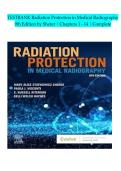
TESTBANK Radiation Protection in Medical Radiography
9th Edition by Sherer | Chapters 1 - 14 | Complete
,TABLE OF CONTENTS u u
1. Introduction to Radiation Protection
u u u
2. Radiation: Types, Sources, and Doses Received
u u u u u
3. Interaction of X-Radiation with Matter
u u u u
4. Radiation Quantities and Units
u u u
5. Radiation Monitoring
u
6. Overview of Cell Biology
u u u
7. Molecular and Cellular Radiation Biology
u u u u
8. Early Tissue Reactions and Their Effects on Organ Systems
u u u u u u u u
9. Stochastic Effects and Late Tissue Reactions of Radiation in Organ Systems
u u u u u u u u u u
10. Equipment Design for Radiation Protection
u u u u
11. Management of Patient Radiation Dose During Diagnostic X-Ray Procedures
u u u u u u u u
12. Radiation Safety in Computed Tomography and Mammography
u u u u u u
13. Management of Imaging Personnel Radiation Dose During Diagnostic X-Ray Procedures
u u u u u u u u u
14. Radioisotopes and Radiation Protection u u u
,Chapter 01: Introduction to Radiation Protection
u u u u u
Sherer: Radiation Protection in Medical Radiography, 9th Edition
u u u u u u u
MULTIPLE CHOICE u
1. Consequences of ionization in human cells include u u u u u u
1. creation of unstable atoms. u u u
2. production of free electrons. u u u
3. creation of highly reactive free radicals capable of producing substances poisonous to th
u u u u u u u u u u u u
e cell.
u
4. creation of new biologic molecules detrimental to the living cell.
u u u u u u u u u
5. injury to the cell that may manifest itself as abnormal function or loss of function.
u u u u u u u u u u u u u u
a.
1, 2, and 3 only u u u u
b.
2, 3, and 4 only u u u u
c.
3, 4, and 5 only u u u u
d. 1, 2, 3, 4, and 5
u u u u u u
ANSWER: D u
2. Which of the following is a form of radiation that is capable of creating electrically ch
u u u u u u u u u u u u u u u
arged particles by removing orbital electrons from the atom of normal matter throu
u u u u u u u u u u u u
gh which it passes?
u u u
a.
Ionizing radiation u
b.
Nonionizing radiation u
c.
Subatomic radiation u
d.
Ultrasonic radiation u
ANSWER: A u
3. Regarding exposure to ionizing radiation, patients who are educated to understand the m
u u u u u u u u u u u u
edical benefit of an imaging procedure are more likely to
u u u u u u u u u
a.
assume a small chance of biologic damage but not suppress any radiati u u u u u u u u u u u
on phobia they may have.
u u u u
b.
cancel their scheduled procedure because they are not willing to assum u u u u u u u u u u
e a small chance of biologic damage.
u u u u u u
c.
suppress any radiation phobia but not risk a small chance of possi u u u u u u u u u u u
ble biologic damage.
u u
d.
suppress any radiation phobia and be willing to assume a small chance u u u u u u u u u u u u
of possible biologic damage.
u u u
ANSWER: D u
4. The millisievert (mSv) is equal to
u u u u u
a.
1/10 of a sievert. u u u
b.
1/100 of a sievert. u u u
c.
1/1000 of a sievert. u u u
d.
1/10,000 of a sievert. u u u
, ANSWER: C
u
9th Edition by Sherer | Chapters 1 - 14 | Complete
,TABLE OF CONTENTS u u
1. Introduction to Radiation Protection
u u u
2. Radiation: Types, Sources, and Doses Received
u u u u u
3. Interaction of X-Radiation with Matter
u u u u
4. Radiation Quantities and Units
u u u
5. Radiation Monitoring
u
6. Overview of Cell Biology
u u u
7. Molecular and Cellular Radiation Biology
u u u u
8. Early Tissue Reactions and Their Effects on Organ Systems
u u u u u u u u
9. Stochastic Effects and Late Tissue Reactions of Radiation in Organ Systems
u u u u u u u u u u
10. Equipment Design for Radiation Protection
u u u u
11. Management of Patient Radiation Dose During Diagnostic X-Ray Procedures
u u u u u u u u
12. Radiation Safety in Computed Tomography and Mammography
u u u u u u
13. Management of Imaging Personnel Radiation Dose During Diagnostic X-Ray Procedures
u u u u u u u u u
14. Radioisotopes and Radiation Protection u u u
,Chapter 01: Introduction to Radiation Protection
u u u u u
Sherer: Radiation Protection in Medical Radiography, 9th Edition
u u u u u u u
MULTIPLE CHOICE u
1. Consequences of ionization in human cells include u u u u u u
1. creation of unstable atoms. u u u
2. production of free electrons. u u u
3. creation of highly reactive free radicals capable of producing substances poisonous to th
u u u u u u u u u u u u
e cell.
u
4. creation of new biologic molecules detrimental to the living cell.
u u u u u u u u u
5. injury to the cell that may manifest itself as abnormal function or loss of function.
u u u u u u u u u u u u u u
a.
1, 2, and 3 only u u u u
b.
2, 3, and 4 only u u u u
c.
3, 4, and 5 only u u u u
d. 1, 2, 3, 4, and 5
u u u u u u
ANSWER: D u
2. Which of the following is a form of radiation that is capable of creating electrically ch
u u u u u u u u u u u u u u u
arged particles by removing orbital electrons from the atom of normal matter throu
u u u u u u u u u u u u
gh which it passes?
u u u
a.
Ionizing radiation u
b.
Nonionizing radiation u
c.
Subatomic radiation u
d.
Ultrasonic radiation u
ANSWER: A u
3. Regarding exposure to ionizing radiation, patients who are educated to understand the m
u u u u u u u u u u u u
edical benefit of an imaging procedure are more likely to
u u u u u u u u u
a.
assume a small chance of biologic damage but not suppress any radiati u u u u u u u u u u u
on phobia they may have.
u u u u
b.
cancel their scheduled procedure because they are not willing to assum u u u u u u u u u u
e a small chance of biologic damage.
u u u u u u
c.
suppress any radiation phobia but not risk a small chance of possi u u u u u u u u u u u
ble biologic damage.
u u
d.
suppress any radiation phobia and be willing to assume a small chance u u u u u u u u u u u u
of possible biologic damage.
u u u
ANSWER: D u
4. The millisievert (mSv) is equal to
u u u u u
a.
1/10 of a sievert. u u u
b.
1/100 of a sievert. u u u
c.
1/1000 of a sievert. u u u
d.
1/10,000 of a sievert. u u u
, ANSWER: C
u

