100% de satisfacción garantizada Inmediatamente disponible después del pago Tanto en línea como en PDF No estas atado a nada 4,6 TrustPilot
logo-home
Examen

Engineering Manufacture OCR R109 | Questions with Verified Answers

Puntuación
-
Vendido
-
Páginas
13
Grado
A
Subido en
17-01-2026
Escrito en
2025/2026

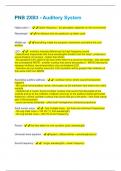
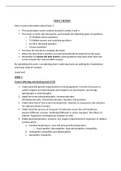
Engineering Manufacture OCR R109 | Questions with Verified Answers The ability for a material to withstand a force that is applied to it Strength The ability for a material to withstand a force that pulls it Tensile strength The ability for a material to withstand a force that squeezes it Compressive strength The ability for a material to resist wear or being scratched Hardness The ability for a material to not break when a force is applied to it suddenly Toughness The ease with which a material can be machined with an acceptable surface finish without damaging the tool Machinability The ability for a material to deform and be hammered into shape under stress without breaking, relates to the materials compressive strength Malleability The ability for a material to be stretched and drawn under stress into a wire, relates to the materials tensile strength Ductility The ability for a material to transfer heat or electricity Conductivity The opposite of conductivity so the ability for a material to resist the transfer heat or electricity Resistivity A material or metal's ability to resist attack by other elements and chemicals. Corrosion resistance The ability of a material to bounce back after removing deforming forces Elasticity The ability for a material to acquire permanent deformation after the removal of a force, it happens when the object loses elasticity Plasticity A metal that contains iron, is usually silvery-grey in colour, is prone to rusting and corrosion and is magnetic (except stainless steel) Ferrous metal A metal that does not contain iron, has good corrosion resistance but does tarnish and is non-magnetic Non-ferrous metal A mixture of two or more metallic elements which gives enhanced properties Alloy A shiny, soft, malleable, ductile and strong metal and used to make steels and girders Iron Ductile, malleable, prone to rusting Used to make car bodies, girders, gates Mild Steel (Low carbon steel) Hard, strong Used for hand tools like screwdrivers and hammers High carbon steel Resistant to corrosion, does not rust, with chromium Used for cutlery, kitchen sinks, surgical instruments Stainless steel Resistant to wear but brittle Used for drill bits, lathe cutting tools High-speed steel Molten impure iron from blast furnace for moulds, good compressive strength but brittle Used for brake discs, machine bases, vices, manhole covers, engine blocks Cast iron Ductile, malleable, excellent conductor, reddish brown, corrosion resistant Used for pipes, wire, cookware Copper Well cast and good machinability, corrosion resistant, conducts heat well, alloy of copper and zinc Used for musical instruments, screws, water fittings Brass Hard, brittle, very corrosion resistant, copper and tin Used for statues, coins, bearings, underwater fittings Bronze Lightweight, malleable, ductile, good corrosion resistance, good conductivity, low density, common Used for aircraft bodies, drinks cans, cooking foil, window frames Aluminium alloys Resistant to corrosion but weak by itself so used for galvanising to make other material corrosion resistant Zinc Ductile, malleable, resistant to corrosion Used for tin-plating for steel food cans against corrosion Tin Soft, dense, malleable, tarnishes Batteries, x-ray shielding, weights, roofing Lead Lightweight, strong, corrosion resistant Used for drill bits, bikes, aircraft Titanium Alloy of lead and tin, low melting points Used for plumbing, joining electronic components Solder Polymers that can be softened by heating Thermoplastics Polymers that cannot be remelted as they have cross-links between layers Thermosetting polymers Tough, corrosion resistant, impact resistant, low melting point Used for toys, protective headgear, canoes Acrylonitrile Butadiene Styrene (ABS) HDPE is strong, stiff Used for pipes, buckets, bowels LDPE is flexible, soft, tough Used for plastic bags, plastic film Polyethylene Light, strong, resistive Used for vacuum forming in school, packaging High Impact Polystyrene (HIPS) Stiff, hard-wearing Used for pipes, electrical cable jackets, packaging Polyvinyl Chloride (PVC) Strong, elastic, tough, lightweight, colourfast, durable Used for clothing, carpets, sportswear, upholstery Nylon Low density, tough, flexible Used for ropes, carpets, packaging Polypropelene Strong, stiff, hard, tough, transparent, heat and impact resistant Used for eyewear, bullet-proof glass Polycarbonate Insulator, stiff, hard, brittle if not reinforced with glass fibre to form GRP Used for car bodies, boats Polyester resin Hard, strong, stiff, insulator, brittle Used for plug sockets, electrical switches, door handles Urea formaldehyde Resin with hardener, hard, brittle if not reinforced, corrosion resistant Used for printed circuit boards, epoxy adhesives Epoxy resin Very good heat resistance, very dark, hard, quite brittle Used for saucepan handles, electrical fittings, adhesives Phenol Formaldehyde Refractory, inorganic and nonmetallic material made from clay and other cominations of minerals baked at high temperatures Ceramics Hard, abrasion resistant, high melting point Used for cutting tool tips, jewellery Tungsten carbide Heat resistant, transparent, corrosion resistant Jars, glasses, window panes Glass Silicon nitride, low conductivity, high heat resistance Ceramic bearing material Strong, lightweight, insulator Used for water tanks, surfboards, boats Glass reinforced plastic (GRP) A material that combines two or more different materials to make one with better properties Composite Strong, stiff, lightweight, conductor Used for aircraft, racecars, bicycle frames Carbon fibre Strong, durable Used for buildings, bridges, roads, dams, kerbs Concrete Materials that change in properties in response to stimuli Smart materials definition Shape memory alloys are metals that when deformed, can spring back into its original shape with heat. Used for fire alarm systems, and nitinol for stents, dental braces Shape-memory alloys Materials or inks that change colour in response to temperature change Temperature indicators, children's cups, mood rings Thermochromic Materials Same as the alloys in function Used for selectively pliable tools Shape memory plastics Becomes a conductor when squeezed Used for membrane switches on phones, pressure sensors Quantum tunnelling composite (QTC) Nanomaterials are tiny particles that can be used to deliver drugs around the body through the bloodstream, dirt-repellent coatings Nanotechnology Superalloys such as nickel superalloy are able to operate at a high fraction of their melting point Used in aerospace and marine turbine engines Advanced metal alloys The object is permanently damaged and mechanical tests such as the following are carried out to find the : - Hardness tests include Brinell hardness test where a load is applied to a specimen with a tungsten carbide or hardened steel ball and the diameter is measure and converted into a Brinell hardness number. There is also a Rockwell hardness test an indenter causes applies a minor and then major force with the difference being the hardness value, harder material is harder number - There is also fatigue testing where a material is continuously acted on until is breaks and creep testing where a material is under stress for prolonged periods of time under heat Destructive testing Allows for the sample to be used again and can check for internal damage -Electromagnetic testing -Visual testing -Laser testing -Leak testing -Magnetic flux testing Non-destructive Testing Relative cost Availability Ease of use Safety in use Forms of supply Sustainability Characteristics of engineering materials Excess material is removed from a stock Sawing, filing , threading Material Removal Processes Abrasive cutting in which a toothed saw blade removes a kerf of material Sawing Particles rubbed off when smoothing or shaping with a file Filing Cutting material with a tap-wrench to create a screw thread Threading Deforming an object, stretching and shrinking a metal Forging, casting, bending Hand forming techniques A process by which metal is heated and shaped by plastic deformation by suitably applying compressive force. Forging

Mostrar más Leer menos
Institución
OCR R109
Grado
OCR R109


Ups! No podemos cargar tu documento ahora. Inténtalo de nuevo o contacta con soporte.

Escuela, estudio y materia

Institución
OCR R109
Grado
OCR R109

Información del documento

Subido en
17 de enero de 2026
Número de páginas
13
Escrito en
2025/2026
Tipo
Examen
Contiene
Preguntas y respuestas

Temas

Vista previa del contenido

Engineering Manufacture OCR R109


The ability for a material to withstand a force that is applied to it
Strength

The ability for a material to withstand a force that pulls it
Tensile strength

The ability for a material to withstand a force that squeezes it
Compressive strength

The ability for a material to resist wear or being scratched
Hardness

The ability for a material to not break when a force is applied to it suddenly
Toughness

The ease with which a material can be machined with an acceptable surface finish
without damaging the tool
Machinability

The ability for a material to deform and be hammered into shape under stress without
breaking, relates to the materials compressive strength
Malleability

The ability for a material to be stretched and drawn under stress into a wire, relates to
the materials tensile strength
Ductility

The ability for a material to transfer heat or electricity
Conductivity

The opposite of conductivity so the ability for a material to resist the transfer heat or
electricity
Resistivity

A material or metal's ability to resist attack by other elements and chemicals.
Corrosion resistance

The ability of a material to bounce back after removing deforming forces
Elasticity

, The ability for a material to acquire permanent deformation after the removal of a force,
it happens when the object loses elasticity
Plasticity

A metal that contains iron, is usually silvery-grey in colour, is prone to rusting and
corrosion and is magnetic (except stainless steel)
Ferrous metal

A metal that does not contain iron, has good corrosion resistance but does tarnish and
is non-magnetic
Non-ferrous metal

A mixture of two or more metallic elements which gives enhanced properties
Alloy

A shiny, soft, malleable, ductile and strong metal and used to make steels and girders
Iron

Ductile, malleable, prone to rusting
Used to make car bodies, girders, gates

Mild Steel (Low carbon steel)
Hard, strong

Used for hand tools like screwdrivers and hammers
High carbon steel

Resistant to corrosion, does not rust, with chromium
Used for cutlery, kitchen sinks, surgical instruments
Stainless steel

Resistant to wear but brittle
Used for drill bits, lathe cutting tools
High-speed steel

Molten impure iron from blast furnace for moulds, good compressive strength but brittle
Used for brake discs, machine bases, vices, manhole covers, engine blocks
Cast iron

Ductile, malleable, excellent conductor, reddish brown, corrosion resistant
Used for pipes, wire, cookware
Copper

Well cast and good machinability, corrosion resistant, conducts heat well, alloy of
copper and zinc
Used for musical instruments, screws, water fittings

$22.49
Accede al documento completo:

100% de satisfacción garantizada
Inmediatamente disponible después del pago
Tanto en línea como en PDF
No estas atado a nada

Conoce al vendedor

Seller avatar
Los indicadores de reputación están sujetos a la cantidad de artículos vendidos por una tarifa y las reseñas que ha recibido por esos documentos. Hay tres niveles: Bronce, Plata y Oro. Cuanto mayor reputación, más podrás confiar en la calidad del trabajo del vendedor.
Jumuja Liberty University
Seguir Necesitas iniciar sesión para seguir a otros usuarios o asignaturas
Vendido
550
Miembro desde
4 año
Número de seguidores
415
Documentos
2672
Última venta
1 día hace

3.9

116 reseñas

5
61
4
15
3
20
2
4
1
16

Recientemente visto por ti

Por qué los estudiantes eligen Stuvia

Creado por compañeros estudiantes, verificado por reseñas

Calidad en la que puedes confiar: escrito por estudiantes que aprobaron y evaluado por otros que han usado estos resúmenes.

¿No estás satisfecho? Elige otro documento

¡No te preocupes! Puedes elegir directamente otro documento que se ajuste mejor a lo que buscas.

Paga como quieras, empieza a estudiar al instante

Sin suscripción, sin compromisos. Paga como estés acostumbrado con tarjeta de crédito y descarga tu documento PDF inmediatamente.

Student with book image

“Comprado, descargado y aprobado. Así de fácil puede ser.”

Alisha Student

Preguntas frecuentes