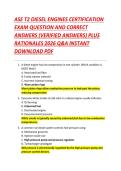
ASE AUTOMOBILE TECHNICIAN A8
ENGINE PERFORMANCE PRACTICE
EXAM QUESTION AND CORRECT
ANSWERS (VERIFIED ANSWERS) PLUS
RATIONALES 2026 Q&A INSTANT
DOWNLOAD PDF
1. A scan tool shows a long-term fuel trim of +18% at idle that drops to near
0% at 2500 RPM. What is the most likely cause?
A. Restricted exhaust
B. Faulty MAP sensor
C. Vacuum leak
D. Leaking injector
Answer: C. Vacuum leak
Rationale: A vacuum leak has the greatest effect at idle, causing lean
conditions and high positive fuel trim that diminish at higher RPM.
2. An engine has good spark and fuel pressure but will not start. Injector pulse
is missing. Which input is most critical for injector operation?
A. MAP sensor
B. Crankshaft position sensor
C. Coolant temperature sensor
D. Oxygen sensor
Answer: B. Crankshaft position sensor
Rationale: The PCM needs crankshaft position input to determine engine
speed and timing for injector operation.
3. Which sensor is primarily used to detect engine load in a speed-density
system?
, A. MAF
B. MAP
C. TPS
D. O2 sensor
Answer: B. MAP
Rationale: Speed-density systems calculate load using manifold absolute
pressure and engine speed.
4. A clogged catalytic converter will most likely cause:
A. Low idle speed only
B. Excessive oil consumption
C. Loss of power at higher RPM
D. Hard cold starting
Answer: C. Loss of power at higher RPM
Rationale: Exhaust restriction limits airflow most noticeably under higher
load and speed.
5. A vehicle has black smoke from the exhaust and poor fuel economy. Which
condition is most likely?
A. Lean mixture
B. Rich mixture
C. Vacuum leak
D. Low fuel pressure
Answer: B. Rich mixture
Rationale: Black smoke and poor fuel economy indicate excessive fuel
delivery.
6. Which component controls idle speed on most late-model vehicles?
A. Idle air control valve or electronic throttle
B. PCV valve
C. EGR valve
D. Fuel pressure regulator
Answer: A. Idle air control valve or electronic throttle
Rationale: Idle speed is regulated by controlling airflow around or through
the throttle.
, 7. A stuck-open EGR valve at idle will cause:
A. High idle speed
B. Detonation
C. Rough idle or stalling
D. No effect
Answer: C. Rough idle or stalling
Rationale: Exhaust gas entering at idle dilutes the mixture and disrupts
combustion.
8. What does a flashing MIL usually indicate?
A. Emissions failure only
B. Pending code
C. Severe misfire
D. Low battery voltage
Answer: C. Severe misfire
Rationale: A flashing MIL warns of catalyst-damaging misfires.
9. Which sensor provides feedback for closed-loop fuel control?
A. TPS
B. MAP
C. Oxygen sensor
D. Crank sensor
Answer: C. Oxygen sensor
Rationale: O2 sensors inform the PCM about exhaust oxygen content for
mixture correction.
10.Low fuel pressure will most likely cause:
A. Rich condition
B. Lean condition
C. High idle
D. Detonation only at idle
Answer: B. Lean condition
Rationale: Insufficient fuel pressure reduces injector flow, creating a lean
mixture.
11.Which test best checks an ignition coil under load?
A. Ohmmeter test
ENGINE PERFORMANCE PRACTICE
EXAM QUESTION AND CORRECT
ANSWERS (VERIFIED ANSWERS) PLUS
RATIONALES 2026 Q&A INSTANT
DOWNLOAD PDF
1. A scan tool shows a long-term fuel trim of +18% at idle that drops to near
0% at 2500 RPM. What is the most likely cause?
A. Restricted exhaust
B. Faulty MAP sensor
C. Vacuum leak
D. Leaking injector
Answer: C. Vacuum leak
Rationale: A vacuum leak has the greatest effect at idle, causing lean
conditions and high positive fuel trim that diminish at higher RPM.
2. An engine has good spark and fuel pressure but will not start. Injector pulse
is missing. Which input is most critical for injector operation?
A. MAP sensor
B. Crankshaft position sensor
C. Coolant temperature sensor
D. Oxygen sensor
Answer: B. Crankshaft position sensor
Rationale: The PCM needs crankshaft position input to determine engine
speed and timing for injector operation.
3. Which sensor is primarily used to detect engine load in a speed-density
system?
, A. MAF
B. MAP
C. TPS
D. O2 sensor
Answer: B. MAP
Rationale: Speed-density systems calculate load using manifold absolute
pressure and engine speed.
4. A clogged catalytic converter will most likely cause:
A. Low idle speed only
B. Excessive oil consumption
C. Loss of power at higher RPM
D. Hard cold starting
Answer: C. Loss of power at higher RPM
Rationale: Exhaust restriction limits airflow most noticeably under higher
load and speed.
5. A vehicle has black smoke from the exhaust and poor fuel economy. Which
condition is most likely?
A. Lean mixture
B. Rich mixture
C. Vacuum leak
D. Low fuel pressure
Answer: B. Rich mixture
Rationale: Black smoke and poor fuel economy indicate excessive fuel
delivery.
6. Which component controls idle speed on most late-model vehicles?
A. Idle air control valve or electronic throttle
B. PCV valve
C. EGR valve
D. Fuel pressure regulator
Answer: A. Idle air control valve or electronic throttle
Rationale: Idle speed is regulated by controlling airflow around or through
the throttle.
, 7. A stuck-open EGR valve at idle will cause:
A. High idle speed
B. Detonation
C. Rough idle or stalling
D. No effect
Answer: C. Rough idle or stalling
Rationale: Exhaust gas entering at idle dilutes the mixture and disrupts
combustion.
8. What does a flashing MIL usually indicate?
A. Emissions failure only
B. Pending code
C. Severe misfire
D. Low battery voltage
Answer: C. Severe misfire
Rationale: A flashing MIL warns of catalyst-damaging misfires.
9. Which sensor provides feedback for closed-loop fuel control?
A. TPS
B. MAP
C. Oxygen sensor
D. Crank sensor
Answer: C. Oxygen sensor
Rationale: O2 sensors inform the PCM about exhaust oxygen content for
mixture correction.
10.Low fuel pressure will most likely cause:
A. Rich condition
B. Lean condition
C. High idle
D. Detonation only at idle
Answer: B. Lean condition
Rationale: Insufficient fuel pressure reduces injector flow, creating a lean
mixture.
11.Which test best checks an ignition coil under load?
A. Ohmmeter test