FULL TEST BANK FOR
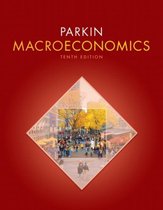
MACROECONOMICS 10TH EDITION
BY MICHAEL PARKIN WITH ANSWER KEY AT THE END)
,MULTIPLE CHOICE. Choose the one alternative that best completes the statement or answers the question.
1) All economic questions are about 1)
A) what to produce. B) how to cope with scarcity.
C) how to satisfy all our wants. D) how to make money.
2) All economic questions arise because we 2)
A) want more than we can get.
B) want more than we need.
C) have limited wants that need to be satisfied.
D) have an abundance of resources.
3) Economics is best defined as the study of how people, businesses, governments, and societies 3)
A) use their infinite resources. B) attain wealth.
C) choose abundance over scarcity. D) make choices to cope with scarcity.
4) Scarcity is a situation in which 4)
A) most people can get only bare necessities.
B) people cannot satisfy all their wants.
C) people can satisfy all their wants.
D) some people can get all they want and some cannot.
5) Economists point out that scarcity confronts 5)
A) the rich but not the poor. B) the poor but not the rich.
C) neither the poor nor the rich. D) both the poor and the rich.
6) Scarcity is 6)
A) eliminated by choices.
B) a situation that exists during economic recessions but not during economic booms.
C) our inability to satisfy all our wants.
D) an economic problem only for poor people.
7) When an economist talks of scarcity, the economist is referring to the 7)
A) ability of society to continually make technological breakthroughs and increase production.
B) inability of society to satisfy all human wants because of limited resources.
C) ability of society to consume all that it produces.
D) ability of society to employ all of its resources.
8) Fundamental economic problems basically arise from 8)
A) the unequal distribution of income.
B) the fact that society has more than it needs.
C) turmoil in the stock market.
D) our wants exceeding our scarce resources.
, 9)
9) Scarcity exists because
A) of the inefficient choices we make.
B) poor people need more food and other goods.
C) society and people are greedy and wasteful.
D) our wants exceed the resources available to satisfy them.
10) Scarcity can be eliminated through 10)
A) exploration that helps us find new resources.
B) wise use of our resources.
C) the use of market mechanisms.
D) None of the above because scarcity cannot be eliminated.
11) As an economic concept, scarcity applies to 11)
A) money but not time. B) time but not money.
C) both money and time. D) neither time nor money.
12) In every economic system, choices must be made because resources are and our wants 12)
are .
A) unlimited; unlimited B) unlimited; limited
C) limited; limited D) limited; unlimited
13) The problem of ʺscarcityʺ applies 13)
A) only in underdeveloped countries because there are few productive resources in these
countries.
B) to all economic systems, regardless of their level of development.
C) only in economic systems that are just beginning to develop because specialized resources are
scarce.
D) only in industrially developed countries because resources are scarce in these countries.
14) Scarcity requires that people must 14)
A) compete. B) trade. C) cooperate. D) make choices.
15) People must make choices because 15)
A) there are many goods available. B) of scarcity.
C) most people enjoy shopping. D) None of the above answers is correct.
16) An incentive 16)
A) is the opposite of a tradeoff.
B) could be a penalty but could not be a reward.
C) could be either a reward or a penalty.
D) could be a reward but could not be a penalty.
17) An inducement to take a particular action is called 17)
A) the marginal benefit. B) the marginal cost.
C) an incentive. D) opportunity cost.
2
, 18) Economics is best defined as 18)
A) controlling a budget for a household.
B) making choices from an unlimited supply of goods and services.
C) how people make money and profits in the stock market.
D) making choices with unlimited wants but facing a scarcity of resources.
19) The study of economics 19)
A) deals mainly with microeconomics.
B) focuses mainly on individual consumers.
C) recognizes that scarcity does not affect rich nations.
D) arises from the fact that our wants exceed available resources.
20) Economics is best defined as the science of choice and how people cope with 20)
A) differences in needs. B) differences in wants.
C) scarcity. D) different economic systems.
21) Economics is the study of 21)
A) the distribution of surplus goods to those in need.
B) the choices we make because of scarcity.
C) ways to reduce wants to eliminate the problem of scarcity.
D) affluence in a morally bankrupt world.
22) The study of the choices made by individuals is part of the definition of 22)
A) positive economics. B) macroeconomics.
C) normative economics. D) microeconomics.
23) In part, microeconomics is concerned with 23)
A) factors that explain changes in the unemployment rate over time.
B) the Federal Reserveʹs policy decisions.
C) changes in the economyʹs total output of goods and services over long periods of time.
D) how a business firm decides upon the amount it produces and the price it sets.
24) The study of the decisions of individual units in the economy is known as 24)
A) macroeconomics. B) ceteris paribus study.
C) microeconomics. D) the study of incentives.
25) Studying the determination of prices in individual markets is primarily a concern of 25)
A) negative economics. B) positive economics.
C) microeconomics. D) macroeconomics.
26) The analysis of the behavior of individual decision-making units is the definition of 26)
A) normative economics. B) positive economics.
C) microeconomics. D) macroeconomics.
27) Which of the following is a microeconomic topic? 27)
A) How rent ceilings impact the supply of apartments.
B) Comparing inflation rates across countries.
C) How a trade agreement between the United States and Mexico affects both nationsʹ
unemployment rates.
D) How a tax rate increase will impact total production.
3
MACROECONOMICS 10TH EDITION
BY MICHAEL PARKIN WITH ANSWER KEY AT THE END)
,MULTIPLE CHOICE. Choose the one alternative that best completes the statement or answers the question.
1) All economic questions are about 1)
A) what to produce. B) how to cope with scarcity.
C) how to satisfy all our wants. D) how to make money.
2) All economic questions arise because we 2)
A) want more than we can get.
B) want more than we need.
C) have limited wants that need to be satisfied.
D) have an abundance of resources.
3) Economics is best defined as the study of how people, businesses, governments, and societies 3)
A) use their infinite resources. B) attain wealth.
C) choose abundance over scarcity. D) make choices to cope with scarcity.
4) Scarcity is a situation in which 4)
A) most people can get only bare necessities.
B) people cannot satisfy all their wants.
C) people can satisfy all their wants.
D) some people can get all they want and some cannot.
5) Economists point out that scarcity confronts 5)
A) the rich but not the poor. B) the poor but not the rich.
C) neither the poor nor the rich. D) both the poor and the rich.
6) Scarcity is 6)
A) eliminated by choices.
B) a situation that exists during economic recessions but not during economic booms.
C) our inability to satisfy all our wants.
D) an economic problem only for poor people.
7) When an economist talks of scarcity, the economist is referring to the 7)
A) ability of society to continually make technological breakthroughs and increase production.
B) inability of society to satisfy all human wants because of limited resources.
C) ability of society to consume all that it produces.
D) ability of society to employ all of its resources.
8) Fundamental economic problems basically arise from 8)
A) the unequal distribution of income.
B) the fact that society has more than it needs.
C) turmoil in the stock market.
D) our wants exceeding our scarce resources.
, 9)
9) Scarcity exists because
A) of the inefficient choices we make.
B) poor people need more food and other goods.
C) society and people are greedy and wasteful.
D) our wants exceed the resources available to satisfy them.
10) Scarcity can be eliminated through 10)
A) exploration that helps us find new resources.
B) wise use of our resources.
C) the use of market mechanisms.
D) None of the above because scarcity cannot be eliminated.
11) As an economic concept, scarcity applies to 11)
A) money but not time. B) time but not money.
C) both money and time. D) neither time nor money.
12) In every economic system, choices must be made because resources are and our wants 12)
are .
A) unlimited; unlimited B) unlimited; limited
C) limited; limited D) limited; unlimited
13) The problem of ʺscarcityʺ applies 13)
A) only in underdeveloped countries because there are few productive resources in these
countries.
B) to all economic systems, regardless of their level of development.
C) only in economic systems that are just beginning to develop because specialized resources are
scarce.
D) only in industrially developed countries because resources are scarce in these countries.
14) Scarcity requires that people must 14)
A) compete. B) trade. C) cooperate. D) make choices.
15) People must make choices because 15)
A) there are many goods available. B) of scarcity.
C) most people enjoy shopping. D) None of the above answers is correct.
16) An incentive 16)
A) is the opposite of a tradeoff.
B) could be a penalty but could not be a reward.
C) could be either a reward or a penalty.
D) could be a reward but could not be a penalty.
17) An inducement to take a particular action is called 17)
A) the marginal benefit. B) the marginal cost.
C) an incentive. D) opportunity cost.
2
, 18) Economics is best defined as 18)
A) controlling a budget for a household.
B) making choices from an unlimited supply of goods and services.
C) how people make money and profits in the stock market.
D) making choices with unlimited wants but facing a scarcity of resources.
19) The study of economics 19)
A) deals mainly with microeconomics.
B) focuses mainly on individual consumers.
C) recognizes that scarcity does not affect rich nations.
D) arises from the fact that our wants exceed available resources.
20) Economics is best defined as the science of choice and how people cope with 20)
A) differences in needs. B) differences in wants.
C) scarcity. D) different economic systems.
21) Economics is the study of 21)
A) the distribution of surplus goods to those in need.
B) the choices we make because of scarcity.
C) ways to reduce wants to eliminate the problem of scarcity.
D) affluence in a morally bankrupt world.
22) The study of the choices made by individuals is part of the definition of 22)
A) positive economics. B) macroeconomics.
C) normative economics. D) microeconomics.
23) In part, microeconomics is concerned with 23)
A) factors that explain changes in the unemployment rate over time.
B) the Federal Reserveʹs policy decisions.
C) changes in the economyʹs total output of goods and services over long periods of time.
D) how a business firm decides upon the amount it produces and the price it sets.
24) The study of the decisions of individual units in the economy is known as 24)
A) macroeconomics. B) ceteris paribus study.
C) microeconomics. D) the study of incentives.
25) Studying the determination of prices in individual markets is primarily a concern of 25)
A) negative economics. B) positive economics.
C) microeconomics. D) macroeconomics.
26) The analysis of the behavior of individual decision-making units is the definition of 26)
A) normative economics. B) positive economics.
C) microeconomics. D) macroeconomics.
27) Which of the following is a microeconomic topic? 27)
A) How rent ceilings impact the supply of apartments.
B) Comparing inflation rates across countries.
C) How a trade agreement between the United States and Mexico affects both nationsʹ
unemployment rates.
D) How a tax rate increase will impact total production.
3