Accredited Test Bank Solution For
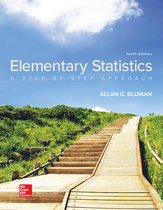
Elementary Statistics, A Step By Step
Approach, 10th Edition Bluman [All
Lessons Included]
Complete Chapter Solution Manual
are Included (Ch.1 to Ch.14)
Rapid Download
Quick Turnaround
Complete Chapters Provided
AMAZINGTIPS
, Table of Contents are Given Below
Here is the list of chapters from "Elementary Statistics: A Step By Step Approach," 10th Edition by Allan G.
Bluman:
1. The Nature of Probability and Statistics
2. Frequency Distributions and Graphs
3. Data Description
4. Probability and Counting Rules
5. Discrete Probability Distributions
6. The Normal Distribution
7. Confidence Intervals and Sample Size
8. Hypothesis Testing
9. Testing the Difference Between Two Means, Two Variances, and Two Proportions
10. Correlation and Regression
11. Other Chi-Square Tests
12. Analysis of Variance
13. Nonparametric Statistics
14. Sampling and Simulation
This comprehensive structure covers various aspects of elementary statistics, providing a solid foundation for
understanding and applying statistical methods.
For more detailed information, you can visit the publisher's website.
Section 1: The Nature of Probability and Statistics
Q1. Which of the following best defines statistics?
a) The study of how data are collected, organized, analyzed, and interpreted.
b) The mathematical study of uncertainty.
c) A branch of mathematics dealing with shapes and spaces.
d) The science of predicting future events.
PAGE 1
AMAZINGTIPS
,Answer: a) The study of how data are collected, organized, analyzed, and interpreted.
Explanation: Statistics involves methods for collecting, organizing, analyzing, and interpreting data to make
informed decisions.
Q2. Probability is best described as:
a) The study of past events.
b) A measure of the likelihood that an event will occur.
c) The process of organizing data.
d) A type of statistical graph.
Answer: b) A measure of the likelihood that an event will occur.
Explanation: Probability quantifies the chance that a specific event will happen, ranging from 0 (impossible) to 1
(certain).
Q3. Which branch of statistics deals with data from a sample to make inferences about a population?
a) Descriptive statistics
b) Inferential statistics
c) Applied statistics
d) Mathematical statistics
Answer: b) Inferential statistics
Explanation: Inferential statistics use sample data to make estimates, predictions, or decisions about a larger
population.
Q4. Which of the following is an example of a discrete random variable?
a) The height of students in a class.
b) The number of books on a shelf.
c) The temperature outside.
d) The time it takes to run a marathon.
Answer: b) The number of books on a shelf.
Explanation: A discrete random variable takes on countable values, such as the number of books.
PAGE 2
AMAZINGTIPS
, Q5. What does the Law of Large Numbers state?
a) As the number of trials increases, the experimental probability approaches the theoretical probability.
b) Large datasets are always more accurate.
c) The sum of probabilities in a large sample equals one.
d) Probability distributions must be large to be valid.
Answer: a) As the number of trials increases, the experimental probability approaches the theoretical
probability.
Explanation: The Law of Large Numbers indicates that with more trials, the experimental outcomes converge to
the expected theoretical probabilities.
Q6. In statistics, a parameter refers to:
a) A numerical characteristic of a sample.
b) A numerical characteristic of a population.
c) Any variable in a study.
d) The method of data collection.
Answer: b) A numerical characteristic of a population.
Explanation: A parameter is a fixed number that describes a characteristic of an entire population, such as the
population mean.
Q7. Which of the following is NOT a measure of central tendency?
a) Mean
b) Median
c) Mode
d) Range
Answer: d) Range
Explanation: Mean, median, and mode are measures of central tendency, while range is a measure of variability.
Q8. What is the primary purpose of inferential statistics?
PAGE 3
AMAZINGTIPS
Elementary Statistics, A Step By Step
Approach, 10th Edition Bluman [All
Lessons Included]
Complete Chapter Solution Manual
are Included (Ch.1 to Ch.14)
Rapid Download
Quick Turnaround
Complete Chapters Provided
AMAZINGTIPS
, Table of Contents are Given Below
Here is the list of chapters from "Elementary Statistics: A Step By Step Approach," 10th Edition by Allan G.
Bluman:
1. The Nature of Probability and Statistics
2. Frequency Distributions and Graphs
3. Data Description
4. Probability and Counting Rules
5. Discrete Probability Distributions
6. The Normal Distribution
7. Confidence Intervals and Sample Size
8. Hypothesis Testing
9. Testing the Difference Between Two Means, Two Variances, and Two Proportions
10. Correlation and Regression
11. Other Chi-Square Tests
12. Analysis of Variance
13. Nonparametric Statistics
14. Sampling and Simulation
This comprehensive structure covers various aspects of elementary statistics, providing a solid foundation for
understanding and applying statistical methods.
For more detailed information, you can visit the publisher's website.
Section 1: The Nature of Probability and Statistics
Q1. Which of the following best defines statistics?
a) The study of how data are collected, organized, analyzed, and interpreted.
b) The mathematical study of uncertainty.
c) A branch of mathematics dealing with shapes and spaces.
d) The science of predicting future events.
PAGE 1
AMAZINGTIPS
,Answer: a) The study of how data are collected, organized, analyzed, and interpreted.
Explanation: Statistics involves methods for collecting, organizing, analyzing, and interpreting data to make
informed decisions.
Q2. Probability is best described as:
a) The study of past events.
b) A measure of the likelihood that an event will occur.
c) The process of organizing data.
d) A type of statistical graph.
Answer: b) A measure of the likelihood that an event will occur.
Explanation: Probability quantifies the chance that a specific event will happen, ranging from 0 (impossible) to 1
(certain).
Q3. Which branch of statistics deals with data from a sample to make inferences about a population?
a) Descriptive statistics
b) Inferential statistics
c) Applied statistics
d) Mathematical statistics
Answer: b) Inferential statistics
Explanation: Inferential statistics use sample data to make estimates, predictions, or decisions about a larger
population.
Q4. Which of the following is an example of a discrete random variable?
a) The height of students in a class.
b) The number of books on a shelf.
c) The temperature outside.
d) The time it takes to run a marathon.
Answer: b) The number of books on a shelf.
Explanation: A discrete random variable takes on countable values, such as the number of books.
PAGE 2
AMAZINGTIPS
, Q5. What does the Law of Large Numbers state?
a) As the number of trials increases, the experimental probability approaches the theoretical probability.
b) Large datasets are always more accurate.
c) The sum of probabilities in a large sample equals one.
d) Probability distributions must be large to be valid.
Answer: a) As the number of trials increases, the experimental probability approaches the theoretical
probability.
Explanation: The Law of Large Numbers indicates that with more trials, the experimental outcomes converge to
the expected theoretical probabilities.
Q6. In statistics, a parameter refers to:
a) A numerical characteristic of a sample.
b) A numerical characteristic of a population.
c) Any variable in a study.
d) The method of data collection.
Answer: b) A numerical characteristic of a population.
Explanation: A parameter is a fixed number that describes a characteristic of an entire population, such as the
population mean.
Q7. Which of the following is NOT a measure of central tendency?
a) Mean
b) Median
c) Mode
d) Range
Answer: d) Range
Explanation: Mean, median, and mode are measures of central tendency, while range is a measure of variability.
Q8. What is the primary purpose of inferential statistics?
PAGE 3
AMAZINGTIPS