UTA NUR 5334 ADVANCED PHARMACOLOGY TEST 2
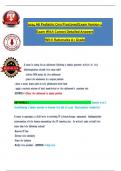
HTN is defined as - Answers -As SBP > 130mmHg or DBP > 80mmHg
How many BP readings are required to diagnoses HTN - Answers -Diagnosis should
be based on BP readings over one to two weeks
HTN treatment goal is - Answers -To reduce cardiovascular and renal morbidity and
mortality
The usual form of HTN is - Answers -Primary or essential
Elevated SBP presents a - Answers -Greater risk for complications than elevated DBP
for people older than 50 y/o
For all ages, HTN related deaths result - Answers -Largely from cerebral hemorrhage,
renal failure, heart failure and MI
Four BP categories - Answers -Normal SBP <120 and DBP < 80
Elevated SBP 120-129 or DBP > 80
Stage 1 SBP > 130-139 or DBP 80-89
Stage 2 SBP => 140 or DBP => 90
1. A 30-year-old man in for annual examination. On last exam one year ago, BP was
120/70. Patient has no complaint. On examination, vital signs: BP 158/96 mm Hg, P 88,
R 20 T 98.6 F orally, BMI 34 Kg/m2. Rest of examination showed normal results. What
would your next step be? - Answers -a) Start antihypertensive therapy with one agent
b) Start antihypertensive therapy with two agents
c) Check BP two more times in the next two weeks.
d) Send patient to ER
2. Your last patient for the day is a 72-year-old woman with several chronic medical
problems including: Hypertension, hyperlipidemia, osteoarthritis, anemia, and diabetes
mellitus type 2. Current medications consist of hydrochlorothiazide, atorvastatin
(Lipitor), acetaminophen, ferrous sulfate, and metformin. Patient brings in her BP log
which shows BP readings between 152/92 to 160/96 mm Hg over the past three
months. Potassium is 4.9 mg/dl (normal 3.5-5.5 mg/dl). Your next best action is to: -
Answers -a) Add another diuretic like aldosterone.
b) Prescribe an angiotensin-converting enzyme inhibitor (ACEI)
c) Continue current medications. No need to add another medication as patient may
forget to take it.
, d) Schedule a six months follow-up visit.
3. A 64-year-old man with hypertension is taking ACEI and Aldosterone
(spironolactone). He needs to be monitored for an increase in what electrolyte? -
Answers -a) Potassium
b) Sodium
c) Glucose
d) Calcium
4. Your next patient is new to your practice. Her name is Ms. Smith. Ms. Smith is a 79-
year-old woman who tells you her last examination was over two years ago. She gives
history of hypertension since the age of 35 with BP readings greater than 160/100.
Patient is currently not taking any medications. Patient is at risk for: - Answers -a)
Cardiovascular disease (CVA)
b) LEFT ventricular hypertrophy
c) Renal disease
d) All the above
5. Ms. Smith has LEFT ventricular dysfunction, which of the following medicine is
contraindicated? - Answers -a) Zestril/Lisinopril (ACE inhibitor)
b) Cozaar/Losartan (Angiotensin receptor antagonist)
c) Cardizem/Diltiazem (Non-dihydropyridine calcium channel blocker)
d) Inderal/Propranolol (Beta blocker)
6. In ordering tests for Ms. Smith, what diagnostic tests should the FNP NOT include? -
Answers -a) Chemistry, CBC, Lipid, and hepatic, urine analysis
b) Chest X-ray
c) EKG
d) Uric acid
7. A 34-year-old African American male comes is for his routine follow-up visit. He was
diagnosed with hypertension in 2014 and he has no other medical diagnoses. Patient is
taking hydrochlorothiazide 25mg one tablet every day. BP today 154/94 mm Hg. The
FNP should add a medication from what antihypertensive drug class? - Answers -a)
Beta-adrenergic receptor blocker
b) ACE inhibitor
c) Calcium channel blocker
d) Angiotensin receptor blocker
8. What are the most common causes of Hypertensive heart disease? - Answers -a)
Osteoarthritis
b) Hypertension
c) Heart Failure
d) B and C
HTN is defined as - Answers -As SBP > 130mmHg or DBP > 80mmHg
How many BP readings are required to diagnoses HTN - Answers -Diagnosis should
be based on BP readings over one to two weeks
HTN treatment goal is - Answers -To reduce cardiovascular and renal morbidity and
mortality
The usual form of HTN is - Answers -Primary or essential
Elevated SBP presents a - Answers -Greater risk for complications than elevated DBP
for people older than 50 y/o
For all ages, HTN related deaths result - Answers -Largely from cerebral hemorrhage,
renal failure, heart failure and MI
Four BP categories - Answers -Normal SBP <120 and DBP < 80
Elevated SBP 120-129 or DBP > 80
Stage 1 SBP > 130-139 or DBP 80-89
Stage 2 SBP => 140 or DBP => 90
1. A 30-year-old man in for annual examination. On last exam one year ago, BP was
120/70. Patient has no complaint. On examination, vital signs: BP 158/96 mm Hg, P 88,
R 20 T 98.6 F orally, BMI 34 Kg/m2. Rest of examination showed normal results. What
would your next step be? - Answers -a) Start antihypertensive therapy with one agent
b) Start antihypertensive therapy with two agents
c) Check BP two more times in the next two weeks.
d) Send patient to ER
2. Your last patient for the day is a 72-year-old woman with several chronic medical
problems including: Hypertension, hyperlipidemia, osteoarthritis, anemia, and diabetes
mellitus type 2. Current medications consist of hydrochlorothiazide, atorvastatin
(Lipitor), acetaminophen, ferrous sulfate, and metformin. Patient brings in her BP log
which shows BP readings between 152/92 to 160/96 mm Hg over the past three
months. Potassium is 4.9 mg/dl (normal 3.5-5.5 mg/dl). Your next best action is to: -
Answers -a) Add another diuretic like aldosterone.
b) Prescribe an angiotensin-converting enzyme inhibitor (ACEI)
c) Continue current medications. No need to add another medication as patient may
forget to take it.
, d) Schedule a six months follow-up visit.
3. A 64-year-old man with hypertension is taking ACEI and Aldosterone
(spironolactone). He needs to be monitored for an increase in what electrolyte? -
Answers -a) Potassium
b) Sodium
c) Glucose
d) Calcium
4. Your next patient is new to your practice. Her name is Ms. Smith. Ms. Smith is a 79-
year-old woman who tells you her last examination was over two years ago. She gives
history of hypertension since the age of 35 with BP readings greater than 160/100.
Patient is currently not taking any medications. Patient is at risk for: - Answers -a)
Cardiovascular disease (CVA)
b) LEFT ventricular hypertrophy
c) Renal disease
d) All the above
5. Ms. Smith has LEFT ventricular dysfunction, which of the following medicine is
contraindicated? - Answers -a) Zestril/Lisinopril (ACE inhibitor)
b) Cozaar/Losartan (Angiotensin receptor antagonist)
c) Cardizem/Diltiazem (Non-dihydropyridine calcium channel blocker)
d) Inderal/Propranolol (Beta blocker)
6. In ordering tests for Ms. Smith, what diagnostic tests should the FNP NOT include? -
Answers -a) Chemistry, CBC, Lipid, and hepatic, urine analysis
b) Chest X-ray
c) EKG
d) Uric acid
7. A 34-year-old African American male comes is for his routine follow-up visit. He was
diagnosed with hypertension in 2014 and he has no other medical diagnoses. Patient is
taking hydrochlorothiazide 25mg one tablet every day. BP today 154/94 mm Hg. The
FNP should add a medication from what antihypertensive drug class? - Answers -a)
Beta-adrenergic receptor blocker
b) ACE inhibitor
c) Calcium channel blocker
d) Angiotensin receptor blocker
8. What are the most common causes of Hypertensive heart disease? - Answers -a)
Osteoarthritis
b) Hypertension
c) Heart Failure
d) B and C