FA-BA304
Oncologie
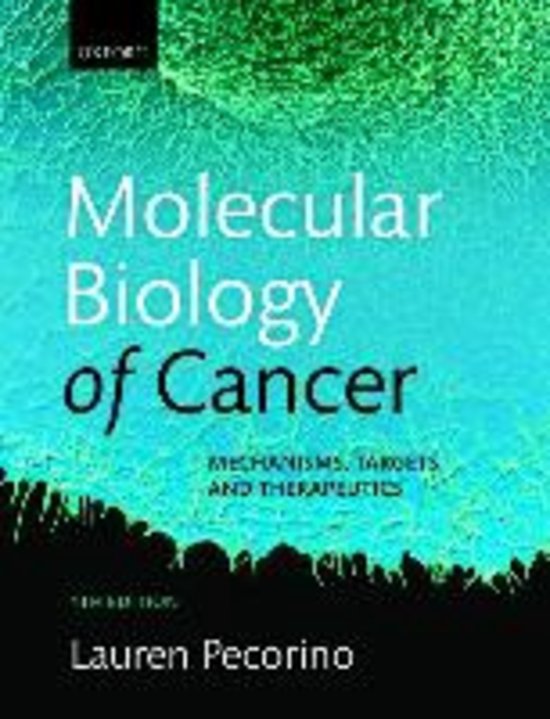
Samenvatting Pecorino
Michelle
,Inhoud
H2: DNA structure and stability: mutations versus repair ...................................................................... 5
2.1 Gene structure- two parts of a gene: the regulatory region and the coding region..................... 5
2.2 Mutations ...................................................................................................................................... 5
2.3 Carcinogenic agents ...................................................................................................................... 6
2.4 DNA repair and predisposition to cancer ...................................................................................... 7
One-step repair ............................................................................................................................... 7
Nucleotide excision repair (NER) ..................................................................................................... 7
Base excision repair (BER) ............................................................................................................... 8
Mismatch repair (MMR) .................................................................................................................. 8
Recombinational repair ................................................................................................................... 8
2.5 Conventional therapies: chemotherapy and radiation therapy.................................................... 8
2.6 Strategies that target DNA repair pathways ................................................................................. 8
Synthetic lethal strategies ............................................................................................................... 8
Combination therapies .................................................................................................................... 8
H3: Regulation of gene expression.......................................................................................................... 9
3.1 Transcription factors and transcriptional regulation .................................................................... 9
3.2 Chromatin structure .................................................................................................................... 10
3.3 epigenetic regulation of transcription......................................................................................... 10
3.4 Evidence of a role for epigenetics in carcinogenesis ................................................................... 11
3.5 Long non coding RNAs ................................................................................................................. 11
3.6 MicroRNAs (miRNAs) and regulation of mRNA expression ......................................................... 12
3.7 Telomeres and telomerase .......................................................................................................... 12
3.8 Epigenomic and histonomic drugs. ............................................................................................. 13
3.9 Non-coding RNAs for diagnosis. .................................................................................................. 13
3.10 Telomerase inhibitors................................................................................................................ 13
H4: Growth factor signaling and oncogenes ......................................................................................... 14
4.1: Epidermal growth factor signaling: an important paradigm ...................................................... 14
4.2 Oncogenes ................................................................................................................................... 17
4.3 Kinases as drug targets ................................................................................................................ 18
H5: The cell cycle ................................................................................................................................... 20
5.1 Cyclins and cyclin-dependent kinases (cdks)............................................................................... 20
5.2 Mechanisms of cdk regulation .................................................................................................... 20
5.3 Progression through the G1 checkpoint...................................................................................... 21
5.4 The G2 checkpoint........................................................................................................................ 22
Michelle
2
, 5.5 The mitotic checkpoint ................................................................................................................ 23
5.6 The cell cycle and cancer ............................................................................................................. 24
5.7 Cyclin-dependent kinase inhibitors ............................................................................................. 24
5.8 Other cell cycle kinase targets ..................................................................................................... 24
5.9 Inhibitors of the mitotic spindle .................................................................................................. 24
H6: Growth inhibition and tumor suppressor genes............................................................................. 25
6.1 Definitions of tumor suppressor genes ....................................................................................... 25
6.2 The retinoblastoma gene ............................................................................................................ 25
6.3 Mutations in the RB pathway and cancer ................................................................................... 25
6.4 The p53 pathway ......................................................................................................................... 25
6.5 Mutations in the p53 pathway and cancer ................................................................................. 29
6.6 Interaction of DNA viral protein products with RB and p53 ....................................................... 30
6.7 targeting of the p53 pathway ...................................................................................................... 30
H7: Apoptosis ........................................................................................................................................ 32
7.1 Molecular mechanisms of apoptosis ........................................................................................... 32
7.2 Apoptosis and cancer .................................................................................................................. 36
7.3 Apoptosis and chemotherapy ..................................................................................................... 37
7.4 apoptotic drugs ........................................................................................................................... 37
H9: Metastasis ....................................................................................................................................... 39
9.1 How do tumors spread? .............................................................................................................. 39
9.2 The process of metastase ............................................................................................................ 39
9.3 Invasion and the epithelial-mesenchymal transition .................................................................. 40
Induction of EMT ........................................................................................................................... 40
Tools of invasion: cell adhesion molecules, integrins and proteases ........................................... 40
9.4 Intravasation................................................................................................................................ 41
9.5 Transport ..................................................................................................................................... 41
9.6 Extravasation ............................................................................................................................... 41
9.7 Metastatic colonization ............................................................................................................... 42
The pre-metastatic niche .............................................................................................................. 42
Exosomes ....................................................................................................................................... 42
Metastasis suppressor genes ........................................................................................................ 42
Therapeutic strategies ................................................................................................................... 42
9.8 Metalloproteinase inhibitors (MPIs) ........................................................................................... 42
c-MET inhibitors for blocking EMT ................................................................................................ 42
9.9 Strategies for restoring metastasis suppressors ......................................................................... 43
Michelle
3
, 9.10 Targeting several steps of metastasis at once .......................................................................... 43
H10 Angiogenesis .................................................................................................................................. 44
10.1 The angiogenic switch ............................................................................................................... 44
Angiogenic inducers ...................................................................................................................... 44
Angiogenic inhibitors ..................................................................................................................... 45
10.2 Cell behavior during angiogenic sprouting ................................................................................ 46
10.3 Other means of tumor neovascularization ............................................................................... 46
10.4 Anti-angiogenic therapy ............................................................................................................ 47
10.5 Vascular targeting by vascular disrupting agents ...................................................................... 47
H12: Tumor immunology and immunotherapy .................................................................................... 48
12.1 Lymphocytes: B cells and T cells ................................................................................................ 48
12.2 The tumor suppressive roles of the immune system ................................................................ 48
12.3 Immune checkpoints ................................................................................................................. 49
12.4 Cancer immunoediting and tumor promotion .......................................................................... 49
12.5 Mechanisms of avoiding immune destruction .......................................................................... 50
12.6 Therapeutic antibodies.............................................................................................................. 50
12.7 Cancer vaccines ......................................................................................................................... 50
12.8 Immune checkpoint blockades.................................................................................................. 51
12.9 Adoptive T-cell transfer, modified T-cell receptors, and chimeric antigen receptors .............. 52
12.10 Oncolytic viruses and virotherapy ........................................................................................... 52
Michelle
4
Oncologie
Samenvatting Pecorino
Michelle
,Inhoud
H2: DNA structure and stability: mutations versus repair ...................................................................... 5
2.1 Gene structure- two parts of a gene: the regulatory region and the coding region..................... 5
2.2 Mutations ...................................................................................................................................... 5
2.3 Carcinogenic agents ...................................................................................................................... 6
2.4 DNA repair and predisposition to cancer ...................................................................................... 7
One-step repair ............................................................................................................................... 7
Nucleotide excision repair (NER) ..................................................................................................... 7
Base excision repair (BER) ............................................................................................................... 8
Mismatch repair (MMR) .................................................................................................................. 8
Recombinational repair ................................................................................................................... 8
2.5 Conventional therapies: chemotherapy and radiation therapy.................................................... 8
2.6 Strategies that target DNA repair pathways ................................................................................. 8
Synthetic lethal strategies ............................................................................................................... 8
Combination therapies .................................................................................................................... 8
H3: Regulation of gene expression.......................................................................................................... 9
3.1 Transcription factors and transcriptional regulation .................................................................... 9
3.2 Chromatin structure .................................................................................................................... 10
3.3 epigenetic regulation of transcription......................................................................................... 10
3.4 Evidence of a role for epigenetics in carcinogenesis ................................................................... 11
3.5 Long non coding RNAs ................................................................................................................. 11
3.6 MicroRNAs (miRNAs) and regulation of mRNA expression ......................................................... 12
3.7 Telomeres and telomerase .......................................................................................................... 12
3.8 Epigenomic and histonomic drugs. ............................................................................................. 13
3.9 Non-coding RNAs for diagnosis. .................................................................................................. 13
3.10 Telomerase inhibitors................................................................................................................ 13
H4: Growth factor signaling and oncogenes ......................................................................................... 14
4.1: Epidermal growth factor signaling: an important paradigm ...................................................... 14
4.2 Oncogenes ................................................................................................................................... 17
4.3 Kinases as drug targets ................................................................................................................ 18
H5: The cell cycle ................................................................................................................................... 20
5.1 Cyclins and cyclin-dependent kinases (cdks)............................................................................... 20
5.2 Mechanisms of cdk regulation .................................................................................................... 20
5.3 Progression through the G1 checkpoint...................................................................................... 21
5.4 The G2 checkpoint........................................................................................................................ 22
Michelle
2
, 5.5 The mitotic checkpoint ................................................................................................................ 23
5.6 The cell cycle and cancer ............................................................................................................. 24
5.7 Cyclin-dependent kinase inhibitors ............................................................................................. 24
5.8 Other cell cycle kinase targets ..................................................................................................... 24
5.9 Inhibitors of the mitotic spindle .................................................................................................. 24
H6: Growth inhibition and tumor suppressor genes............................................................................. 25
6.1 Definitions of tumor suppressor genes ....................................................................................... 25
6.2 The retinoblastoma gene ............................................................................................................ 25
6.3 Mutations in the RB pathway and cancer ................................................................................... 25
6.4 The p53 pathway ......................................................................................................................... 25
6.5 Mutations in the p53 pathway and cancer ................................................................................. 29
6.6 Interaction of DNA viral protein products with RB and p53 ....................................................... 30
6.7 targeting of the p53 pathway ...................................................................................................... 30
H7: Apoptosis ........................................................................................................................................ 32
7.1 Molecular mechanisms of apoptosis ........................................................................................... 32
7.2 Apoptosis and cancer .................................................................................................................. 36
7.3 Apoptosis and chemotherapy ..................................................................................................... 37
7.4 apoptotic drugs ........................................................................................................................... 37
H9: Metastasis ....................................................................................................................................... 39
9.1 How do tumors spread? .............................................................................................................. 39
9.2 The process of metastase ............................................................................................................ 39
9.3 Invasion and the epithelial-mesenchymal transition .................................................................. 40
Induction of EMT ........................................................................................................................... 40
Tools of invasion: cell adhesion molecules, integrins and proteases ........................................... 40
9.4 Intravasation................................................................................................................................ 41
9.5 Transport ..................................................................................................................................... 41
9.6 Extravasation ............................................................................................................................... 41
9.7 Metastatic colonization ............................................................................................................... 42
The pre-metastatic niche .............................................................................................................. 42
Exosomes ....................................................................................................................................... 42
Metastasis suppressor genes ........................................................................................................ 42
Therapeutic strategies ................................................................................................................... 42
9.8 Metalloproteinase inhibitors (MPIs) ........................................................................................... 42
c-MET inhibitors for blocking EMT ................................................................................................ 42
9.9 Strategies for restoring metastasis suppressors ......................................................................... 43
Michelle
3
, 9.10 Targeting several steps of metastasis at once .......................................................................... 43
H10 Angiogenesis .................................................................................................................................. 44
10.1 The angiogenic switch ............................................................................................................... 44
Angiogenic inducers ...................................................................................................................... 44
Angiogenic inhibitors ..................................................................................................................... 45
10.2 Cell behavior during angiogenic sprouting ................................................................................ 46
10.3 Other means of tumor neovascularization ............................................................................... 46
10.4 Anti-angiogenic therapy ............................................................................................................ 47
10.5 Vascular targeting by vascular disrupting agents ...................................................................... 47
H12: Tumor immunology and immunotherapy .................................................................................... 48
12.1 Lymphocytes: B cells and T cells ................................................................................................ 48
12.2 The tumor suppressive roles of the immune system ................................................................ 48
12.3 Immune checkpoints ................................................................................................................. 49
12.4 Cancer immunoediting and tumor promotion .......................................................................... 49
12.5 Mechanisms of avoiding immune destruction .......................................................................... 50
12.6 Therapeutic antibodies.............................................................................................................. 50
12.7 Cancer vaccines ......................................................................................................................... 50
12.8 Immune checkpoint blockades.................................................................................................. 51
12.9 Adoptive T-cell transfer, modified T-cell receptors, and chimeric antigen receptors .............. 52
12.10 Oncolytic viruses and virotherapy ........................................................................................... 52
Michelle
4