

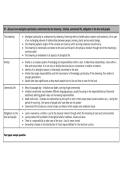
S1 - discuss how aboriginal spirituality is determined by the dreaming : kinship, ceremonial life, obligation to the land and people
The dreaming ● Aboriginal spirituality is underpinned by dreaming. Dreaming refers to beliefs about creation and existence. Life is part
of an unchanging network of relationships between people, animals, plants and ancestral beings.
● The dreaming explains origins of the universe and rules by which all living creatures should live by
● The dreaming is inextricably connected to the land as the land is the physical medium through which the dreaming is
communicated
● The dreaming is embedded in all aspects of aboriginal life.
Kinship ● Kinship is a complex system of belonging and responsibilities within a clan. It determines relationships, roles within a
tribe and tones totem. It is not only on familial ties but also on connections in relation to totems.
● Identity of an aboriginal person is inextricably connected to the land
● Kinship ties assign responsibilities and the transmission of knowledge, particularly of the dreaming, from elders to
younger generations.
● Sacred sites have significance as they teach people how to live and how to care for the land.
Ceremonial life ● Rites of passages (eg - initiation and death, coming of age ceremonies)
● Initiation ceremonies vary between different language groups, usually focusing on the responsibilities as they enter
adulthood, defining gender roles and increasing responsibilities.
● Death and burial - funerals and ceremonies lay the spirit to rest in their proper place. Burial customs vary - during the
period of mourning , the names of people who have died are not spoken
● Ceremonial life includes art, stories rituals and totems which explain and celebrate rituals
Obligations to the ● Land is revered as a mother. Land is the physical medium through which the dreaming is lived and communicated
land and people ● Land provides the foundation of aboriginal beliefs, traditions, rituals and laws
● There is a responsibility to take care of the land - land is never owned
● Ownership is based on the distribution of ritual responsibilities for the land and country.
Past paper sample question
, ●
The land is central to Aboriginal spirituality because it is understood that land is the mother, we are of the land, and ultimately the land owns us.
For Aboriginal peoples, identity is not separate from the country but flows directly from it. Patrick Dodson, a Yawuru man from Broome, captures
this truth when he says, “I belong to the land,” showing how personal and communal identity is rooted in spiritual connection to the country. This
identity carries sacred responsibility, since the land nurtures and sustains life. Kinship systems and totems regulate the use of resources, ensuring
balance and sustainability while reinforcing the duty to protect the country. For Aboriginal peoples, caring for the land is not about ownership but
custodianship; they maintain that we do not own the land but are entrusted with it as caretakers. Just as importantly, the land is the medium
through which the Dreaming is lived and communicated. Sacred stories, rituals, and laws are embedded in the natural landscape, binding people
to their spiritual origins. For example, the Tiwi people of the Northern Territory conduct funeral ceremonies on their land, carving and painting
poles that are placed around graves to return the spirits of the dead to their rightful place within the country. Ultimately, the enduring belief that
land is the mother and that we are of the land reinforces that Aboriginal spirituality, law, and identity can never be separated from country, for the
land owns us and continues to guide and sustain all aspects of life.
, Aboriginal spirituality is closely linked to Country, where land is understood as a living spiritual presence that shapes identity, relationships, and
cultural obligations. Ceremonial life makes this connection visible and active. Ceremonies such as initiation, death rites, and seasonal gatherings
are performed in the country, often at sacred sites tied to Dreaming stories. Among the Yanyuwa people, male initiation involves travelling across
ancestral land, where elders pass on spiritual knowledge through song, story, and ritual. These ceremonies embed individuals within the spiritual
landscape, affirming their belonging and responsibilities to Country. Kinship systems also reflect this deep spiritual bond. Through blood kinship,
individuals inherit their place within a network of relationships that determines their duties to both people and land. These ties guide decisions
about marriage, education, and custodianship. Totemic kinship deepens this connection by linking individuals to plants, animals, or landmarks. In
Wiradjuri culture, someone with a Goanna Totem must avoid harming goannas and may participate in Goanna-related ceremonies. These
obligations reinforce the sacred relationship between people and Country. Obligations to the land and people are lifelong and sacred. Aboriginal
peoples maintain ecological and spiritual balance through ritual and social responsibility. Among the Tiwi, clans are responsible for caring for
specific areas of Country, performing ceremonies to awaken ancestral spirits and ensure harmony. Land is seen as a nurturing mother, and correct
guardianship involves protecting sacred sites and fulfilling duties tied to one’s ritual estate. Together, these practices form a spiritual framework
where Aboriginal identity is inseparable from Country.
The dreaming ● Aboriginal spirituality is underpinned by dreaming. Dreaming refers to beliefs about creation and existence. Life is part
of an unchanging network of relationships between people, animals, plants and ancestral beings.
● The dreaming explains origins of the universe and rules by which all living creatures should live by
● The dreaming is inextricably connected to the land as the land is the physical medium through which the dreaming is
communicated
● The dreaming is embedded in all aspects of aboriginal life.
Kinship ● Kinship is a complex system of belonging and responsibilities within a clan. It determines relationships, roles within a
tribe and tones totem. It is not only on familial ties but also on connections in relation to totems.
● Identity of an aboriginal person is inextricably connected to the land
● Kinship ties assign responsibilities and the transmission of knowledge, particularly of the dreaming, from elders to
younger generations.
● Sacred sites have significance as they teach people how to live and how to care for the land.
Ceremonial life ● Rites of passages (eg - initiation and death, coming of age ceremonies)
● Initiation ceremonies vary between different language groups, usually focusing on the responsibilities as they enter
adulthood, defining gender roles and increasing responsibilities.
● Death and burial - funerals and ceremonies lay the spirit to rest in their proper place. Burial customs vary - during the
period of mourning , the names of people who have died are not spoken
● Ceremonial life includes art, stories rituals and totems which explain and celebrate rituals
Obligations to the ● Land is revered as a mother. Land is the physical medium through which the dreaming is lived and communicated
land and people ● Land provides the foundation of aboriginal beliefs, traditions, rituals and laws
● There is a responsibility to take care of the land - land is never owned
● Ownership is based on the distribution of ritual responsibilities for the land and country.
Past paper sample question
, ●
The land is central to Aboriginal spirituality because it is understood that land is the mother, we are of the land, and ultimately the land owns us.
For Aboriginal peoples, identity is not separate from the country but flows directly from it. Patrick Dodson, a Yawuru man from Broome, captures
this truth when he says, “I belong to the land,” showing how personal and communal identity is rooted in spiritual connection to the country. This
identity carries sacred responsibility, since the land nurtures and sustains life. Kinship systems and totems regulate the use of resources, ensuring
balance and sustainability while reinforcing the duty to protect the country. For Aboriginal peoples, caring for the land is not about ownership but
custodianship; they maintain that we do not own the land but are entrusted with it as caretakers. Just as importantly, the land is the medium
through which the Dreaming is lived and communicated. Sacred stories, rituals, and laws are embedded in the natural landscape, binding people
to their spiritual origins. For example, the Tiwi people of the Northern Territory conduct funeral ceremonies on their land, carving and painting
poles that are placed around graves to return the spirits of the dead to their rightful place within the country. Ultimately, the enduring belief that
land is the mother and that we are of the land reinforces that Aboriginal spirituality, law, and identity can never be separated from country, for the
land owns us and continues to guide and sustain all aspects of life.
, Aboriginal spirituality is closely linked to Country, where land is understood as a living spiritual presence that shapes identity, relationships, and
cultural obligations. Ceremonial life makes this connection visible and active. Ceremonies such as initiation, death rites, and seasonal gatherings
are performed in the country, often at sacred sites tied to Dreaming stories. Among the Yanyuwa people, male initiation involves travelling across
ancestral land, where elders pass on spiritual knowledge through song, story, and ritual. These ceremonies embed individuals within the spiritual
landscape, affirming their belonging and responsibilities to Country. Kinship systems also reflect this deep spiritual bond. Through blood kinship,
individuals inherit their place within a network of relationships that determines their duties to both people and land. These ties guide decisions
about marriage, education, and custodianship. Totemic kinship deepens this connection by linking individuals to plants, animals, or landmarks. In
Wiradjuri culture, someone with a Goanna Totem must avoid harming goannas and may participate in Goanna-related ceremonies. These
obligations reinforce the sacred relationship between people and Country. Obligations to the land and people are lifelong and sacred. Aboriginal
peoples maintain ecological and spiritual balance through ritual and social responsibility. Among the Tiwi, clans are responsible for caring for
specific areas of Country, performing ceremonies to awaken ancestral spirits and ensure harmony. Land is seen as a nurturing mother, and correct
guardianship involves protecting sacred sites and fulfilling duties tied to one’s ritual estate. Together, these practices form a spiritual framework
where Aboriginal identity is inseparable from Country.

