1|Page
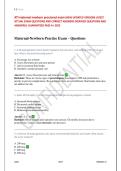
ATI maternal newborn proctored exam (NEW UPDATED VERSION) LATEST
ACTUAL EXAM QUESTIONS AND CORRECT ANSWERS (VERIFIED QUESTIONS AND
ANSWERS)- GUARANTEED PASS A+ 2025
Maternal-Newborn Practice Exam – Questions
1. A 28-week gestation client reports headache, blurred vision, and swelling of the hands and
face. What is the priority nursing action?
A. Encourage rest at home
B. Assess blood pressure and urine protein
C. Advise increased fluid intake
D. Schedule a routine prenatal visit
Answer: B. Assess blood pressure and urine protein
Rationale: These are classic signs of preeclampsia. Assessment of BP and proteinuria is
priority to prevent complications. Rest or routine visits are not sufficient; fluid intake alone does
not address the risk.
2. Select all that apply: Common physiological changes during pregnancy include:
A. Increased blood volume
B. Decreased cardiac output
C. Increased respiratory rate
D. Reduced gastrointestinal motility
Answer: A, C, D
Rationale: Blood volume and respiratory rate increase; GI motility decreases due to
progesterone. Cardiac output increases, not decreases.
3. A client at 10 weeks gestation asks about recommended daily folic acid intake. What should
the nurse respond?
A. 200 mcg
B. 400 mcg
C. 600 mcg
D. 800 mcg
2026 2027 GRADED A+
,2|Page
Rationale: The CDC recommends 400 mcg/day before conception and during early pregnancy
to prevent neural tube defects.
4. Which lab result indicates gestational diabetes risk at 24–28 weeks?
A. Fasting glucose 92 mg/dL
B. Fasting glucose 70 mg/dL
C. Hemoglobin 12 g/dL
D. White blood cell count 10,000
Rationale: Fasting glucose ≥92 mg/dL is diagnostic threshold for gestational diabetes.
5. A client presents with sudden gush of clear fluid at 36 weeks. What is the immediate priority?
A. Assess for urinary incontinence
B. Check fetal heart rate
C. Test for rupture of membranes
D. Encourage ambulation
Rationale: Sudden fluid loss may indicate rupture of membranes; testing is needed to confirm
and prevent infection.
6. Select all that apply: Risk factors for ectopic pregnancy include:
A. History of pelvic inflammatory disease
B. Use of intrauterine device
C. Advanced maternal age
D. Multiple gestation
Rationale: PID, IUD use, and advanced maternal age increase ectopic risk. Multiple gestation is
not a risk factor.
7. A client at 20 weeks gestation reports vaginal bleeding and cramping. Ultrasound confirms a
low-lying placenta. What is the priority teaching?
A. Avoid sexual intercourse
B. Encourage exercise
2026 2027 GRADED A+
,3|Page
C. Start iron supplements
D. Prepare for immediate delivery
Rationale: Placenta previa requires avoidance of vaginal trauma, including sexual activity.
Delivery is not immediate unless bleeding is severe.
8. Which symptom is concerning for hyperemesis gravidarum?
A. Mild nausea relieved by food
B. Vomiting >5 times per day with weight loss
C. Occasional heartburn
D. Increased salivation
Rationale: Persistent vomiting with weight loss and electrolyte imbalance signals hyperemesis
gravidarum, requiring medical attention.
9. A client is scheduled for a triple-marker screening at 15–20 weeks. What does this test assess?
A. Neural tube defects
B. Chromosomal abnormalities
C. Maternal blood pressure
D. Iron deficiency anemia
Rationale: Triple-marker screening measures AFP, hCG, and estriol to identify risk for
trisomy 21, 18, and neural tube defects.
10. Select all that apply: Teaching for a client with iron-deficiency anemia includes:
A. Increase intake of red meat and leafy greens
B. Take iron supplements with milk
C. Take supplements with vitamin C
D. Avoid excessive caffeine
Rationale: Iron absorption is enhanced with vitamin C and inhibited by milk/caffeine. Diet
should include iron-rich foods.
2026 2027 GRADED A+
, 4|Page
11. Which assessment finding may indicate gestational hypertension?
A. BP 130/84 mmHg
B. Heart rate 88 bpm
C. Respiratory rate 18
D. Temp 98.6°F
Rationale: BP ≥140/90 mmHg is diagnostic, but 130/84 is a warning sign and requires
monitoring.
12. A client at 28 weeks has a non-reactive NST. What is the next appropriate action?
A. Discharge home
B. Perform a contraction stress test
C. Schedule routine prenatal visit
D. Encourage ambulation
Rationale: A non-reactive NST requires further assessment, often a biophysical profile or
contraction stress test.
13. Select all that apply: Teaching for gestational diabetes management includes:
A. Blood glucose monitoring
B. Limiting carbohydrates moderately
C. Daily exercise
D. Avoiding all dairy
Rationale: Monitoring, moderate carbohydrate control, and activity help manage gestational
diabetes. Dairy is not contraindicated.
14. A client at 32 weeks reports decreased fetal movement. What is the priority action?
A. Perform kick-count assessment
B. Schedule routine prenatal visit
C. Encourage hydration
D. Provide dietary counseling
Rationale: Decreased fetal movement may indicate fetal compromise. Kick counts help assess
fetal well-being.
2026 2027 GRADED A+
ATI maternal newborn proctored exam (NEW UPDATED VERSION) LATEST
ACTUAL EXAM QUESTIONS AND CORRECT ANSWERS (VERIFIED QUESTIONS AND
ANSWERS)- GUARANTEED PASS A+ 2025
Maternal-Newborn Practice Exam – Questions
1. A 28-week gestation client reports headache, blurred vision, and swelling of the hands and
face. What is the priority nursing action?
A. Encourage rest at home
B. Assess blood pressure and urine protein
C. Advise increased fluid intake
D. Schedule a routine prenatal visit
Answer: B. Assess blood pressure and urine protein
Rationale: These are classic signs of preeclampsia. Assessment of BP and proteinuria is
priority to prevent complications. Rest or routine visits are not sufficient; fluid intake alone does
not address the risk.
2. Select all that apply: Common physiological changes during pregnancy include:
A. Increased blood volume
B. Decreased cardiac output
C. Increased respiratory rate
D. Reduced gastrointestinal motility
Answer: A, C, D
Rationale: Blood volume and respiratory rate increase; GI motility decreases due to
progesterone. Cardiac output increases, not decreases.
3. A client at 10 weeks gestation asks about recommended daily folic acid intake. What should
the nurse respond?
A. 200 mcg
B. 400 mcg
C. 600 mcg
D. 800 mcg
2026 2027 GRADED A+
,2|Page
Rationale: The CDC recommends 400 mcg/day before conception and during early pregnancy
to prevent neural tube defects.
4. Which lab result indicates gestational diabetes risk at 24–28 weeks?
A. Fasting glucose 92 mg/dL
B. Fasting glucose 70 mg/dL
C. Hemoglobin 12 g/dL
D. White blood cell count 10,000
Rationale: Fasting glucose ≥92 mg/dL is diagnostic threshold for gestational diabetes.
5. A client presents with sudden gush of clear fluid at 36 weeks. What is the immediate priority?
A. Assess for urinary incontinence
B. Check fetal heart rate
C. Test for rupture of membranes
D. Encourage ambulation
Rationale: Sudden fluid loss may indicate rupture of membranes; testing is needed to confirm
and prevent infection.
6. Select all that apply: Risk factors for ectopic pregnancy include:
A. History of pelvic inflammatory disease
B. Use of intrauterine device
C. Advanced maternal age
D. Multiple gestation
Rationale: PID, IUD use, and advanced maternal age increase ectopic risk. Multiple gestation is
not a risk factor.
7. A client at 20 weeks gestation reports vaginal bleeding and cramping. Ultrasound confirms a
low-lying placenta. What is the priority teaching?
A. Avoid sexual intercourse
B. Encourage exercise
2026 2027 GRADED A+
,3|Page
C. Start iron supplements
D. Prepare for immediate delivery
Rationale: Placenta previa requires avoidance of vaginal trauma, including sexual activity.
Delivery is not immediate unless bleeding is severe.
8. Which symptom is concerning for hyperemesis gravidarum?
A. Mild nausea relieved by food
B. Vomiting >5 times per day with weight loss
C. Occasional heartburn
D. Increased salivation
Rationale: Persistent vomiting with weight loss and electrolyte imbalance signals hyperemesis
gravidarum, requiring medical attention.
9. A client is scheduled for a triple-marker screening at 15–20 weeks. What does this test assess?
A. Neural tube defects
B. Chromosomal abnormalities
C. Maternal blood pressure
D. Iron deficiency anemia
Rationale: Triple-marker screening measures AFP, hCG, and estriol to identify risk for
trisomy 21, 18, and neural tube defects.
10. Select all that apply: Teaching for a client with iron-deficiency anemia includes:
A. Increase intake of red meat and leafy greens
B. Take iron supplements with milk
C. Take supplements with vitamin C
D. Avoid excessive caffeine
Rationale: Iron absorption is enhanced with vitamin C and inhibited by milk/caffeine. Diet
should include iron-rich foods.
2026 2027 GRADED A+
, 4|Page
11. Which assessment finding may indicate gestational hypertension?
A. BP 130/84 mmHg
B. Heart rate 88 bpm
C. Respiratory rate 18
D. Temp 98.6°F
Rationale: BP ≥140/90 mmHg is diagnostic, but 130/84 is a warning sign and requires
monitoring.
12. A client at 28 weeks has a non-reactive NST. What is the next appropriate action?
A. Discharge home
B. Perform a contraction stress test
C. Schedule routine prenatal visit
D. Encourage ambulation
Rationale: A non-reactive NST requires further assessment, often a biophysical profile or
contraction stress test.
13. Select all that apply: Teaching for gestational diabetes management includes:
A. Blood glucose monitoring
B. Limiting carbohydrates moderately
C. Daily exercise
D. Avoiding all dairy
Rationale: Monitoring, moderate carbohydrate control, and activity help manage gestational
diabetes. Dairy is not contraindicated.
14. A client at 32 weeks reports decreased fetal movement. What is the priority action?
A. Perform kick-count assessment
B. Schedule routine prenatal visit
C. Encourage hydration
D. Provide dietary counseling
Rationale: Decreased fetal movement may indicate fetal compromise. Kick counts help assess
fetal well-being.
2026 2027 GRADED A+