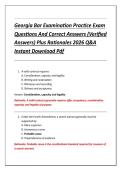
New Jersey Bar Examination Exam
Questions And Correct Answers
(Verified Answers) Plus Rationale 2026
Q&A| Instant Download Pdf
1. In New Jersey, which of the following is considered a valid
consideration for a contract?
A. Past performance
B. A promise to do something one is not legally obligated to do
C. A gift
D. Moral obligation
Answer: B
Rationale: Consideration requires a bargained-for exchange. A
promise to perform a legal duty not already owed constitutes
valid consideration.
2. Under New Jersey law, the Statute of Frauds requires certain contracts
to be in writing. Which of the following is included?
A. Contract for personal services under $500
B. Contract for the sale of goods under $500
C. Contract for the sale of real estate
D. Oral lease for 6 months
Answer: C
Rationale: Contracts for the sale of real estate must be in writing to
be enforceable under the Statute of Frauds.
3. Which of the following types of damages is intended to punish a
defendant and deter similar conduct?
A. Compensatory
B. Nominal
, C. Punitive
D. Liquidated
Answer: C
Rationale: Punitive damages are designed to punish wrongdoing and
deter future misconduct, not merely compensate the plaintiff.
4. In New Jersey, which of the following is true regarding joint tenancy?
A. Interest passes to heirs
B. Can be terminated only by court order
C. Includes the right of survivorship
D. Requires a written lease
Answer: C
Rationale: Joint tenancy automatically includes a right of
survivorship, meaning the surviving tenant inherits the deceased
tenant’s interest.
5. Which of the following is required for a valid will under New Jersey
law?
A. Signed by the testator and witnessed by two competent witnesses
B. Notarization only
C. Only the testator’s signature
D. Oral declaration before a judge
Answer: A
Rationale: New Jersey requires a written will signed by the testator
and witnessed by at least two competent witnesses.
6. Under New Jersey law, when does the statute of limitations for
personal injury typically begin?
A. On the date of settlement
B. On the date of injury
C. On the date of discovery of injury only
D. On the date the lawsuit is filed
Answer: B
Rationale: The statute of limitations for personal injury generally
begins on the date the injury occurs.
7. Which of the following is a defense to a negligence claim in New
Jersey?
A. Strict liability
, B. Res ipsa loquitur
C. Comparative negligence
D. Vicarious liability
Answer: C
Rationale: New Jersey follows comparative negligence, which can
reduce recovery based on the plaintiff’s own fault.
8. In New Jersey, the “parol evidence rule” generally prevents:
A. Using oral evidence to create a contract
B. Using prior or contemporaneous agreements to vary the terms of
a written contract
C. Introducing any evidence in contract disputes
D. Oral contracts for services under $1,000
Answer: B
Rationale: The parol evidence rule bars evidence of prior or
contemporaneous agreements that contradict a fully integrated
written contract.
9. Under New Jersey criminal law, which of the following constitutes
first-degree murder?
A. Homicide resulting from reckless driving
B. Homicide committed by accident
C. Murder with premeditation
D. Manslaughter
Answer: C
Rationale: First-degree murder requires intentional and
premeditated killing.
10. The New Jersey “good faith” requirement in commercial
contracts is codified under which statute?
A. New Jersey Uniform Commercial Code (UCC)
B. New Jersey Civil Rights Act
C. UCC § 1-304
D. NJ Consumer Fraud Act
Answer: C
Rationale: UCC § 1-304 imposes an obligation of good faith in the
performance and enforcement of contracts.
Questions And Correct Answers
(Verified Answers) Plus Rationale 2026
Q&A| Instant Download Pdf
1. In New Jersey, which of the following is considered a valid
consideration for a contract?
A. Past performance
B. A promise to do something one is not legally obligated to do
C. A gift
D. Moral obligation
Answer: B
Rationale: Consideration requires a bargained-for exchange. A
promise to perform a legal duty not already owed constitutes
valid consideration.
2. Under New Jersey law, the Statute of Frauds requires certain contracts
to be in writing. Which of the following is included?
A. Contract for personal services under $500
B. Contract for the sale of goods under $500
C. Contract for the sale of real estate
D. Oral lease for 6 months
Answer: C
Rationale: Contracts for the sale of real estate must be in writing to
be enforceable under the Statute of Frauds.
3. Which of the following types of damages is intended to punish a
defendant and deter similar conduct?
A. Compensatory
B. Nominal
, C. Punitive
D. Liquidated
Answer: C
Rationale: Punitive damages are designed to punish wrongdoing and
deter future misconduct, not merely compensate the plaintiff.
4. In New Jersey, which of the following is true regarding joint tenancy?
A. Interest passes to heirs
B. Can be terminated only by court order
C. Includes the right of survivorship
D. Requires a written lease
Answer: C
Rationale: Joint tenancy automatically includes a right of
survivorship, meaning the surviving tenant inherits the deceased
tenant’s interest.
5. Which of the following is required for a valid will under New Jersey
law?
A. Signed by the testator and witnessed by two competent witnesses
B. Notarization only
C. Only the testator’s signature
D. Oral declaration before a judge
Answer: A
Rationale: New Jersey requires a written will signed by the testator
and witnessed by at least two competent witnesses.
6. Under New Jersey law, when does the statute of limitations for
personal injury typically begin?
A. On the date of settlement
B. On the date of injury
C. On the date of discovery of injury only
D. On the date the lawsuit is filed
Answer: B
Rationale: The statute of limitations for personal injury generally
begins on the date the injury occurs.
7. Which of the following is a defense to a negligence claim in New
Jersey?
A. Strict liability
, B. Res ipsa loquitur
C. Comparative negligence
D. Vicarious liability
Answer: C
Rationale: New Jersey follows comparative negligence, which can
reduce recovery based on the plaintiff’s own fault.
8. In New Jersey, the “parol evidence rule” generally prevents:
A. Using oral evidence to create a contract
B. Using prior or contemporaneous agreements to vary the terms of
a written contract
C. Introducing any evidence in contract disputes
D. Oral contracts for services under $1,000
Answer: B
Rationale: The parol evidence rule bars evidence of prior or
contemporaneous agreements that contradict a fully integrated
written contract.
9. Under New Jersey criminal law, which of the following constitutes
first-degree murder?
A. Homicide resulting from reckless driving
B. Homicide committed by accident
C. Murder with premeditation
D. Manslaughter
Answer: C
Rationale: First-degree murder requires intentional and
premeditated killing.
10. The New Jersey “good faith” requirement in commercial
contracts is codified under which statute?
A. New Jersey Uniform Commercial Code (UCC)
B. New Jersey Civil Rights Act
C. UCC § 1-304
D. NJ Consumer Fraud Act
Answer: C
Rationale: UCC § 1-304 imposes an obligation of good faith in the
performance and enforcement of contracts.