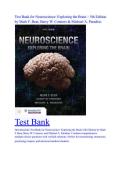
Test Bank for Neuroscience: Exploring the Brain – 5th Edition
by Mark F. Bear, Barry W. Connors & Michael A. Paradiso
Test Bank
Download the Test Bank for Neuroscience: Exploring the Brain (5th Edition) by Mark
F. Bear, Barry W. Connors, and Michael A. Paradiso. Contains comprehensive
multiple-choice questions with verified solutions. Perfect for neurobiology instructors,
psychology majors, and advanced medical students.
,Neuroscience: Exploring the Brain – 5th Edition
Chapter 1: Introduction to Neuroscience
1. According to Hippocrates, which organ is responsible for joys, delights, laughter, and
sorrows?
A) The heart
B) The liver
C) The brain
D) The stomach
E) The lungs
Answer: C) The brain
2. When was the Society for Neuroscience founded?
A) 1950
B) 1960
C) 1970
D) 1980
E) 1990
Answer: C) 1970
3. What is trepanation?
A) A method of brain imaging
B) The process of boring holes in skulls
C) A type of brain surgery for tumors
D) A technique for measuring brain waves
E) A form of psychological therapy
Answer: B) The process of boring holes in skulls
4. How long ago were people performing trepanation procedures?
A) 2000 years ago
B) 3000 years ago
C) 5000 years ago
D) 7000 years ago
E) 10000 years ago
Answer: D) 7000 years ago
5. According to ancient Egyptian physicians, which organ was considered the seat of the
soul?
A) The brain
B) The liver
C) The heart
D) The lungs
E) The kidneys
Answer: C) The heart
,6. What did ancient Egyptians do with the brain during mummification?
A) Preserved it carefully in a special jar
B) Left it inside the skull
C) Scooped it out through the nostrils and discarded it
D) Studied it for medical purposes
E) Offered it to the gods
Answer: C) Scooped it out through the nostrils and discarded it
7. Who is known as the father of Western medicine?
A) Aristotle
B) Galen
C) Hippocrates
D) Vesalius
E) Descartes
Answer: C) Hippocrates
8. What did Aristotle believe was the function of the brain?
A) The seat of intelligence
B) A radiator for cooling blood
C) The center of emotions
D) The source of sensations
E) The controller of movement
Answer: B) A radiator for cooling blood
9. Who was the most important figure in Roman medicine?
A) Hippocrates
B) Aristotle
C) Galen
D) Vesalius
E) Descartes
Answer: C) Galen
10. What were Galen's favorite subjects for dissection?
A) Humans
B) Dogs
C) Sheep
D) Pigs
E) Monkeys
Answer: C) Sheep
11. Based on the texture of brain tissue, what did Galen conclude about the cerebrum?
A) It commanded the muscles
B) It received sensations
, C) It regulated temperature
D) It pumped blood
E) It stored bile
Answer: B) It received sensations
12. What are the hollow spaces inside the brain called?
A) Cavities
B) Chambers
C) Ventricles
D) Pockets
E) Cisterns
Answer: C) Ventricles
13. According to Galen's theory, how did the brain communicate with the body?
A) Through electrical signals
B) Through movement of humors via hollow nerves
C) Through solid nerve fibers
D) Through blood vessels
E) Through spiritual energy
Answer: B) Through movement of humors via hollow nerves
14. Who was the great anatomist who added more detail to brain structure during the
Renaissance?
A) Galen
B) Vesalius
C) Descartes
D) Bell
E) Broca
Answer: B) Vesalius
15. What invention in the early seventeenth century supported the ventricular theory of brain
function?
A) The microscope
B) Hydraulically controlled mechanical devices
C) The printing press
D) Electrical generators
E) Steam engines
Answer: B) Hydraulically controlled mechanical devices
16. Who was a chief advocate of the fluid-mechanical theory of brain function?
A) Galen
B) Vesalius
C) René Descartes
D) Charles Bell
by Mark F. Bear, Barry W. Connors & Michael A. Paradiso
Test Bank
Download the Test Bank for Neuroscience: Exploring the Brain (5th Edition) by Mark
F. Bear, Barry W. Connors, and Michael A. Paradiso. Contains comprehensive
multiple-choice questions with verified solutions. Perfect for neurobiology instructors,
psychology majors, and advanced medical students.
,Neuroscience: Exploring the Brain – 5th Edition
Chapter 1: Introduction to Neuroscience
1. According to Hippocrates, which organ is responsible for joys, delights, laughter, and
sorrows?
A) The heart
B) The liver
C) The brain
D) The stomach
E) The lungs
Answer: C) The brain
2. When was the Society for Neuroscience founded?
A) 1950
B) 1960
C) 1970
D) 1980
E) 1990
Answer: C) 1970
3. What is trepanation?
A) A method of brain imaging
B) The process of boring holes in skulls
C) A type of brain surgery for tumors
D) A technique for measuring brain waves
E) A form of psychological therapy
Answer: B) The process of boring holes in skulls
4. How long ago were people performing trepanation procedures?
A) 2000 years ago
B) 3000 years ago
C) 5000 years ago
D) 7000 years ago
E) 10000 years ago
Answer: D) 7000 years ago
5. According to ancient Egyptian physicians, which organ was considered the seat of the
soul?
A) The brain
B) The liver
C) The heart
D) The lungs
E) The kidneys
Answer: C) The heart
,6. What did ancient Egyptians do with the brain during mummification?
A) Preserved it carefully in a special jar
B) Left it inside the skull
C) Scooped it out through the nostrils and discarded it
D) Studied it for medical purposes
E) Offered it to the gods
Answer: C) Scooped it out through the nostrils and discarded it
7. Who is known as the father of Western medicine?
A) Aristotle
B) Galen
C) Hippocrates
D) Vesalius
E) Descartes
Answer: C) Hippocrates
8. What did Aristotle believe was the function of the brain?
A) The seat of intelligence
B) A radiator for cooling blood
C) The center of emotions
D) The source of sensations
E) The controller of movement
Answer: B) A radiator for cooling blood
9. Who was the most important figure in Roman medicine?
A) Hippocrates
B) Aristotle
C) Galen
D) Vesalius
E) Descartes
Answer: C) Galen
10. What were Galen's favorite subjects for dissection?
A) Humans
B) Dogs
C) Sheep
D) Pigs
E) Monkeys
Answer: C) Sheep
11. Based on the texture of brain tissue, what did Galen conclude about the cerebrum?
A) It commanded the muscles
B) It received sensations
, C) It regulated temperature
D) It pumped blood
E) It stored bile
Answer: B) It received sensations
12. What are the hollow spaces inside the brain called?
A) Cavities
B) Chambers
C) Ventricles
D) Pockets
E) Cisterns
Answer: C) Ventricles
13. According to Galen's theory, how did the brain communicate with the body?
A) Through electrical signals
B) Through movement of humors via hollow nerves
C) Through solid nerve fibers
D) Through blood vessels
E) Through spiritual energy
Answer: B) Through movement of humors via hollow nerves
14. Who was the great anatomist who added more detail to brain structure during the
Renaissance?
A) Galen
B) Vesalius
C) Descartes
D) Bell
E) Broca
Answer: B) Vesalius
15. What invention in the early seventeenth century supported the ventricular theory of brain
function?
A) The microscope
B) Hydraulically controlled mechanical devices
C) The printing press
D) Electrical generators
E) Steam engines
Answer: B) Hydraulically controlled mechanical devices
16. Who was a chief advocate of the fluid-mechanical theory of brain function?
A) Galen
B) Vesalius
C) René Descartes
D) Charles Bell