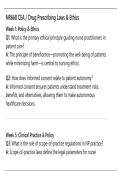
NR668 CEA / Drug Prescribing Laws & Ethics
Week 1: Policy & Ethics
Q1: What is the primary ethical principle guiding nurse practitioners in
patient care?
A: The principle of beneficence—promoting the well-being of patients
while minimizing harm—is central to nursing ethics.
Q2: How does informed consent relate to patient autonomy?
A: Informed consent ensures patients understand treatment risks,
benefits, and alternatives, allowing them to make autonomous
healthcare decisions.
Week 5: Clinical Practice & Policy
Q3: What is the role of scope-of-practice regulations in NP practice?
A: Scope-of-practice laws define the legal parameters for nurse
, practitioners’ clinical activities, ensuring safe and standardized patient
care.
Q4: How should an NP handle conflicts between institutional policy and
ethical patient care?
A: The NP should advocate for the patient, seek ethical consultation,
and document actions while adhering to professional standards.
Week 7: Advanced Ethics & Legal Considerations
Q5: What is the difference between negligence and malpractice?
A: Negligence is failing to exercise reasonable care, while malpractice
involves professional misconduct that causes harm to a patient.
Q6: How do HIPAA regulations affect NP practice?
A: HIPAA ensures patient health information is protected and only
shared with authorized personnel, impacting documentation,
communication, and electronic records.
Week 1: Policy & Ethics
Q1: What is the primary ethical principle guiding nurse practitioners in
patient care?
A: The principle of beneficence—promoting the well-being of patients
while minimizing harm—is central to nursing ethics.
Q2: How does informed consent relate to patient autonomy?
A: Informed consent ensures patients understand treatment risks,
benefits, and alternatives, allowing them to make autonomous
healthcare decisions.
Week 5: Clinical Practice & Policy
Q3: What is the role of scope-of-practice regulations in NP practice?
A: Scope-of-practice laws define the legal parameters for nurse
, practitioners’ clinical activities, ensuring safe and standardized patient
care.
Q4: How should an NP handle conflicts between institutional policy and
ethical patient care?
A: The NP should advocate for the patient, seek ethical consultation,
and document actions while adhering to professional standards.
Week 7: Advanced Ethics & Legal Considerations
Q5: What is the difference between negligence and malpractice?
A: Negligence is failing to exercise reasonable care, while malpractice
involves professional misconduct that causes harm to a patient.
Q6: How do HIPAA regulations affect NP practice?
A: HIPAA ensures patient health information is protected and only
shared with authorized personnel, impacting documentation,
communication, and electronic records.