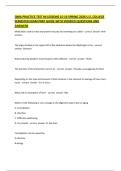
QMA PRACTICE TEST #2 LESSONS 8-11 SPRING 2026 U.S. COLLEGE
SEMESTER EXAM PREP GUIDE WITH VERIFIED QUESTIONS AND
ANSWERS
Something that serves to relieve or alleviate symptoms, but not cure is called:
A. Pruritus
B. Stomatitis
C. Palliative
D. Apnea - correct answer -C. Palliative
The most common complications associated with terminal illness include:
A. Sleeping
B. Lack of appetite
C. Nausea and vomiting
D. Stomatitis
E. All the above - correct answer -E. All the above
Which of the following is true about pain?
A. There will always be visible signs of pain
B. Everyone always feels the same intensity of pain from the same stimuli
C. We adapt to our discomfort, leading to periods of very minimal signs of discomfort. Lack of
pain expression does not mean lack of pain
D. None of the above - correct answer -C. We adapt to our discomfort, leading to periods of
very minimal signs of discomfort. Lack of pain expression does not mean lack of pain
The study of medication is called - correct answer -Pharmacology
, The official name of a medication is known as the - correct answer -Generic name
The systemic affect - correct answer -Affects the entire body
An adverse effect is defined as - correct answer -And undesired side effect or toxicity, harmful,
unfavorable
Factors that influence medication action include
A. Dosage strength
B. Presence of food in the stomach
C. Disease state of the resident
D. None of the above
E. All of the above - correct answer -E. All of the above
Rationale for administration of medication include
A. cure illness and treat disease
B. Relieve symptoms
C. Prevent illness
D. Aid in diagnosis of illness
E. Both a and B
F. All of the above - correct answer -F. All of the above
Legend medication are - correct answer -Medication so I can only be obtained with a
prescription filled by a licensed pharmacist
The QMA can do all of the following except
A. Prepare medication for administration
SEMESTER EXAM PREP GUIDE WITH VERIFIED QUESTIONS AND
ANSWERS
Something that serves to relieve or alleviate symptoms, but not cure is called:
A. Pruritus
B. Stomatitis
C. Palliative
D. Apnea - correct answer -C. Palliative
The most common complications associated with terminal illness include:
A. Sleeping
B. Lack of appetite
C. Nausea and vomiting
D. Stomatitis
E. All the above - correct answer -E. All the above
Which of the following is true about pain?
A. There will always be visible signs of pain
B. Everyone always feels the same intensity of pain from the same stimuli
C. We adapt to our discomfort, leading to periods of very minimal signs of discomfort. Lack of
pain expression does not mean lack of pain
D. None of the above - correct answer -C. We adapt to our discomfort, leading to periods of
very minimal signs of discomfort. Lack of pain expression does not mean lack of pain
The study of medication is called - correct answer -Pharmacology
, The official name of a medication is known as the - correct answer -Generic name
The systemic affect - correct answer -Affects the entire body
An adverse effect is defined as - correct answer -And undesired side effect or toxicity, harmful,
unfavorable
Factors that influence medication action include
A. Dosage strength
B. Presence of food in the stomach
C. Disease state of the resident
D. None of the above
E. All of the above - correct answer -E. All of the above
Rationale for administration of medication include
A. cure illness and treat disease
B. Relieve symptoms
C. Prevent illness
D. Aid in diagnosis of illness
E. Both a and B
F. All of the above - correct answer -F. All of the above
Legend medication are - correct answer -Medication so I can only be obtained with a
prescription filled by a licensed pharmacist
The QMA can do all of the following except
A. Prepare medication for administration