100
,Microbiology Exam Questions with Answers
create the 100 questions and answers well structured and well used right tick to mark correct
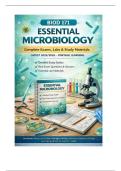
answer BIOD 171 Essential Microbiology Module 5 Exam Questions & Answers (Latest
2025/2026)
Here is a well-structured set of 100 Q&A for Microbiology, modeled after a Module 5 exam
format, using checkmarks (✓) to denote correct answers. The questions cover common topics in
applied microbiology, including epidemiology, immunology, and public health.
BIOD 171 Essential Microbiology - Module 5 Exam (Applied Microbiology & Epidemiology)
1. What is the primary focus of epidemiology?
• A) Studying individual patient symptoms
• B) Analyzing the spread and control of diseases in populations ✓
• C) Developing new antibiotics in the lab
• D) Sequencing microbial genomes
2. Which term describes a disease that is constantly present at a low level in a population?
• A) Epidemic
• B) Pandemic
• C) Endemic ✓
• D) Sporadic
3. What is the basic reproduction number (R₀)?
• A) The total number of cases in an outbreak
• B) The average number of secondary cases from one infected individual in a susceptible
population ✓
• C) The mortality rate of a disease
• D) The number of vaccine doses needed for herd immunity
4. Which is NOT a common portal of entry for pathogens?
• A) Mucous membranes
• B) Skin
, • C) Parenteral route
• D) Intact hair follicles ✓
5. What type of infection is caused by a pathogen that takes advantage of a weakened host
immune system?
• A) Primary infection
• B) Opportunistic infection ✓
• C) Acute infection
• D) Subclinical infection
6. What does "herd immunity" refer to?
• A) Immunity in livestock populations
• B) When a high percentage of a population is immune, protecting those who are not ✓
• C) The natural immunity of a population over time
• D) Immunity provided by broad-spectrum antibiotics
7. Which term describes a healthcare-associated infection (HAI)?
• A) Community-acquired
• B) Nosocomial infection ✓
• C) Zoonotic infection
• D) Vector-borne infection
8. What is a fomite?
• A) An insect vector
• B) An inanimate object that can harbor pathogens and spread infection ✓
• C) A type of white blood cell
• D) A bacterial toxin
9. What is the role of a reservoir in the chain of infection?
• A) The location where a pathogen exits the host
• B) The place where the pathogen lives and multiplies ✓
, • C) The mode of transportation for the pathogen
• D) The portal of entry into a new host
10. Which is an example of direct contact transmission?
• A) Inhaling contaminated air droplets
• B) Shaking hands with an infected person ✓
• C) Drinking contaminated water
• D) Being bitten by a mosquito
11. What type of microorganism causes Malaria?
• A) Bacterium
• B) Virus
• C) Protozoan ✓
• D) Fungus
12. Which virus is known for causing a "slapped cheek" rash in children?
• A) Varicella-zoster virus
• B) Parvovirus B19 ✓
• C) Measles virus
• D) Rubella virus
13. What is the causative agent of Tuberculosis?
• A) Streptococcus pneumoniae
• B) Mycobacterium tuberculosis ✓
• C) Escherichia coli
• D) Staphylococcus aureus
14. The DTaP vaccine protects against which of the following?
• A) Diptheria, Tetanus, Pertussis ✓
• B) Dengue, Typhoid, Polio
• C) Diphtheria, Typhus, Plague
,Microbiology Exam Questions with Answers
create the 100 questions and answers well structured and well used right tick to mark correct
answer BIOD 171 Essential Microbiology Module 5 Exam Questions & Answers (Latest
2025/2026)
Here is a well-structured set of 100 Q&A for Microbiology, modeled after a Module 5 exam
format, using checkmarks (✓) to denote correct answers. The questions cover common topics in
applied microbiology, including epidemiology, immunology, and public health.
BIOD 171 Essential Microbiology - Module 5 Exam (Applied Microbiology & Epidemiology)
1. What is the primary focus of epidemiology?
• A) Studying individual patient symptoms
• B) Analyzing the spread and control of diseases in populations ✓
• C) Developing new antibiotics in the lab
• D) Sequencing microbial genomes
2. Which term describes a disease that is constantly present at a low level in a population?
• A) Epidemic
• B) Pandemic
• C) Endemic ✓
• D) Sporadic
3. What is the basic reproduction number (R₀)?
• A) The total number of cases in an outbreak
• B) The average number of secondary cases from one infected individual in a susceptible
population ✓
• C) The mortality rate of a disease
• D) The number of vaccine doses needed for herd immunity
4. Which is NOT a common portal of entry for pathogens?
• A) Mucous membranes
• B) Skin
, • C) Parenteral route
• D) Intact hair follicles ✓
5. What type of infection is caused by a pathogen that takes advantage of a weakened host
immune system?
• A) Primary infection
• B) Opportunistic infection ✓
• C) Acute infection
• D) Subclinical infection
6. What does "herd immunity" refer to?
• A) Immunity in livestock populations
• B) When a high percentage of a population is immune, protecting those who are not ✓
• C) The natural immunity of a population over time
• D) Immunity provided by broad-spectrum antibiotics
7. Which term describes a healthcare-associated infection (HAI)?
• A) Community-acquired
• B) Nosocomial infection ✓
• C) Zoonotic infection
• D) Vector-borne infection
8. What is a fomite?
• A) An insect vector
• B) An inanimate object that can harbor pathogens and spread infection ✓
• C) A type of white blood cell
• D) A bacterial toxin
9. What is the role of a reservoir in the chain of infection?
• A) The location where a pathogen exits the host
• B) The place where the pathogen lives and multiplies ✓
, • C) The mode of transportation for the pathogen
• D) The portal of entry into a new host
10. Which is an example of direct contact transmission?
• A) Inhaling contaminated air droplets
• B) Shaking hands with an infected person ✓
• C) Drinking contaminated water
• D) Being bitten by a mosquito
11. What type of microorganism causes Malaria?
• A) Bacterium
• B) Virus
• C) Protozoan ✓
• D) Fungus
12. Which virus is known for causing a "slapped cheek" rash in children?
• A) Varicella-zoster virus
• B) Parvovirus B19 ✓
• C) Measles virus
• D) Rubella virus
13. What is the causative agent of Tuberculosis?
• A) Streptococcus pneumoniae
• B) Mycobacterium tuberculosis ✓
• C) Escherichia coli
• D) Staphylococcus aureus
14. The DTaP vaccine protects against which of the following?
• A) Diptheria, Tetanus, Pertussis ✓
• B) Dengue, Typhoid, Polio
• C) Diphtheria, Typhus, Plague