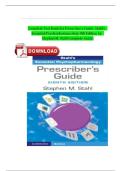
, Prescriber's Guide- Stahl's Essential Psychopharmacology 8th Edition Test Bank
s5 s5 s5 s5 s5 s5 s5 s5
Chapter 1 Chemimical Neurotransmissin
s5 s5 s5
Chapter Questions on Alcohol abstinence/Alcohol dependence/Alcohol withdrawal
s5 s5 s5 s5 s5 s5 s5
1.
A client has been prescribed naltrexone (Trexan) for treatment of alcohol dependence. The nurs
s5 s5 s5 s5 s5 s5 s5 s5 s5 s5 s5 s5 s5
e has explained the drugs purpose to the client. The nurse determines that the client has underst
s5 s5 s5 s5 s5 s5 s5 s5 s5 s5 s5 s5 s5 s5 s5 s5
ood the instructions when the client identifies which of the following about the drug?
s5 s5 s5 s5 s5 s5 s5 s5 s5 s5 s5 s5 s5
A)
Causes itching if alcohol is consumed
s5 s5 s5 s5 s5 s5
B)
Produces the euphoria of alcohol s5 s5 s5 s5 s
5 C)
Reduces the appeal of alcohol s5 s5 s5 s5 s5
D)
Improves appetite and nutritional status s5 s5 s5 s5 s
5 2.
An adolescent client tells the nurse that he or she occasionally sniffs airplane glue. When discus
s5 s5 s5 s5 s5 s5 s5 s5 s5 s5 s5 s5 s5 s5 s5
sing the effects of long-
s5 s5 s5 s5
term use of inhalants, which of the following would the nurse most likely include?
s5 s5 s5 s5 s5 s5 s5 s5 s5 s5 s5 s5 s5
A)
Tremors and CNS arousal s5 s5 s5 s5
B)
Enhanced normal heart rhythms s5 s5 s5 s5
C)
Enhanced attention focus and memory s5 s5 s5 s5 s5
D)
www.nursylab.com
,Brain damage and cognitive abnormalities
s5 s5 s5 s5 s5
3.
A client tells the nurse that he is committed to trying to quit smoking. When teaching the client a
s5 s5 s5 s5 s5 s5 s5 s5 s5 s5 s5 s5 s5 s5 s5 s5 s5 s5
bout smoking cessation, which of the following would the nurse include?
s5 s5 s5 s5 s5 s5 s5 s5 s5 s5
A)
Success usually involves more than one type of intervention.
s5 s5 s5 s5 s5 s5 s5 s5 s5
B)
Relapse is fairly rare within the first year of quitting.
s5 s5 s5 s5 s5 s5 s5 s5 s5
s5 C)
Ear acupressure is a highly proven method for quitting.
s5 s5 s5 s5 s5 s5 s5 s5
s5 D)
Education is key for smoking cessation. s5 s5 s5 s5 s5 s5
4.
The nurse is completing the admission of a client who is seeking treatment for alcoholism. He t
s5 s5 s5 s5 s5 s5 s5 s5 s5 s5 s5 s5 s5 s5 s5 s5
ells the nurse that the last time he had any alcohol to drink was at 10:00 AM before he left for
s5 s5 s5 s5 s5 s5 s5 s5 s5 s5 s5 s5 s5 s5 s5 s5 s5 s5 s5 s5 s5
the hospital. The nurse closely monitors the client. Which of the following would lead the nurse
s5 s5 s5 s5 s5 s5 s5 s5 s5 s5 s5 s5 s5 s5 s5 s
5to suspect that the client is experiencing stage 1 of alcohol withdrawal syndrome? Select all that
s5 s5 s5 s5 s5 s5 s5 s5 s5 s5 s5 s5 s5 s5 s5
apply.
s5
A)
Slight diaphoresis s5
s5 B)
Hand tremors s5 s5
C)
Intermittent confusion s5
s5 D)
www.nursylab.com
, Heart rate of 135 beats/min
s5 s5 s5 s5 s5
E)
Normal blood pressure s5 s5 s5
5.
A nurse is talking with a 57-year-
s5 s5 s5 s5 s5 s5
old client who has been a heavy drinker for many years. The client is being treated for alcoholi
s5 s5 s5 s5 s5 s5 s5 s5 s5 s5 s5 s5 s5 s5 s5 s5 s5
sm, and this is her second week as an inpatient on the psychiatric unit. It is 5:00 AM, and the c
s5 s5 s5 s5 s5 s5 s5 s5 s5 s5 s5 s5 s5 s5 s5 s5 s5 s5 s5 s5
lient has been having difficulty sleeping. The client is an orthopedic nurse, and although she is
s5 s5 s5 s5 s5 s5 s5 s5 s5 s5 s5 s5 s5 s5 s5 s5
clothed in a hospital- s5 s5 s5
issued gown and robe, she is wearing a stethoscope around her neck that the nurse recognizes
s5 s5 s5 s5 s5 s5 s5 s5 s5 s5 s5 s5 s5 s5 s5 s5
as belonging to one of the staff nurses.
s5 s5 s5 s5 s5 s5 s5
When the nurse asks her why she is wearing the stethoscope and where she got it, the client give
s5 s5 s5 s5 s5 s5 s5 s5 s5 s5 s5 s5 s5 s5 s5 s5 s5 s5
s her a long and involved reply that basically describes how her nursing supervisor came to vis
s5 s5 s5 s5 s5 s5 s5 s5 s5 s5 s5 s5 s5 s5 s5 s5
it and gave it to her to wear so shed remember to get well. The nurse suspects that the client m
s5 s5 s5 s5 s5 s5 s5 s5 s5 s5 s5 s5 s5 s5 s5 s5 s5 s5 s5 s5
ay be experiencing which of the following?
s5 s5 s5 s5 s5 s5
A)
Wernickes syndrome s5 s5
B)
Delirium tremens s5 s
5 C)
Korsakoffs psychosis s5 s5
D)
Malignant hyperthermia s5
s5 6.
A nurse is using motivational therapy with a female client with alcoholism. The client, who is
s5 s5 s5 s5 s5 s5 s5 s5 s5 s5 s5 s5 s5 s5 s5 s5
unwilling to consider changing her drinking behavior, emphatically states, I am not an alcoholic;
s5 s5 s5 s5 s5 s5 s5 s5 s5 s5 s5 s5 s5
you cant make me stop drinking. Which response by the nurse would be most appropriate?
s5 s5 s5 s5 s5 s5 s5 s5 s5 s5 s5 s5 s5 s5 s5
A)
You have to stop drinking and driving; you could kill someone.
s5 s5 s5 s5 s5 s5 s5 s5 s5 s5 s5
B)
www.nursylab.com
s5 s5 s5 s5 s5 s5 s5 s5
Chapter 1 Chemimical Neurotransmissin
s5 s5 s5
Chapter Questions on Alcohol abstinence/Alcohol dependence/Alcohol withdrawal
s5 s5 s5 s5 s5 s5 s5
1.
A client has been prescribed naltrexone (Trexan) for treatment of alcohol dependence. The nurs
s5 s5 s5 s5 s5 s5 s5 s5 s5 s5 s5 s5 s5
e has explained the drugs purpose to the client. The nurse determines that the client has underst
s5 s5 s5 s5 s5 s5 s5 s5 s5 s5 s5 s5 s5 s5 s5 s5
ood the instructions when the client identifies which of the following about the drug?
s5 s5 s5 s5 s5 s5 s5 s5 s5 s5 s5 s5 s5
A)
Causes itching if alcohol is consumed
s5 s5 s5 s5 s5 s5
B)
Produces the euphoria of alcohol s5 s5 s5 s5 s
5 C)
Reduces the appeal of alcohol s5 s5 s5 s5 s5
D)
Improves appetite and nutritional status s5 s5 s5 s5 s
5 2.
An adolescent client tells the nurse that he or she occasionally sniffs airplane glue. When discus
s5 s5 s5 s5 s5 s5 s5 s5 s5 s5 s5 s5 s5 s5 s5
sing the effects of long-
s5 s5 s5 s5
term use of inhalants, which of the following would the nurse most likely include?
s5 s5 s5 s5 s5 s5 s5 s5 s5 s5 s5 s5 s5
A)
Tremors and CNS arousal s5 s5 s5 s5
B)
Enhanced normal heart rhythms s5 s5 s5 s5
C)
Enhanced attention focus and memory s5 s5 s5 s5 s5
D)
www.nursylab.com
,Brain damage and cognitive abnormalities
s5 s5 s5 s5 s5
3.
A client tells the nurse that he is committed to trying to quit smoking. When teaching the client a
s5 s5 s5 s5 s5 s5 s5 s5 s5 s5 s5 s5 s5 s5 s5 s5 s5 s5
bout smoking cessation, which of the following would the nurse include?
s5 s5 s5 s5 s5 s5 s5 s5 s5 s5
A)
Success usually involves more than one type of intervention.
s5 s5 s5 s5 s5 s5 s5 s5 s5
B)
Relapse is fairly rare within the first year of quitting.
s5 s5 s5 s5 s5 s5 s5 s5 s5
s5 C)
Ear acupressure is a highly proven method for quitting.
s5 s5 s5 s5 s5 s5 s5 s5
s5 D)
Education is key for smoking cessation. s5 s5 s5 s5 s5 s5
4.
The nurse is completing the admission of a client who is seeking treatment for alcoholism. He t
s5 s5 s5 s5 s5 s5 s5 s5 s5 s5 s5 s5 s5 s5 s5 s5
ells the nurse that the last time he had any alcohol to drink was at 10:00 AM before he left for
s5 s5 s5 s5 s5 s5 s5 s5 s5 s5 s5 s5 s5 s5 s5 s5 s5 s5 s5 s5 s5
the hospital. The nurse closely monitors the client. Which of the following would lead the nurse
s5 s5 s5 s5 s5 s5 s5 s5 s5 s5 s5 s5 s5 s5 s5 s
5to suspect that the client is experiencing stage 1 of alcohol withdrawal syndrome? Select all that
s5 s5 s5 s5 s5 s5 s5 s5 s5 s5 s5 s5 s5 s5 s5
apply.
s5
A)
Slight diaphoresis s5
s5 B)
Hand tremors s5 s5
C)
Intermittent confusion s5
s5 D)
www.nursylab.com
, Heart rate of 135 beats/min
s5 s5 s5 s5 s5
E)
Normal blood pressure s5 s5 s5
5.
A nurse is talking with a 57-year-
s5 s5 s5 s5 s5 s5
old client who has been a heavy drinker for many years. The client is being treated for alcoholi
s5 s5 s5 s5 s5 s5 s5 s5 s5 s5 s5 s5 s5 s5 s5 s5 s5
sm, and this is her second week as an inpatient on the psychiatric unit. It is 5:00 AM, and the c
s5 s5 s5 s5 s5 s5 s5 s5 s5 s5 s5 s5 s5 s5 s5 s5 s5 s5 s5 s5
lient has been having difficulty sleeping. The client is an orthopedic nurse, and although she is
s5 s5 s5 s5 s5 s5 s5 s5 s5 s5 s5 s5 s5 s5 s5 s5
clothed in a hospital- s5 s5 s5
issued gown and robe, she is wearing a stethoscope around her neck that the nurse recognizes
s5 s5 s5 s5 s5 s5 s5 s5 s5 s5 s5 s5 s5 s5 s5 s5
as belonging to one of the staff nurses.
s5 s5 s5 s5 s5 s5 s5
When the nurse asks her why she is wearing the stethoscope and where she got it, the client give
s5 s5 s5 s5 s5 s5 s5 s5 s5 s5 s5 s5 s5 s5 s5 s5 s5 s5
s her a long and involved reply that basically describes how her nursing supervisor came to vis
s5 s5 s5 s5 s5 s5 s5 s5 s5 s5 s5 s5 s5 s5 s5 s5
it and gave it to her to wear so shed remember to get well. The nurse suspects that the client m
s5 s5 s5 s5 s5 s5 s5 s5 s5 s5 s5 s5 s5 s5 s5 s5 s5 s5 s5 s5
ay be experiencing which of the following?
s5 s5 s5 s5 s5 s5
A)
Wernickes syndrome s5 s5
B)
Delirium tremens s5 s
5 C)
Korsakoffs psychosis s5 s5
D)
Malignant hyperthermia s5
s5 6.
A nurse is using motivational therapy with a female client with alcoholism. The client, who is
s5 s5 s5 s5 s5 s5 s5 s5 s5 s5 s5 s5 s5 s5 s5 s5
unwilling to consider changing her drinking behavior, emphatically states, I am not an alcoholic;
s5 s5 s5 s5 s5 s5 s5 s5 s5 s5 s5 s5 s5
you cant make me stop drinking. Which response by the nurse would be most appropriate?
s5 s5 s5 s5 s5 s5 s5 s5 s5 s5 s5 s5 s5 s5 s5
A)
You have to stop drinking and driving; you could kill someone.
s5 s5 s5 s5 s5 s5 s5 s5 s5 s5 s5
B)
www.nursylab.com