Stuvia.com - The Marketplace to Buy and Sell your Study Material
Comprehensive Study Guide- Solved Exam Q&A
BIO 152 EXAM 5 |2025-2026 LATEST UPDATED| REAL EXAM QUESTIONS
AND ANSWERS | 100% RATED CORRECT | 100% VERFIED | ALREADY
GRADED A+
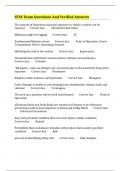
1. What are algae?: NOT plants; they are photosynthetic protists
2. What is a plant?: a photosynthetic autotroph
3. What are plants cell walls made of?: cellulose
4. What is an apical meristem?: group of undifferentiated cells that divide to produce increased length
of stems and roots
5. What is mychorrhizae?: mutualistic symbiosis between fungus and plant
6. What makes an animal and animal?: most have nerves and muscles, they move at some life stage
(self-powered), and they have blastulas
7. What is a blastula?: hollow ball of cells
8. What does a fungus body look like?: mycelium - main body of a fungus; hyphae - filaments
9. What makes a fungus a fungus?: heterotrophs, cell walls of chitin, has septa, sometimes have
temporary fruiting bodies that disperse spores, apical growth of filaments, and fertilization is
divided into two phases
10. What are the two phases of fertilization in fungi?: the cell cytoplasm fuses and then the nuclei fuse
11. What is a synamorphy?: a shared derived trait
Downloaded by: aplusgrade0 | Want to earn $1.236
Distribution 2025/2026!!!!!!
of this document is illegal Page
extra per 2 of 19
year?
, Stuvia.com - The Marketplace to Buy and Sell your Study Material
Comprehensive Study Guide- Solved Exam Q&A
12. What are the 3 main types of multicellular growth?: mitotic cell division, cell expansion, and cell
differentiation
13. What are the types of flexibility in growth?: indeterminate and determinate growth
14. What is indeterminate growth?: no set stopping point
15. What is determinate growth?: set stopping point in growth
16. What are the components for the flexibility in growth for plants?: apical meristems and modular
growth
17. What is a totipotent cell?: a cell that can differentiate to any type of cell in the human body - ex a
zygote
18. What is modular growth?: New units or modules are added to the existing plant. Each module is
relatively independent of other modules and may have a distinct function, yet they all function
together to make an integrated whole. 19. What is the component for the flexibility in growth of
fungi?: apical growth
20. What is apical growth?: vertical growth from the tips of the plant
21. What is the component for the flexibility in growth of animals?: apparent movement
22. What is a clade?: A group of species that includes an ancestral species and all its descendants.
23. What are some traits of a plant?: dominant ploidy, flowers, seeds and pollen
24. What are the types of tissue in plants?: dermal, ground and vascular
25. What is the function of dermal tissue in plants?: covers and protects the plant
Downloaded by: aplusgrade0 | Want to earn $1.236
Distribution 2025/2026!!!!!!
of this document is illegal Page
extra per 3 of 19
year?
, Stuvia.com - The Marketplace to Buy and Sell your Study Material
Comprehensive Study Guide- Solved Exam Q&A
26. What is the function of ground tissue in plants?: site for photosynthesis and provides a supportive
matrix
27. What is the function of vascular tissue in plants?: transports water, sugar, and minerals to other
parts of the plant
28. What is a type of non-vascular plant (no veins for transport)?: mosses 29. What are the 4 main
tissue types in animals?: muscle, nervous, epithelial, and connective
30. How does each embryo form into particular tissue types?: germ layers
31. What are the 3 layers of the germ layer?: ectoderm, mesoderm, endoderm 32. Why is fungi
important to other organisms?: decomposition and nutrient cycling decomposers, plant growth,
biochemists, food, and pathogens
33. What is a trait that distinguishes plants from animals and fungi? Plants have ____
A. both a multicellular haploid phase and a multicellular diploid phase
B. collagen as a major component of their extracellular matrix
C. mitochondria within their cells
D. multicellular bodies
E. mycelia: A. both a multicellular haploid and a multicellular diploid phase
34. All the following traits occur in animals. Which one is also found in some non-animal organisms?
A. blastula
B. chitin
C. gastrula
Downloaded by: aplusgrade0 | Want to earn $1.236
Distribution 2025/2026!!!!!!
of this document is illegal Page
extra per 4 of 19
year?
Comprehensive Study Guide- Solved Exam Q&A
BIO 152 EXAM 5 |2025-2026 LATEST UPDATED| REAL EXAM QUESTIONS
AND ANSWERS | 100% RATED CORRECT | 100% VERFIED | ALREADY
GRADED A+
1. What are algae?: NOT plants; they are photosynthetic protists
2. What is a plant?: a photosynthetic autotroph
3. What are plants cell walls made of?: cellulose
4. What is an apical meristem?: group of undifferentiated cells that divide to produce increased length
of stems and roots
5. What is mychorrhizae?: mutualistic symbiosis between fungus and plant
6. What makes an animal and animal?: most have nerves and muscles, they move at some life stage
(self-powered), and they have blastulas
7. What is a blastula?: hollow ball of cells
8. What does a fungus body look like?: mycelium - main body of a fungus; hyphae - filaments
9. What makes a fungus a fungus?: heterotrophs, cell walls of chitin, has septa, sometimes have
temporary fruiting bodies that disperse spores, apical growth of filaments, and fertilization is
divided into two phases
10. What are the two phases of fertilization in fungi?: the cell cytoplasm fuses and then the nuclei fuse
11. What is a synamorphy?: a shared derived trait
Downloaded by: aplusgrade0 | Want to earn $1.236
Distribution 2025/2026!!!!!!
of this document is illegal Page
extra per 2 of 19
year?
, Stuvia.com - The Marketplace to Buy and Sell your Study Material
Comprehensive Study Guide- Solved Exam Q&A
12. What are the 3 main types of multicellular growth?: mitotic cell division, cell expansion, and cell
differentiation
13. What are the types of flexibility in growth?: indeterminate and determinate growth
14. What is indeterminate growth?: no set stopping point
15. What is determinate growth?: set stopping point in growth
16. What are the components for the flexibility in growth for plants?: apical meristems and modular
growth
17. What is a totipotent cell?: a cell that can differentiate to any type of cell in the human body - ex a
zygote
18. What is modular growth?: New units or modules are added to the existing plant. Each module is
relatively independent of other modules and may have a distinct function, yet they all function
together to make an integrated whole. 19. What is the component for the flexibility in growth of
fungi?: apical growth
20. What is apical growth?: vertical growth from the tips of the plant
21. What is the component for the flexibility in growth of animals?: apparent movement
22. What is a clade?: A group of species that includes an ancestral species and all its descendants.
23. What are some traits of a plant?: dominant ploidy, flowers, seeds and pollen
24. What are the types of tissue in plants?: dermal, ground and vascular
25. What is the function of dermal tissue in plants?: covers and protects the plant
Downloaded by: aplusgrade0 | Want to earn $1.236
Distribution 2025/2026!!!!!!
of this document is illegal Page
extra per 3 of 19
year?
, Stuvia.com - The Marketplace to Buy and Sell your Study Material
Comprehensive Study Guide- Solved Exam Q&A
26. What is the function of ground tissue in plants?: site for photosynthesis and provides a supportive
matrix
27. What is the function of vascular tissue in plants?: transports water, sugar, and minerals to other
parts of the plant
28. What is a type of non-vascular plant (no veins for transport)?: mosses 29. What are the 4 main
tissue types in animals?: muscle, nervous, epithelial, and connective
30. How does each embryo form into particular tissue types?: germ layers
31. What are the 3 layers of the germ layer?: ectoderm, mesoderm, endoderm 32. Why is fungi
important to other organisms?: decomposition and nutrient cycling decomposers, plant growth,
biochemists, food, and pathogens
33. What is a trait that distinguishes plants from animals and fungi? Plants have ____
A. both a multicellular haploid phase and a multicellular diploid phase
B. collagen as a major component of their extracellular matrix
C. mitochondria within their cells
D. multicellular bodies
E. mycelia: A. both a multicellular haploid and a multicellular diploid phase
34. All the following traits occur in animals. Which one is also found in some non-animal organisms?
A. blastula
B. chitin
C. gastrula
Downloaded by: aplusgrade0 | Want to earn $1.236
Distribution 2025/2026!!!!!!
of this document is illegal Page
extra per 4 of 19
year?