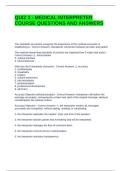
QUIZ 3 - MEDICAL INTERPRETER
COURSE QUESTIONS AND ANSWERS
The standards of practice recognize the importance of the medical encounter in
establishing a - Correct Answers -therapeutic connection between provider and patient
The medical interpreting standards of practice are organized into 3 major task areas: -
Correct Answers -1. interpretation
2. cultural interface
3. ethical behavior
What are the 9 standards of practice - Correct Answers -1. accuracy
2. confidentiality
3. impartiality
4. respect
5. cultural awareness
6. role boundaries
7. professionalism
8. professional development
9. advocacy
Accuracy Objective (ethical principle) - Correct Answers -interpreters will deliver the
message accurately, conveying the content and spirit of the original message, taking in
considerations the cultural context.
Accuracy Objective - Correct Answers -1. the interpreter renders all messages
accurately and completely, without adding, omitting, or substituting.
2. the interpreter replicates the register. style, and tone of the speaker.
3. the interpreter advises parties that everything said will be interpreted.
4. the interpreter manages the flow of communication.
5. the interpreter corrects errors in interpretation.
6. the interpreter maintains transparency.
, Confidentiality Objective (ethical principle) - Correct Answers -interpreters treat as
confidential within the treating team all information learned in the performance of their
professional duties, while observing relevant requirements regarding disclosure.
Confidentiality Objective - Correct Answers -to honor the private and personal nature of
the health care interaction and maintain trust among all parties.
1. the interpreter maintains confidentiality and does not disclose information outside the
treating team, except with the patient's consent or if required by law.
2. the interpreter protects written patient information in his or her possession.
Impartiality Objective (ethical principle) - Correct Answers -interpreters maintain
impartiality and refrain from counseling, advising, or projecting personal biases or
beliefs.
Impartiality Objective - Correct Answers -To eliminate the effect of interpreter bias or
preference
1. the interpreter doesn't allow personal judgements or cultural values to influence
objectivity.
2. the interpreter discloses potential conflicts of interest, withdrawing from assignments
if necessary.
Respect Objective (ethical principle) - Correct Answers -interpreters treat all parties with
respect.
Respect Objective - Correct Answers -to acknowledge the inherent dignity of all parties
in the interpreted encounter.
1. the interpreter uses professional, culturally appropriate ways of showing respect.
2. the interpreter promotes direct communication among all parties in the encounter.
3. the interpreter promotes patient autonomy.
Cultural Awareness Objective (ethical principle) - Correct Answers -interpreters strive to
develop awareness of the cultures encountered in the performance of interpreting
duties.
Cultural Awareness Objective - Correct Answers -to facilitate communication across
cultural differences.
1. the interpreter strives to understand the cultural associated with the languages they
interpret, including biomedical culture.
COURSE QUESTIONS AND ANSWERS
The standards of practice recognize the importance of the medical encounter in
establishing a - Correct Answers -therapeutic connection between provider and patient
The medical interpreting standards of practice are organized into 3 major task areas: -
Correct Answers -1. interpretation
2. cultural interface
3. ethical behavior
What are the 9 standards of practice - Correct Answers -1. accuracy
2. confidentiality
3. impartiality
4. respect
5. cultural awareness
6. role boundaries
7. professionalism
8. professional development
9. advocacy
Accuracy Objective (ethical principle) - Correct Answers -interpreters will deliver the
message accurately, conveying the content and spirit of the original message, taking in
considerations the cultural context.
Accuracy Objective - Correct Answers -1. the interpreter renders all messages
accurately and completely, without adding, omitting, or substituting.
2. the interpreter replicates the register. style, and tone of the speaker.
3. the interpreter advises parties that everything said will be interpreted.
4. the interpreter manages the flow of communication.
5. the interpreter corrects errors in interpretation.
6. the interpreter maintains transparency.
, Confidentiality Objective (ethical principle) - Correct Answers -interpreters treat as
confidential within the treating team all information learned in the performance of their
professional duties, while observing relevant requirements regarding disclosure.
Confidentiality Objective - Correct Answers -to honor the private and personal nature of
the health care interaction and maintain trust among all parties.
1. the interpreter maintains confidentiality and does not disclose information outside the
treating team, except with the patient's consent or if required by law.
2. the interpreter protects written patient information in his or her possession.
Impartiality Objective (ethical principle) - Correct Answers -interpreters maintain
impartiality and refrain from counseling, advising, or projecting personal biases or
beliefs.
Impartiality Objective - Correct Answers -To eliminate the effect of interpreter bias or
preference
1. the interpreter doesn't allow personal judgements or cultural values to influence
objectivity.
2. the interpreter discloses potential conflicts of interest, withdrawing from assignments
if necessary.
Respect Objective (ethical principle) - Correct Answers -interpreters treat all parties with
respect.
Respect Objective - Correct Answers -to acknowledge the inherent dignity of all parties
in the interpreted encounter.
1. the interpreter uses professional, culturally appropriate ways of showing respect.
2. the interpreter promotes direct communication among all parties in the encounter.
3. the interpreter promotes patient autonomy.
Cultural Awareness Objective (ethical principle) - Correct Answers -interpreters strive to
develop awareness of the cultures encountered in the performance of interpreting
duties.
Cultural Awareness Objective - Correct Answers -to facilitate communication across
cultural differences.
1. the interpreter strives to understand the cultural associated with the languages they
interpret, including biomedical culture.