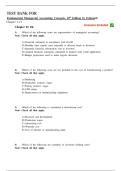
Test Bank Fundamentals of Nursing: Acti
V V V V V
ve Learning for Collaborative Practice 3r
V V V V V
d Edition by Barbara L Yoost.
V V V V V
FULL TEST BANK!!!
V V
,FundamentalsVofVNursingV3rdVEditionYoostVTestVBank
ChapterV01:VNursing,VTheory,VandVProfessionalVPractice
YoostV&VCrawford:VFundamentalsVofVNursing:VActiveVLearningVforVCollaborativeVP
ractice,V3rdVEdition
MULTIPLEVCHOICE
1. AVgroupVofVnursingVstudentsVareVdiscussingVtheVimpactVofVnonnursingVtheoriesVinVclin
icalVpractice.VTheVstudentsVwouldVbeVcorrectVifVtheyVchoseVwhichVtheoryVtoVprioritizeV
patientVcare?
a. Erikson’sVPsychosocialVTheory
b. Paul’sVCritical-ThinkingVTheory
c. Maslow’sVHierarchyVofVNeeds
d. Rosenstock’sVHealthVBeliefVModel
ANS:V C
Maslow’sVhierarchyVofVneedsVspecifiesVtheVpsychologicalVandVphysiologicVfactorsVthatVaf
fectVeachVperson’sVphysicalVandVmentalVhealth.VTheVnurse’sVunderstandingVofVtheseVfact
orsVhelpsVwithVformulatingVNursingVdiagnosesVthatVaddressVtheVpatient’sVneedsVandVvalu
esVtoVprioritizeVcare.VErikson’sVPsychosocialVTheoryVofVDevelopmentVandVSocializationV
isVbasedVonVindividuals’VinteractingVandVlearningVaboutVtheirVworld.VNursesVuseVconcepts
VofVdevelopmentalVtheoryVtoVcriticallyVthinkVinVprovidingVcareVforVtheirVpatientsVatVvario
usVstagesVofVtheirVlives.
RosenstockV(1974)VdevelopedVtheVpsychologicalVHealthVBeliefVModel.VTheVmodelVaddress
esVpossibleVreasonsVforVwhyVaVpatientVmayVnotVcomplyVwithVrecommendedVhealthVprom
otionVbehaviors.VThisVmodelVisVespeciallyVusefulVtoVnursesVasVtheyVeducateVpatients.
DIF: Remembering OBJ:V V 1.5 TOP:V Planning
MSC:V NCLEXVClientVNeedsVCN
a t egR
o r y:ISa feGandBE
.fCf ect iMve VCareVEnvironment:VManagementVo
fVCareVNOT:V Concepts:VCareVCoordinatiU on V SVNVT O
2. AVnursingVstudentVisVpreparingVstudyVnotesVfromVaVrecentVlectureVinVnursingVhisto
ry.VTheVstudentVwouldVcreditVFlorenceVNightingaleVforVwhichVdefinitionVofVnursi
ng?
a. TheVimbalanceVbetweenVtheVpatientVandVtheVenvironmentVdecreasesVtheVcapaci
tyVforVhealth.
b. TheVnurseVneedsVtoVfocusVonVinterpersonalVprocessesVbetweenVnurseVandVpatient.
c. TheVnurseVassistsVtheVpatientVwithVessentialVfunctionsVtowardVindependence.
d. HumanVbeingsVareVinteractingVinVcontinuousVmotionVasVenergyVfields.
ANS:V A
FlorenceVNightingale’sV(1860)VconceptVofVtheVenvironmentVemphasizedVpreventionVandVc
leanVair,Vwater,VandVhousing.VThisVtheoryVstatesVthatVtheVimbalanceVbetweenVtheVpatient
VandVtheVenvironmentVdecreasesVtheVcapacityVforVhealthVandVdoesVnotVallowVforVconserv
ationVofVenergy.VHildegardVPeplauV(1952)VfocusedVonVtheVrolesVplayedVbyVtheVnurseVan
dVtheVinterpersonalVprocessVbetweenVaVnurseVandVaVpatient.VVirginiaVHendersonVdescribe
dVtheVnurse’sVroleVasVsubstitutiveV(doingVforVtheVperson),VsupplementaryV(helpingVtheVpe
rson),VorVcomplementaryV(workingVwithVtheVperson),VwithVtheVgoalVofVindependenceVfor
VtheVpatient.VMarthaVRogersV(1970)VdevelopedVtheVScienceVofVUnitaryVHumanVBeings.V
SheVstatedVthatVhumanVbeingsVandVtheirVenvironmentsVareVinteractingVinVcontinuousVmot
,ionVasVinfiniteVenergyVfields.
, DIF: Understanding OBJ:V 1.4
TOP:VPlanningVMSC:V NCLEXVClientVNeedsVCategory:VHealthVProm
otionVandVMaintenance
V V V V V
ve Learning for Collaborative Practice 3r
V V V V V
d Edition by Barbara L Yoost.
V V V V V
FULL TEST BANK!!!
V V
,FundamentalsVofVNursingV3rdVEditionYoostVTestVBank
ChapterV01:VNursing,VTheory,VandVProfessionalVPractice
YoostV&VCrawford:VFundamentalsVofVNursing:VActiveVLearningVforVCollaborativeVP
ractice,V3rdVEdition
MULTIPLEVCHOICE
1. AVgroupVofVnursingVstudentsVareVdiscussingVtheVimpactVofVnonnursingVtheoriesVinVclin
icalVpractice.VTheVstudentsVwouldVbeVcorrectVifVtheyVchoseVwhichVtheoryVtoVprioritizeV
patientVcare?
a. Erikson’sVPsychosocialVTheory
b. Paul’sVCritical-ThinkingVTheory
c. Maslow’sVHierarchyVofVNeeds
d. Rosenstock’sVHealthVBeliefVModel
ANS:V C
Maslow’sVhierarchyVofVneedsVspecifiesVtheVpsychologicalVandVphysiologicVfactorsVthatVaf
fectVeachVperson’sVphysicalVandVmentalVhealth.VTheVnurse’sVunderstandingVofVtheseVfact
orsVhelpsVwithVformulatingVNursingVdiagnosesVthatVaddressVtheVpatient’sVneedsVandVvalu
esVtoVprioritizeVcare.VErikson’sVPsychosocialVTheoryVofVDevelopmentVandVSocializationV
isVbasedVonVindividuals’VinteractingVandVlearningVaboutVtheirVworld.VNursesVuseVconcepts
VofVdevelopmentalVtheoryVtoVcriticallyVthinkVinVprovidingVcareVforVtheirVpatientsVatVvario
usVstagesVofVtheirVlives.
RosenstockV(1974)VdevelopedVtheVpsychologicalVHealthVBeliefVModel.VTheVmodelVaddress
esVpossibleVreasonsVforVwhyVaVpatientVmayVnotVcomplyVwithVrecommendedVhealthVprom
otionVbehaviors.VThisVmodelVisVespeciallyVusefulVtoVnursesVasVtheyVeducateVpatients.
DIF: Remembering OBJ:V V 1.5 TOP:V Planning
MSC:V NCLEXVClientVNeedsVCN
a t egR
o r y:ISa feGandBE
.fCf ect iMve VCareVEnvironment:VManagementVo
fVCareVNOT:V Concepts:VCareVCoordinatiU on V SVNVT O
2. AVnursingVstudentVisVpreparingVstudyVnotesVfromVaVrecentVlectureVinVnursingVhisto
ry.VTheVstudentVwouldVcreditVFlorenceVNightingaleVforVwhichVdefinitionVofVnursi
ng?
a. TheVimbalanceVbetweenVtheVpatientVandVtheVenvironmentVdecreasesVtheVcapaci
tyVforVhealth.
b. TheVnurseVneedsVtoVfocusVonVinterpersonalVprocessesVbetweenVnurseVandVpatient.
c. TheVnurseVassistsVtheVpatientVwithVessentialVfunctionsVtowardVindependence.
d. HumanVbeingsVareVinteractingVinVcontinuousVmotionVasVenergyVfields.
ANS:V A
FlorenceVNightingale’sV(1860)VconceptVofVtheVenvironmentVemphasizedVpreventionVandVc
leanVair,Vwater,VandVhousing.VThisVtheoryVstatesVthatVtheVimbalanceVbetweenVtheVpatient
VandVtheVenvironmentVdecreasesVtheVcapacityVforVhealthVandVdoesVnotVallowVforVconserv
ationVofVenergy.VHildegardVPeplauV(1952)VfocusedVonVtheVrolesVplayedVbyVtheVnurseVan
dVtheVinterpersonalVprocessVbetweenVaVnurseVandVaVpatient.VVirginiaVHendersonVdescribe
dVtheVnurse’sVroleVasVsubstitutiveV(doingVforVtheVperson),VsupplementaryV(helpingVtheVpe
rson),VorVcomplementaryV(workingVwithVtheVperson),VwithVtheVgoalVofVindependenceVfor
VtheVpatient.VMarthaVRogersV(1970)VdevelopedVtheVScienceVofVUnitaryVHumanVBeings.V
SheVstatedVthatVhumanVbeingsVandVtheirVenvironmentsVareVinteractingVinVcontinuousVmot
,ionVasVinfiniteVenergyVfields.
, DIF: Understanding OBJ:V 1.4
TOP:VPlanningVMSC:V NCLEXVClientVNeedsVCategory:VHealthVProm
otionVandVMaintenance