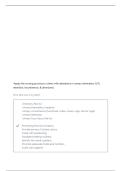
•Apply the nursing process to clients with alterations in urinary elimination (UTI,
retention, incontinence, & diversions).
Give this one a try later!
•Infection, Risk for
•Urinary Elimination, Impaired
•Urinary Incontinence (functional, reflex, stress, urge, risk for urge)
•Urinary Retention
•Urinary Tract Injury, Risk for
Promoting Normal Urination,
Provide privacy, Curtains, doors.
Assist with positioning,
Facilitate toileting routines,
Identify the client's pattern,
Promote adequate fluids and nutrition,
Assist with hygiene.
,•Compare/contrast sensory deprivation and sensory overload
Give this one a try later!
Sensory deprivation: Signs and symptoms(1.Decreased attention span
2.Decrease problem solving skills
3.Drowsiness
4.Fixated on somatic complaints
5.Irritability
6.Hallucinations)
Interventions(1.Visual stimulation
2.Auditory stimulation
3.Olfactory stimulation
4.Tactile stimulation
5.Adequate sleep/rest
6.Social interactions
7.Pet therapy)
Sensory overload: Signs and symptoms(1.Disorientation/confusion
2.Anxiety, restlessness, insomnia
3.Decreased attention span
4.Muscle tension
5.Decreased ability to perform tasks
6.Distractibility) Interventions (1.Control visual stimuli
2.Control auditory stimuli
3.Manage olfactory stimuli
4.Promote sleep and rest)
•Identity nursing diagnoses, outcomes and interventions specific to body image
disturbance
Give this one a try later!
, Negative body image associated with depression, increased smoking in
adolescents, increased risk for STIs and unintended pregnancy and
increased incidences of being bullied.
•Be aware of your OWN perspective of a healthy body
•Encourage patient to discuss changes as a result of injury/illness
•Healthy does not mean perfect
•Focus on activity and healthy eating
•Do not make negative comments about your body
•Make a list of things you like about your body
•ACCEPT COMPLIMENTS
•Surround yourself with positive people
•Plan outcomes and nursing interventions for patients with a diagnosis of Risk for
suicide
Give this one a try later!
•Must always be considered
•Can happen at home, in a hospital or even a psychiatric unit
•80% of suicide attempts give some sort of indirect cute
•We must be alert for warnings!
•Be direct: Have you thought about harming yourself?
•If answers yes: Stay with patient. Ask about a plan
•Move room close to nurse's station
•Sweep Room, obtain Sitter
•Ensure windows can not open
Always involve other members of your team
Physiological responses to Stress
Give this one a try later!
retention, incontinence, & diversions).
Give this one a try later!
•Infection, Risk for
•Urinary Elimination, Impaired
•Urinary Incontinence (functional, reflex, stress, urge, risk for urge)
•Urinary Retention
•Urinary Tract Injury, Risk for
Promoting Normal Urination,
Provide privacy, Curtains, doors.
Assist with positioning,
Facilitate toileting routines,
Identify the client's pattern,
Promote adequate fluids and nutrition,
Assist with hygiene.
,•Compare/contrast sensory deprivation and sensory overload
Give this one a try later!
Sensory deprivation: Signs and symptoms(1.Decreased attention span
2.Decrease problem solving skills
3.Drowsiness
4.Fixated on somatic complaints
5.Irritability
6.Hallucinations)
Interventions(1.Visual stimulation
2.Auditory stimulation
3.Olfactory stimulation
4.Tactile stimulation
5.Adequate sleep/rest
6.Social interactions
7.Pet therapy)
Sensory overload: Signs and symptoms(1.Disorientation/confusion
2.Anxiety, restlessness, insomnia
3.Decreased attention span
4.Muscle tension
5.Decreased ability to perform tasks
6.Distractibility) Interventions (1.Control visual stimuli
2.Control auditory stimuli
3.Manage olfactory stimuli
4.Promote sleep and rest)
•Identity nursing diagnoses, outcomes and interventions specific to body image
disturbance
Give this one a try later!
, Negative body image associated with depression, increased smoking in
adolescents, increased risk for STIs and unintended pregnancy and
increased incidences of being bullied.
•Be aware of your OWN perspective of a healthy body
•Encourage patient to discuss changes as a result of injury/illness
•Healthy does not mean perfect
•Focus on activity and healthy eating
•Do not make negative comments about your body
•Make a list of things you like about your body
•ACCEPT COMPLIMENTS
•Surround yourself with positive people
•Plan outcomes and nursing interventions for patients with a diagnosis of Risk for
suicide
Give this one a try later!
•Must always be considered
•Can happen at home, in a hospital or even a psychiatric unit
•80% of suicide attempts give some sort of indirect cute
•We must be alert for warnings!
•Be direct: Have you thought about harming yourself?
•If answers yes: Stay with patient. Ask about a plan
•Move room close to nurse's station
•Sweep Room, obtain Sitter
•Ensure windows can not open
Always involve other members of your team
Physiological responses to Stress
Give this one a try later!