
Examen
Solutions Manual for Engineering Economy 17th Global Edition By William Sullivan Elin Wicks Patrick Koelling
This is Original Solutions Manual All Other Solutions Manual in The Market are Fake/Old Solutions Manual for Engineering Economy 17th Global Edition By William Sullivan Elin Wicks Patrick Koelling 978-1292264905 978-1292264967 978-0134870069 978-0134838229
 tutorsection
Examen
Test Bank for Engineering Economy 17th Global Edition By William Sullivan Elin Wicks Patrick Koelling
Test Bank for Engineering Economy 17th Global Edition By William Sullivan Elin Wicks Patrick Koelling 978-1292264905 978-1292264967 978-0134870069 978-0134838229
tutorsection

Examen
Test Bank for Modern Database Management, 13th Edition, Jeff Hoffer, Ramesh Venkataraman, Heikki Topi ISBN: 9780134877006 Chapter 1-14 Complete Guide.
Test Bank for Modern Database Management, 13th Edition, Jeff Hoffer, Ramesh Venkataraman, Heikki Topi ISBN: 9780134877006 Chapter 1-14 Complete Guide. TABLE OF CONTE NTS I. The Context of Database Management 1. The Database Environment and Development Process II. Database Analysis and Logical Design 2. Modeling Data in the Organization 3. The Enhanced E-R Model 4. Logical Database Design and the Relational Model III. Database Implementation and Use 5. Introduction to SQL 6. Advanced SQL 7. Datab...
 MedStudyguide
Otro
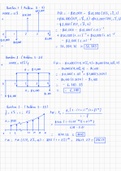
HW7_Profitability Measures (PW, FW, AW)_EngEconomics
The three most commonly used profitability measures are present worth (PW), future worth (FW), and annual worth (AW). Each measure provides a different perspective on the profitability of an investment, and engineers can use them in combination to make informed decisions about the use of resources. Present worth (PW) is the value of all future cash flows of an investment at the present time. Engineers use the present worth factor to calculate the present worth of an investment, taking into ac...
 hoangthanhtruc283

Otro
HW8_IRR (Internal Rate of Return) and Payback Period_EngEconomics
IRR (Internal Rate of Return) and Payback Period are two common methods used to evaluate the financial viability of a project. IRR is a financial metric used to determine the rate at which the net present value (NPV) of a project equals zero. It represents the discount rate at which the present value of the expected cash inflows equals the present value of the expected cash outflows. A project is considered financially viable if its IRR is greater than the required rate of return. In other wo...
hoangthanhtruc283

Otro
HW3_Cost Concepts and Design Economics_EngEconomics
Cost concepts refer to the various types of costs that are involved in a project, including direct costs (such as labor and materials) and indirect costs (such as overhead and administration expenses). These costs are analyzed and quantified in order to determine the total cost of a project. Understanding cost concepts is important for engineers because it allows them to accurately estimate the costs associated with a project and identify areas where cost savings can be made. Design economics...
hoangthanhtruc283

Otro
HW6_Uniform and Geometric Gradients_EngEconomics
Uniform gradients are cash flows in which the payment or receipt is the same amount for each period. For example, a uniform gradient might be a series of annual payments of $10,000 over the next five years. Engineers use uniform gradient calculations to evaluate investments and financial decisions with constant cash flows. They can use the present worth factor to calculate the value of a uniform gradient, taking into account the time value of money and the interest rate. Geometric gradients, ...
hoangthanhtruc283
Otro
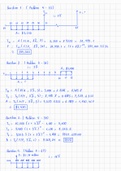
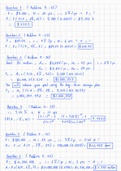
HW5_Deferred Annuities and More Complicated Equivalence Calculations_EE
A deferred annuity is an annuity that does not begin making payments until a specified date in the future. In engineering economy, deferred annuities are often used to evaluate investments in which cash inflows or outflows are expected to occur at a future date. Engineers use present worth, future worth, annual worth, and nominal rate factors to calculate the value of deferred annuities and compare them to other investment options. In more complicated equivalence calculations, engineers may u...
hoangthanhtruc283
Otro
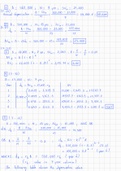
HW4_Equivalence Calculations_P,F,A,N_EngEconomics
Equivalence calculations using the four factors - present worth (P), future worth (F), annual worth (A), and nominal rate (N) - are commonly used to compare and evaluate alternative investment options. Present worth (P) is the value today of a series of future cash flows, calculated by discounting them using a given interest rate. Future worth (F) is the value at a future time of a series of present cash flows, calculated by compounding them using a given interest rate. Annual worth (A) is th...
hoangthanhtruc283
Otro
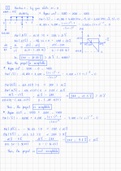
HW12 - Chapter 7: Depreciation and Income Taxes
It discusses the different methods of depreciation (such as straight-line, declining balance, and sum-of-the-years' digits), how to calculate depreciation expenses, and the impact of different depreciation methods on income taxes. The chapter also covers the basics of income taxes, including the different types of taxes and tax rates, tax deductions and credits, and how to calculate income tax expenses.
hoangthanhtruc283
Otro
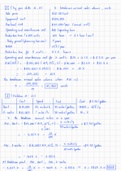
HW11_Sensitivity Analysis_Engineering Economics
Sensitivity analysis is an important tool in engineering economy that is used to determine how changes in input variables affect the output of an economic analysis. It involves varying one or more of the input variables in a model to determine the effect on the output.
hoangthanhtruc283
Otro
HW10_Break-even analysis
Break-even analysis is a tool used in engineering economy to determine the point at which total revenue equals total costs, resulting in neither a profit nor a loss. The break-even point is the level of production or sales at which the total revenue generated by a product or service equals the total cost of producing it.
hoangthanhtruc283

Otro
HW2_Engineering Economic Analysis_EE
Engineering economic analysis is a branch of engineering that deals with the evaluation of engineering projects and investment options from a financial perspective. It involves the application of mathematical and economic principles to assess the feasibility, profitability, and risk of engineering projects.
hoangthanhtruc283
Otro
HW9_Multiple Alternatives_Engineering Economics
Multiple alternatives analysis is a decision-making tool used to compare and select the best alternative among several options. Multiple alternatives analysis involves evaluating different alternatives based on their costs, benefits, and risks.
hoangthanhtruc283

Otro
HW_questions_Chap8to12_Engineering Economics
Provide questions for homework solutions in another files from chapter to 8 chapter 12
hoangthanhtruc283

Otro
HW_questions_Chap2 to7_Engineering Economics.pdf
Provide questions for homework solutions in another files from chapter 2 to chapter 7
hoangthanhtruc283