30.12.2024
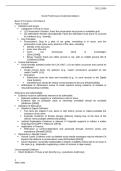
SA10 Preliminary Evidential Matters
Basic Principles of Evidence
Facts in Issue
Definition and Scope:
Categories of Facts in Issue:
(1) Prosecution's Burden: Facts the prosecution must prove to establish guilt.
(2) Defendant's Burden (Exceptional): Facts the defendant must prove to succeed
in a defence (e.g., insanity).
Key Principles:
Prosecution's Duty: In a plea of not guilty, everything is in issue, and the
prosecution must prove every element of the case, including:
Identity of the accused.
actus reus (the act).
mens rea (necessary intent or knowledge).
(Sims [1946]).
Binary System: Facts are either proved or not, with no middle ground (Re B
(Children) [2008]).
Formal Admissions:
Facts formally admitted under the CJA 1967, s.10 are taken as proven and cannot be
contradicted.
Scope: Covers facts, not opinions (e.g., expert conclusions accepted as fact
under CrimPR 19.3).
Procedure:
Admissions must be clear and recorded (e.g., in court records or the Digital
Case System).
Admitted facts should be clearly communicated to the jury (Pittard [2006]).
Withdrawal of Admissions: Leave to resile requires strong evidence of mistake or
misunderstanding (I [2000]).
Relevance and Admissibility
Evidence must be sufficiently relevant to be admissible.
Relevant evidence supports or undermines a fact in issue.
Evidence with no probative value or inherently unreliable should be excluded
(Robinson [2005]).
Definition of Relevance:
Stephen's Digest Definition:
Two facts are related if one, alone or with others, proves or makes probable the
existence of the other.
Example: Evidence of threats (duress defence) making fear at the time of the
offence more probable (Nethercott [2001]).
Judicial Explanation: Evidence is relevant if it logically supports or refutes a matter
requiring proof (DPP v Kilbourne [1973]).
Application in Practice:
Relevance is context-dependent and assessed through common sense and
experience (Randall [2003]).
Relevance in Specific Cases:
Sexual Cases: Evidence such as deleted social media messages may be relevant if it
impacts the defence or prosecution's case (McPartland [2019]).
Good Character: Generally inadmissible to bolster credibility unless tied to an issue in
the case (e.g., disposition supporting a claim of consent in rape cases).
Circumstantial Evidence
Direct Evidence: Proves a fact directly (e.g., eyewitness testimony).
1
Max Lewis
, 30.12.2024
Circumstantial Evidence: Requires inference, e.g., several corroborative facts pointing to
guilt.
Value and Caution:
Circumstantial evidence can outweigh direct evidence if diverse strands consistently
lead to the same conclusion (Exall (1866)).
Judicial Caution: Courts must ensure no other co-existing circumstances undermine
the inference of guilt (Teper v The Queen [1952]).
Judicial Guidance for Juries:
Examine each strand of evidence and decide what conclusions to draw.
Avoid speculation or assumptions without evidence (Crown Court Compendium,
ch.10-1).
Tangible Objects and Real Evidence
Real evidence includes material objects produced in court to support or challenge facts
in issue.
Weight of Evidence: Depends on identification and connection to the case.
Example: A handwriting comparison often requires expert testimony (Tilley [1961]).
Non-Production of Objects:
Oral evidence about an object is admissible without producing the object in court, but
non-production may reduce the weight of the evidence (Francis [1874]).
Views
A view refers to the out-of-court inspection of material objects or locations (e.g., locus in
quo).
Example: Inspecting a vehicle in a case involving an accident.
Guidelines for Conducting Views:
Must be attended by the judge, parties, counsel, and court staff.
Accused’s presence is crucial to avoid misunderstandings or oversights.
Should occur before the summing-up to allow discussion of observations.
Case Example: Magistrates should allow parties to comment on any observed
features before concluding the evidence (Parry v Boyle (1987)).
Key Takeaways
(1) Facts in Issue:
Determined by the offence's legal ingredients and any defences raised.
Prosecution must prove all elements unless formally admitted by the defence.
(2) Relevance:
Evidence must logically relate to and impact the likelihood of a fact in issue.
Judges rely on context, common sense, and precedent to assess relevance.
(3) Circumstantial Evidence:
Effective when multiple independent strands point to the same conclusion.
Courts must ensure that juries are properly directed to avoid speculative reasoning.
(4) Real Evidence and Views:
Real evidence requires proper identification and connection to facts in issue.
Views offer practical insights but require strict procedural safeguards.
Tribunals of Fact and Law
General Principles
Judge’s Role – Questions of Law:
The judge determines all legal questions, including procedural and evidential matters,
in both jury trials and non-jury trials.
Examples of questions of law include:
Fitness to Plead: Whether the accused can stand trial.
Juror Issues: Challenges, discharges, or composition of the jury.
Admissibility of Evidence: Whether certain evidence is legally admissible.
2
Max Lewis
SA10 Preliminary Evidential Matters
Basic Principles of Evidence
Facts in Issue
Definition and Scope:
Categories of Facts in Issue:
(1) Prosecution's Burden: Facts the prosecution must prove to establish guilt.
(2) Defendant's Burden (Exceptional): Facts the defendant must prove to succeed
in a defence (e.g., insanity).
Key Principles:
Prosecution's Duty: In a plea of not guilty, everything is in issue, and the
prosecution must prove every element of the case, including:
Identity of the accused.
actus reus (the act).
mens rea (necessary intent or knowledge).
(Sims [1946]).
Binary System: Facts are either proved or not, with no middle ground (Re B
(Children) [2008]).
Formal Admissions:
Facts formally admitted under the CJA 1967, s.10 are taken as proven and cannot be
contradicted.
Scope: Covers facts, not opinions (e.g., expert conclusions accepted as fact
under CrimPR 19.3).
Procedure:
Admissions must be clear and recorded (e.g., in court records or the Digital
Case System).
Admitted facts should be clearly communicated to the jury (Pittard [2006]).
Withdrawal of Admissions: Leave to resile requires strong evidence of mistake or
misunderstanding (I [2000]).
Relevance and Admissibility
Evidence must be sufficiently relevant to be admissible.
Relevant evidence supports or undermines a fact in issue.
Evidence with no probative value or inherently unreliable should be excluded
(Robinson [2005]).
Definition of Relevance:
Stephen's Digest Definition:
Two facts are related if one, alone or with others, proves or makes probable the
existence of the other.
Example: Evidence of threats (duress defence) making fear at the time of the
offence more probable (Nethercott [2001]).
Judicial Explanation: Evidence is relevant if it logically supports or refutes a matter
requiring proof (DPP v Kilbourne [1973]).
Application in Practice:
Relevance is context-dependent and assessed through common sense and
experience (Randall [2003]).
Relevance in Specific Cases:
Sexual Cases: Evidence such as deleted social media messages may be relevant if it
impacts the defence or prosecution's case (McPartland [2019]).
Good Character: Generally inadmissible to bolster credibility unless tied to an issue in
the case (e.g., disposition supporting a claim of consent in rape cases).
Circumstantial Evidence
Direct Evidence: Proves a fact directly (e.g., eyewitness testimony).
1
Max Lewis
, 30.12.2024
Circumstantial Evidence: Requires inference, e.g., several corroborative facts pointing to
guilt.
Value and Caution:
Circumstantial evidence can outweigh direct evidence if diverse strands consistently
lead to the same conclusion (Exall (1866)).
Judicial Caution: Courts must ensure no other co-existing circumstances undermine
the inference of guilt (Teper v The Queen [1952]).
Judicial Guidance for Juries:
Examine each strand of evidence and decide what conclusions to draw.
Avoid speculation or assumptions without evidence (Crown Court Compendium,
ch.10-1).
Tangible Objects and Real Evidence
Real evidence includes material objects produced in court to support or challenge facts
in issue.
Weight of Evidence: Depends on identification and connection to the case.
Example: A handwriting comparison often requires expert testimony (Tilley [1961]).
Non-Production of Objects:
Oral evidence about an object is admissible without producing the object in court, but
non-production may reduce the weight of the evidence (Francis [1874]).
Views
A view refers to the out-of-court inspection of material objects or locations (e.g., locus in
quo).
Example: Inspecting a vehicle in a case involving an accident.
Guidelines for Conducting Views:
Must be attended by the judge, parties, counsel, and court staff.
Accused’s presence is crucial to avoid misunderstandings or oversights.
Should occur before the summing-up to allow discussion of observations.
Case Example: Magistrates should allow parties to comment on any observed
features before concluding the evidence (Parry v Boyle (1987)).
Key Takeaways
(1) Facts in Issue:
Determined by the offence's legal ingredients and any defences raised.
Prosecution must prove all elements unless formally admitted by the defence.
(2) Relevance:
Evidence must logically relate to and impact the likelihood of a fact in issue.
Judges rely on context, common sense, and precedent to assess relevance.
(3) Circumstantial Evidence:
Effective when multiple independent strands point to the same conclusion.
Courts must ensure that juries are properly directed to avoid speculative reasoning.
(4) Real Evidence and Views:
Real evidence requires proper identification and connection to facts in issue.
Views offer practical insights but require strict procedural safeguards.
Tribunals of Fact and Law
General Principles
Judge’s Role – Questions of Law:
The judge determines all legal questions, including procedural and evidential matters,
in both jury trials and non-jury trials.
Examples of questions of law include:
Fitness to Plead: Whether the accused can stand trial.
Juror Issues: Challenges, discharges, or composition of the jury.
Admissibility of Evidence: Whether certain evidence is legally admissible.
2
Max Lewis