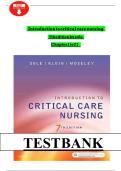
Introduction to critical care nursing
vr vr vr vr
7th edition by sole
vr vr vr
Chapter 1 to 21 vr vr vr
TEST BANK vr
,TABLE OFCONTENT
vr vr
1. Overview of Critical Care Nursing vr vr vr vr
2. Patient and Family Response to the Critical Care Experience
vr vr vr vr vr vr vr vr
3. Ethical and Legal Issues in Critical Care Nursing
vr vr vr vr vr vr vr
4. Palliative and End-of-Life Care vr vr vr
5. Comfort and Sedation vr vr
6. NutritionalTherapy rv
7. DysrhythmiaInterpretationandManagement vr vr vr
8. HemodynamicMonitoring rv
9. VentilatoryAssistance rv
10. Rapid Response Teams and Code Management
vr vr vr vr vr
11. OrganDonation vr
12. Shock, Sepsis, and Multiple Organ Dysfunction Syndrome
vr vr vr vr vr vr
13. CardiovascularAlterations rv
14. NervousSystemAlterations vr vr
15. AcuteRespiratory Failure
vr vr
16. Acute Kidney Injury
vr vr
17. Hematologicaland ImmuneDisorders vr vr vr
18. GastrointestinalAlterations rv
19. EndocrineAlterations rv
20. Trauma andSurgical Management vr vr vr
21. Burns
,Chapter 01: Overview of CriticalCareNursing
vr vr vr vr vr vr
MULTIPLE CHOICE vr
1. Which of the following professional organizations best supports critical care nursing
vr vr vr vr vr vr vr vr vr vr
v r practice?
a. American Association of Critical-Care vr vr vr
Nurses v r
b. American Heart Association vr vr
c. American Nurses Association vr vr
d. Society of Critical Care Medicine vr vr vr vr
ANS: A vr
The American Association of Critical-Care Nurses is the specialty organization
vr vr vr vr vr vr vr vr vr
vthat supports and represents critical care nurses. The American Heart Association
r vr vr vr vr vr vr vr vr vr vr
vsupports cardiovascular initiatives. The American Nurses Association supports all
r vr vr vr vr vr vr vr vr
vnurses. The Society of Critical Care Medicine represents the multiprofessional
r vr vr vr vr vr vr vr vr vr
vcritical care team under the direction of an intensivist.
r vr vr vr vr vr vr vr vr
DIF: Cognitive Level: Remember/Knowledge REF: p. 5 vr vr vr vr vr vr
OBJ: Discuss the purposes and functions of the professional organizations that support
vr v r vr vr vr vr vr vr vr vr vr vr
vcritical care practice.
r TOP: Nursing Process Step: N/A vr vr vr v r vr vr vr
MSC: NCLEX Client Needs Category: Safe and Effective Care Environment
v r vr vr vr vr vr vr vr vr
2. A nurse has been working as a staff nurse in the surgical intensive care unit for 2
vr vr vr vr vr vr vr vr vr vr vr vr vr vr vr vr
years and is interested in certification. Which credential would be most
v r vr vr vr vr vr vr vr vr vr vr
vapplicable for the nurse to seek?
r vr vr vr vr vr
a. ACNPC-AG
b. CNML
c. CCRN
d. PCCN
ANS: C vr
The CCRN certification is appropriate for nurses in bedside practice who care for
vr vr vr vr vr vr vr vr vr vr vr vr
vcritically ill patients. The ACNPC-AG certification is for acute care nurse
r vr vr vr vr vr vr vr vr vr vr
vpractitioners. The CNML is for critical care nurse managers or leaders. The PCCN
r vr vr vr vr vr vr vr vr vr vr vr vr
vcertification is for staff nurses working in progressive care, intermediate care, or
r vr vr vr vr vr vr vr vr vr vr vr
v step-down unit settings.
r vr vr
DIF: Cognitive Level: Remember/Knowledge REF: p. 6 vr vr vr vr vr vr
OBJ: Explain certification options for critical care nurses. TOP: Nursing Process Step:
vr v r vr vr vr vr vr vr v r vr v r vr vr
v N/A MSC: NCLEX Client Needs Category: Safe and Effective Care Environment
r vr v r vr vr vr vr vr vr vr vr
3. The main purpose of certification is to
vr vr vr vr vr vr
a. assure the consumer that you will not make a vr vr vr vr vr vr vr vr
mistake. v r
b. prepare for graduate school. vr vr vr
c. promote magnet status for your facility. vr vr vr vr vr
d. validate knowledge of critical care nursing. vr vr vr vr vr
ANS: D vr
, Certification assists in validating knowledge of the field, promotes excellence in vr vr vr vr vr vr vr vr vr vr
v the profession, and helps nurses to maintain their knowledge of critical care
r vr vr vr vr vr vr vr vr vr vr vr
nursing. Certification helps to assure the consumer that the nurse has a minimum
v r vr vr vr vr vr vr vr vr vr vr vr vr
level of knowledge; however, it does not ensure that care will be mistake-free.
v r vr vr vr vr vr vr vr vr vr vr vr vr
Certification does not prepare one for graduate school; however, achieving vr vr vr vr vr vr vr vr vr
v certification demonstrates motivation for achievement and professionalism.
r vr vr vr vr vr vr
v Magnet facilities are rated on the number of certified nurses; however, that is not
r vr vr vr vr vr vr vr vr vr vr vr vr vr
vthe purpose of certification.
r vr vr vr
DIF: Cognitive Level: Remember/Knowledge REF: p. 6 vr vr vr vr vr vr
OBJ: Explain certification options for critical care nurses. TOP: Nursing Process Step:
vr v r vr vr vr vr vr vr v r vr v r vr vr
v N/A MSC: NCLEX Client Needs Category: Safe and Effective Care Environment
r vr v r vr vr vr vr vr vr vr vr
4. The synergy model of practice focuses on
vr vr vr vr vr vr
a. allowing unrestricted visiting for the patient 24 hours a day. vr vr vr vr vr vr vr vr vr
b. holistic and alternative therapies. vr vr vr
c. the needs of patients and their families, which drive nursing
vr vr vr vr vr vr vr vr vr
competency. v r
d. patients’ needs for energy and support. vr vr vr vr vr
ANS: C vr
The synergy model of practice states that the needs of patients and families
vr vr vr vr vr vr vr vr vr vr vr vr
vinfluence and drive competencies of nurses. Nursing practice based on the
r vr vr vr vr vr vr vr vr vr vr
vsynergy model would involve tailored visiting to meet the patient’s and family’s
r vr vr vr vr vr vr vr vr vr vr vr
v needs and the application of alternative therapies if desired by the patient, but
r vr vr vr vr vr vr vr vr vr vr vr vr
vthat is not the primary focus of the model.
r vr vr vr vr vr vr vr vr
DIF: Cognitive Level: Remember/Knowledge REF: p. vr vr vr v r
6 OBJ: Describe standards of professional practice for critical care
vr v r vr v r vr vr vr vr vr vr vr
vnursing.
r
TOP: Nursing Process Step: N/A vr v r vr vr vr
MSC: NCLEX Client Needs Category: Safe and Effective Care Environment
v r vr vr vr vr vr vr vr vr
5. The family of your critically ill patient tells you that they have not spoken with the
vr vr vr vr vr vr vr vr vr vr vr vr vr vr vr
v physician in over 24 hours and that they have some questions they want
r vr vr vr vr vr vr vr vr vr vr vr vr vr
vclarified. During morning rounds, you convey this concern to the attending
r vr vr vr vr vr vr vr vr vr vr
v intensivist and arrange a meeting with the family at 4:00 PM. Which competency
r vr vr vr vr vr vr vr vr vr vr vr vr
of critical care nursing does this represent?
v r vr vr vr vr vr vr
a. Advocacy and moral agency in solving ethical issues vr vr vr vr vr vr vr
b. Clinical judgment and clinical reasoning skills vr vr vr vr vr
c. Collaboration with patients, families, and team vr vr vr vr vr
members v r
d. Facilitation of learning for patients, families, and team vr vr vr vr vr vr vr
members v r
ANS: C vr
Although one might consider that all of these competencies are being addressed,
vr vr vr vr vr vr vr vr vr vr vr
vcommunication and collaboration with the family and physician best exemplify the
r vr vr vr vr vr vr vr vr vr vr
vcompetency of collaboration.
r vr vr
vr vr vr vr
7th edition by sole
vr vr vr
Chapter 1 to 21 vr vr vr
TEST BANK vr
,TABLE OFCONTENT
vr vr
1. Overview of Critical Care Nursing vr vr vr vr
2. Patient and Family Response to the Critical Care Experience
vr vr vr vr vr vr vr vr
3. Ethical and Legal Issues in Critical Care Nursing
vr vr vr vr vr vr vr
4. Palliative and End-of-Life Care vr vr vr
5. Comfort and Sedation vr vr
6. NutritionalTherapy rv
7. DysrhythmiaInterpretationandManagement vr vr vr
8. HemodynamicMonitoring rv
9. VentilatoryAssistance rv
10. Rapid Response Teams and Code Management
vr vr vr vr vr
11. OrganDonation vr
12. Shock, Sepsis, and Multiple Organ Dysfunction Syndrome
vr vr vr vr vr vr
13. CardiovascularAlterations rv
14. NervousSystemAlterations vr vr
15. AcuteRespiratory Failure
vr vr
16. Acute Kidney Injury
vr vr
17. Hematologicaland ImmuneDisorders vr vr vr
18. GastrointestinalAlterations rv
19. EndocrineAlterations rv
20. Trauma andSurgical Management vr vr vr
21. Burns
,Chapter 01: Overview of CriticalCareNursing
vr vr vr vr vr vr
MULTIPLE CHOICE vr
1. Which of the following professional organizations best supports critical care nursing
vr vr vr vr vr vr vr vr vr vr
v r practice?
a. American Association of Critical-Care vr vr vr
Nurses v r
b. American Heart Association vr vr
c. American Nurses Association vr vr
d. Society of Critical Care Medicine vr vr vr vr
ANS: A vr
The American Association of Critical-Care Nurses is the specialty organization
vr vr vr vr vr vr vr vr vr
vthat supports and represents critical care nurses. The American Heart Association
r vr vr vr vr vr vr vr vr vr vr
vsupports cardiovascular initiatives. The American Nurses Association supports all
r vr vr vr vr vr vr vr vr
vnurses. The Society of Critical Care Medicine represents the multiprofessional
r vr vr vr vr vr vr vr vr vr
vcritical care team under the direction of an intensivist.
r vr vr vr vr vr vr vr vr
DIF: Cognitive Level: Remember/Knowledge REF: p. 5 vr vr vr vr vr vr
OBJ: Discuss the purposes and functions of the professional organizations that support
vr v r vr vr vr vr vr vr vr vr vr vr
vcritical care practice.
r TOP: Nursing Process Step: N/A vr vr vr v r vr vr vr
MSC: NCLEX Client Needs Category: Safe and Effective Care Environment
v r vr vr vr vr vr vr vr vr
2. A nurse has been working as a staff nurse in the surgical intensive care unit for 2
vr vr vr vr vr vr vr vr vr vr vr vr vr vr vr vr
years and is interested in certification. Which credential would be most
v r vr vr vr vr vr vr vr vr vr vr
vapplicable for the nurse to seek?
r vr vr vr vr vr
a. ACNPC-AG
b. CNML
c. CCRN
d. PCCN
ANS: C vr
The CCRN certification is appropriate for nurses in bedside practice who care for
vr vr vr vr vr vr vr vr vr vr vr vr
vcritically ill patients. The ACNPC-AG certification is for acute care nurse
r vr vr vr vr vr vr vr vr vr vr
vpractitioners. The CNML is for critical care nurse managers or leaders. The PCCN
r vr vr vr vr vr vr vr vr vr vr vr vr
vcertification is for staff nurses working in progressive care, intermediate care, or
r vr vr vr vr vr vr vr vr vr vr vr
v step-down unit settings.
r vr vr
DIF: Cognitive Level: Remember/Knowledge REF: p. 6 vr vr vr vr vr vr
OBJ: Explain certification options for critical care nurses. TOP: Nursing Process Step:
vr v r vr vr vr vr vr vr v r vr v r vr vr
v N/A MSC: NCLEX Client Needs Category: Safe and Effective Care Environment
r vr v r vr vr vr vr vr vr vr vr
3. The main purpose of certification is to
vr vr vr vr vr vr
a. assure the consumer that you will not make a vr vr vr vr vr vr vr vr
mistake. v r
b. prepare for graduate school. vr vr vr
c. promote magnet status for your facility. vr vr vr vr vr
d. validate knowledge of critical care nursing. vr vr vr vr vr
ANS: D vr
, Certification assists in validating knowledge of the field, promotes excellence in vr vr vr vr vr vr vr vr vr vr
v the profession, and helps nurses to maintain their knowledge of critical care
r vr vr vr vr vr vr vr vr vr vr vr
nursing. Certification helps to assure the consumer that the nurse has a minimum
v r vr vr vr vr vr vr vr vr vr vr vr vr
level of knowledge; however, it does not ensure that care will be mistake-free.
v r vr vr vr vr vr vr vr vr vr vr vr vr
Certification does not prepare one for graduate school; however, achieving vr vr vr vr vr vr vr vr vr
v certification demonstrates motivation for achievement and professionalism.
r vr vr vr vr vr vr
v Magnet facilities are rated on the number of certified nurses; however, that is not
r vr vr vr vr vr vr vr vr vr vr vr vr vr
vthe purpose of certification.
r vr vr vr
DIF: Cognitive Level: Remember/Knowledge REF: p. 6 vr vr vr vr vr vr
OBJ: Explain certification options for critical care nurses. TOP: Nursing Process Step:
vr v r vr vr vr vr vr vr v r vr v r vr vr
v N/A MSC: NCLEX Client Needs Category: Safe and Effective Care Environment
r vr v r vr vr vr vr vr vr vr vr
4. The synergy model of practice focuses on
vr vr vr vr vr vr
a. allowing unrestricted visiting for the patient 24 hours a day. vr vr vr vr vr vr vr vr vr
b. holistic and alternative therapies. vr vr vr
c. the needs of patients and their families, which drive nursing
vr vr vr vr vr vr vr vr vr
competency. v r
d. patients’ needs for energy and support. vr vr vr vr vr
ANS: C vr
The synergy model of practice states that the needs of patients and families
vr vr vr vr vr vr vr vr vr vr vr vr
vinfluence and drive competencies of nurses. Nursing practice based on the
r vr vr vr vr vr vr vr vr vr vr
vsynergy model would involve tailored visiting to meet the patient’s and family’s
r vr vr vr vr vr vr vr vr vr vr vr
v needs and the application of alternative therapies if desired by the patient, but
r vr vr vr vr vr vr vr vr vr vr vr vr
vthat is not the primary focus of the model.
r vr vr vr vr vr vr vr vr
DIF: Cognitive Level: Remember/Knowledge REF: p. vr vr vr v r
6 OBJ: Describe standards of professional practice for critical care
vr v r vr v r vr vr vr vr vr vr vr
vnursing.
r
TOP: Nursing Process Step: N/A vr v r vr vr vr
MSC: NCLEX Client Needs Category: Safe and Effective Care Environment
v r vr vr vr vr vr vr vr vr
5. The family of your critically ill patient tells you that they have not spoken with the
vr vr vr vr vr vr vr vr vr vr vr vr vr vr vr
v physician in over 24 hours and that they have some questions they want
r vr vr vr vr vr vr vr vr vr vr vr vr vr
vclarified. During morning rounds, you convey this concern to the attending
r vr vr vr vr vr vr vr vr vr vr
v intensivist and arrange a meeting with the family at 4:00 PM. Which competency
r vr vr vr vr vr vr vr vr vr vr vr vr
of critical care nursing does this represent?
v r vr vr vr vr vr vr
a. Advocacy and moral agency in solving ethical issues vr vr vr vr vr vr vr
b. Clinical judgment and clinical reasoning skills vr vr vr vr vr
c. Collaboration with patients, families, and team vr vr vr vr vr
members v r
d. Facilitation of learning for patients, families, and team vr vr vr vr vr vr vr
members v r
ANS: C vr
Although one might consider that all of these competencies are being addressed,
vr vr vr vr vr vr vr vr vr vr vr
vcommunication and collaboration with the family and physician best exemplify the
r vr vr vr vr vr vr vr vr vr vr
vcompetency of collaboration.
r vr vr