ORGANISATION AND BUSINESS MANAGEMENT
Chapter 0: Case method
Case → description of an actual situation, commonly involving a decision, a challenge, an
opportunity or a problem faced by a person in an organisation → DECISION MAKER
Inventory of skills developed by the case method
Analytical skills Time management skills
Decision making skills Interpersonal or social skills
Application skills Creative skills
Oral communication skills Written communication skills
The decision maker has to:
➔ Identify the problem and / or opportunity
➔ Analyze the presented situation
➔ Generate and evaluate courses of action
➔ Select an alternative and justify
➔ Suggest and implement an action plan
Case methodology
● Short cycle process
○ Who, What, Why, When, How
● Long cycle process
○ Issues
○ Case Data Analysis
○ Alternative Generation
○ Decision Criteria
○ Alternative Assessment
○ Preferred Alternative
○ Action & Implementation Plan
CASE METHOD EXAMPLE:
https://docs.google.com/document/d/10qsLG-cMHQhGGGpTJsB5mLXuxIWjW_Y2X6pa1YXj
6zc/edit?tab=t.0
,Management Model
Vision / strategic intent
What do we want to be? → Desired future aspiration of the organization
● Normally is brief, only one sentence
The vision normally fails when !!
➔ Words are not connected with the actions
➔ Ideal future that doesn’t connect with the present situation of the organization
➔ It’s irrelevant
Mission
Who are you? What we do? Where are we going?
Main purpose in line with the values or expectations of stakeholders
★ It can mention key values → attitude to the stakeholders and ethics agenda
Components of the missions statement
Customers Philosophy (believes, values)
Products and services Concerns about survivals
Markets Concern about its public image
Technology Concern about employees
Company’s competitive advantage
Goals
Those that serve to operationalize the mission
➔ Allow organization’s individuals to move in the direction the mission is stated
➔ Tend to be more specific and cover more defined period of time
, Chapter 1: Framing
Virtues and drawbacks of organization
● Virtues
○ Prevalence of large, complex organization is historically recent
○ Much of society's important work is done by organization
● Drawbacks
○ They often produce poor service, defective or dangerous products
○ Often, they exploit people and communities, and damage the environment
Signs of cluelessness (no tener ni idea)
● Management errors produces 100s of bankruptcies of public companies every year
● Most managers fail, but companies keep on merging
● One study estimates 50 to 75% of American managers are incompetent
● Most challenge initiatives produce little change, and some makes thing worse
Some strategies to improve organizations can be: better management, consultants and
government policy and regulation
A frame
Frame → mental map to read and negotiate a territory. The better the map, the easier is to
know where you are and get around. A frame could be:
➔ Frame as window: enables you to see some things, but not others
➔ Frame as tool: effectiveness depends on choosing the right tool and knowing how to
use it.
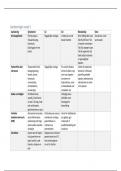
The 4 frame models
1. STRUCTURAL FRAME
● Roots → sociology, management science
● Key concepts → goals, roles, formal relationships
● Emphasizes organizational structure, including planning, strategy goals…
2. HUMAN RESOURCE FRAME
● Roots → personality and social psychology
● Key concepts → needs, capacities, feelings
● Focus on people and relationships → fit between individual and organization
3. POLITICAL FRAME
● Roots → political science
● Competition for power implies bargaining, negotiation, compromise, coalitions…
● Central focus → getting and using power, managing conflict to get things done
4. SYMBOLIC FRAME
● Roots → social and cultural anthropology
● Focus on culture, symbols and spirit
● Looks at the organization the way one look at a religion
Chapter 0: Case method
Case → description of an actual situation, commonly involving a decision, a challenge, an
opportunity or a problem faced by a person in an organisation → DECISION MAKER
Inventory of skills developed by the case method
Analytical skills Time management skills
Decision making skills Interpersonal or social skills
Application skills Creative skills
Oral communication skills Written communication skills
The decision maker has to:
➔ Identify the problem and / or opportunity
➔ Analyze the presented situation
➔ Generate and evaluate courses of action
➔ Select an alternative and justify
➔ Suggest and implement an action plan
Case methodology
● Short cycle process
○ Who, What, Why, When, How
● Long cycle process
○ Issues
○ Case Data Analysis
○ Alternative Generation
○ Decision Criteria
○ Alternative Assessment
○ Preferred Alternative
○ Action & Implementation Plan
CASE METHOD EXAMPLE:
https://docs.google.com/document/d/10qsLG-cMHQhGGGpTJsB5mLXuxIWjW_Y2X6pa1YXj
6zc/edit?tab=t.0
,Management Model
Vision / strategic intent
What do we want to be? → Desired future aspiration of the organization
● Normally is brief, only one sentence
The vision normally fails when !!
➔ Words are not connected with the actions
➔ Ideal future that doesn’t connect with the present situation of the organization
➔ It’s irrelevant
Mission
Who are you? What we do? Where are we going?
Main purpose in line with the values or expectations of stakeholders
★ It can mention key values → attitude to the stakeholders and ethics agenda
Components of the missions statement
Customers Philosophy (believes, values)
Products and services Concerns about survivals
Markets Concern about its public image
Technology Concern about employees
Company’s competitive advantage
Goals
Those that serve to operationalize the mission
➔ Allow organization’s individuals to move in the direction the mission is stated
➔ Tend to be more specific and cover more defined period of time
, Chapter 1: Framing
Virtues and drawbacks of organization
● Virtues
○ Prevalence of large, complex organization is historically recent
○ Much of society's important work is done by organization
● Drawbacks
○ They often produce poor service, defective or dangerous products
○ Often, they exploit people and communities, and damage the environment
Signs of cluelessness (no tener ni idea)
● Management errors produces 100s of bankruptcies of public companies every year
● Most managers fail, but companies keep on merging
● One study estimates 50 to 75% of American managers are incompetent
● Most challenge initiatives produce little change, and some makes thing worse
Some strategies to improve organizations can be: better management, consultants and
government policy and regulation
A frame
Frame → mental map to read and negotiate a territory. The better the map, the easier is to
know where you are and get around. A frame could be:
➔ Frame as window: enables you to see some things, but not others
➔ Frame as tool: effectiveness depends on choosing the right tool and knowing how to
use it.
The 4 frame models
1. STRUCTURAL FRAME
● Roots → sociology, management science
● Key concepts → goals, roles, formal relationships
● Emphasizes organizational structure, including planning, strategy goals…
2. HUMAN RESOURCE FRAME
● Roots → personality and social psychology
● Key concepts → needs, capacities, feelings
● Focus on people and relationships → fit between individual and organization
3. POLITICAL FRAME
● Roots → political science
● Competition for power implies bargaining, negotiation, compromise, coalitions…
● Central focus → getting and using power, managing conflict to get things done
4. SYMBOLIC FRAME
● Roots → social and cultural anthropology
● Focus on culture, symbols and spirit
● Looks at the organization the way one look at a religion