1.1 MONOMERS AND POLYMERS
MONOMERS – smaller units that make up a large molecule (eg)
- Monosaccharides (fructose, galactose, glucose)
- Nucleotides
- amino acids
- ribose, deoxyribose
➢ CONDENSATION reaction joins two molecules/monomers together to form any chemical
bonds by removing one water molecule
○ Glycosidic bonds = monosaccharides
○ Peptide = amino acids
○ Ester = glycerol and fatty acid
○ phosphodiester bonds = nucleotides
➢ HYDROLYSIS breaks a chemical bond between 2 molecules/monomers with a water
molecule
POLYMERS – long chain molecules made from many monomer units joined together
- DNA, RNA,
- Polysaccharides (amylose, cellulose, starch, glycogen)
- Proteins (polypeptides)
1.2 CARBOHYDRATES
MONOSACCHARIDES – monomers that make up long chain polysaccharides/ large carbohydrates
DISACCHARIDES – formed from condensation of 2 monosaccharides, forms a GLYCOSIDIC
BOND (1,4 or 1,6) and removing a water molecule
POLYSACCHARIDES – long chain made from many, depends on its monosaccharides
3 COMMON HEXOSE MONOSACCHARIDES (C6H12O6 = hexose )
- Glucose (alpha or beta)
- Fructose
- Galactose
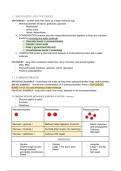
Monosaccharides Disaccharides Polysaccharides
Glucose + glucose = Maltose (helps digestion of starch) - Starch (amylose
and amylopectin)
Glucose + fructose = Sucrose (plant sugar, non reducing) - Cellulose
- Glycogen
Glucose + galactose = Lactose (milk sugar)
PROPERTIES
- Soluble - Soluble - Insoluble
- Small enough to pass - Large = Too big to pass - Large = Too big
through partially - Sweet to pass
permeable membranes - Not sweet
- Sweet
, ISOMERS OF GLUCOSE – ALPHA + BETA same molecular formula, different structural formula/
arranged differently
★ Removing a H2O molecule, forming a
glycosidic bond
★ BETA GLUCOSE FLIP ONE SIDE
★ (1,4) = normal
★ (1,6) = branched
POLYSACCHARIDES PROPERTIES + FUNCTION (x3 plant, x1 animal)
CELLULOSE ➢ Beta Glucose (only one out of 4)
➢ (1,4) glycosidic bonds = Unbranched
➢ Straight, long parallel chains = forms H-bonds with parallel chains
= forms microfibrils = support and strengthen cell wall to prevent cell
bursting so it stays turgid
➢ Alternating chain
AMYLOSE ➢ Alpha glucose
(starch) = storage ➢ (1,4) glycosidic bonds = unbranced
➢ Helical, coiled structure form H-bonds = compact for long term storage
➢ Insoluble + Large = no osmotic effect and does not diffuse out the cell
so starch stays in cell (all insoluble except cellulose)
MONOMERS – smaller units that make up a large molecule (eg)
- Monosaccharides (fructose, galactose, glucose)
- Nucleotides
- amino acids
- ribose, deoxyribose
➢ CONDENSATION reaction joins two molecules/monomers together to form any chemical
bonds by removing one water molecule
○ Glycosidic bonds = monosaccharides
○ Peptide = amino acids
○ Ester = glycerol and fatty acid
○ phosphodiester bonds = nucleotides
➢ HYDROLYSIS breaks a chemical bond between 2 molecules/monomers with a water
molecule
POLYMERS – long chain molecules made from many monomer units joined together
- DNA, RNA,
- Polysaccharides (amylose, cellulose, starch, glycogen)
- Proteins (polypeptides)
1.2 CARBOHYDRATES
MONOSACCHARIDES – monomers that make up long chain polysaccharides/ large carbohydrates
DISACCHARIDES – formed from condensation of 2 monosaccharides, forms a GLYCOSIDIC
BOND (1,4 or 1,6) and removing a water molecule
POLYSACCHARIDES – long chain made from many, depends on its monosaccharides
3 COMMON HEXOSE MONOSACCHARIDES (C6H12O6 = hexose )
- Glucose (alpha or beta)
- Fructose
- Galactose
Monosaccharides Disaccharides Polysaccharides
Glucose + glucose = Maltose (helps digestion of starch) - Starch (amylose
and amylopectin)
Glucose + fructose = Sucrose (plant sugar, non reducing) - Cellulose
- Glycogen
Glucose + galactose = Lactose (milk sugar)
PROPERTIES
- Soluble - Soluble - Insoluble
- Small enough to pass - Large = Too big to pass - Large = Too big
through partially - Sweet to pass
permeable membranes - Not sweet
- Sweet
, ISOMERS OF GLUCOSE – ALPHA + BETA same molecular formula, different structural formula/
arranged differently
★ Removing a H2O molecule, forming a
glycosidic bond
★ BETA GLUCOSE FLIP ONE SIDE
★ (1,4) = normal
★ (1,6) = branched
POLYSACCHARIDES PROPERTIES + FUNCTION (x3 plant, x1 animal)
CELLULOSE ➢ Beta Glucose (only one out of 4)
➢ (1,4) glycosidic bonds = Unbranched
➢ Straight, long parallel chains = forms H-bonds with parallel chains
= forms microfibrils = support and strengthen cell wall to prevent cell
bursting so it stays turgid
➢ Alternating chain
AMYLOSE ➢ Alpha glucose
(starch) = storage ➢ (1,4) glycosidic bonds = unbranced
➢ Helical, coiled structure form H-bonds = compact for long term storage
➢ Insoluble + Large = no osmotic effect and does not diffuse out the cell
so starch stays in cell (all insoluble except cellulose)