LEGAL PRACTICE COURSE
Employment Law
Workshop 8
Topic(s):
Unfair dismissal – redundancy
Statutory redundancy payments
Learning Outcomes:
By the end of this session you will be able to:
Advise a client on the procedural steps in a redundancy situation
Advise on the qualification requirements for a statutory redundancy payment (‘SRP’)
Calculate a SRP
Calculate revised ET1 time limit taking into account the early conciliation (‘EC’)
procedure
Session Activities:
Give general advice to an employer about the procedural steps in a redundancy situation
Give specific advice on an employer’s planned procedure and the likelihood of a
successful unfair dismissal claim
Give advice on whether an individual is entitled to a SRP and perform the calculation
Calculate the revised time limit taking into account EC procedure
Materials Attached:
Pre-session task: memorandum requesting advice on procedure for redundancy
In session task: memorandum giving further information about client’s planned
procedure, including draft selection matrix
In session task: memorandum regarding the time limit for submitting ET1
Post-session task: SRP
Materials to be Released:
Solution to post-session task on SRP (d2e)
Preparation for Session:
Review LG 3, 4 and 5
Re-read article on Practical Law entitled ‘Redundancy (1): the definition of redundancy’
Read article on Practical Law entitled ‘Redundancy (4): statutory redundancy payments’
Read checklist on Practical Law entitled ‘Redundancy procedure checklist'
Read ss.135-139, 141, 162 and 164 ERA 1996
Provide answers to the pre-session task for discussion
Post-Session:
Consolidate your learning in the session
docs_745991602.docx 1/14 © City, University of London 2019
, Redundancy itself is not a claim several claims regarding redundancy, key one is UD,
statutory redundancy payment, potentially WD if notice not been given or paid for, and large
scale redundancy we need to consider collective consultationkey claim is UD
In the exam if a fact suggests it’s a redundancy situation, the question will steer you to what
claim that needs to be identified
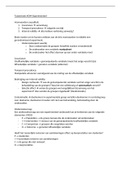
Is there a dismissal? – 3 types of statutory dismissal: express, constructive and expiry of a
limited term contract.
Does the employee qualify? Did they have the requisite qualification period of service? Are
they within the time limit, and check whether they are in excluded category?
Is there potentially fair reason. (for employer to argue they have a potentially fair reason
Finally, was the dismissal fair in all circumstances?
Acas is not relevant for redundancy because the employer hasn’t done anything wrong. So
we will not consider ACAS code – procedure for redundancy comes from a long series of
case law (not from ACAS)
Consider substantive fairness, band of reasonable responseswould a reasonable employer
in same circumstances have dismissed that employee given the procedure that has been
carried out? ET shouldn’t substitute its own view, should consider what a reasonable
employer of that size with resources available to it would have done. Also consider all factors
ie consistency of treatment, size of employer, employee circumstances etc
And then procedural fairness – employer can’t argue no difference rule regarding liability –
polkey. But it may assist in reducing the compensatory award.
Employer may have their own redundancy procedure so check with client - employer should
always consult with employee (essential for procedure) ACAS not relevant for redundancy
docs_745991602.docx 2/14 © City, University of London 2019
Employment Law
Workshop 8
Topic(s):
Unfair dismissal – redundancy
Statutory redundancy payments
Learning Outcomes:
By the end of this session you will be able to:
Advise a client on the procedural steps in a redundancy situation
Advise on the qualification requirements for a statutory redundancy payment (‘SRP’)
Calculate a SRP
Calculate revised ET1 time limit taking into account the early conciliation (‘EC’)
procedure
Session Activities:
Give general advice to an employer about the procedural steps in a redundancy situation
Give specific advice on an employer’s planned procedure and the likelihood of a
successful unfair dismissal claim
Give advice on whether an individual is entitled to a SRP and perform the calculation
Calculate the revised time limit taking into account EC procedure
Materials Attached:
Pre-session task: memorandum requesting advice on procedure for redundancy
In session task: memorandum giving further information about client’s planned
procedure, including draft selection matrix
In session task: memorandum regarding the time limit for submitting ET1
Post-session task: SRP
Materials to be Released:
Solution to post-session task on SRP (d2e)
Preparation for Session:
Review LG 3, 4 and 5
Re-read article on Practical Law entitled ‘Redundancy (1): the definition of redundancy’
Read article on Practical Law entitled ‘Redundancy (4): statutory redundancy payments’
Read checklist on Practical Law entitled ‘Redundancy procedure checklist'
Read ss.135-139, 141, 162 and 164 ERA 1996
Provide answers to the pre-session task for discussion
Post-Session:
Consolidate your learning in the session
docs_745991602.docx 1/14 © City, University of London 2019
, Redundancy itself is not a claim several claims regarding redundancy, key one is UD,
statutory redundancy payment, potentially WD if notice not been given or paid for, and large
scale redundancy we need to consider collective consultationkey claim is UD
In the exam if a fact suggests it’s a redundancy situation, the question will steer you to what
claim that needs to be identified
Is there a dismissal? – 3 types of statutory dismissal: express, constructive and expiry of a
limited term contract.
Does the employee qualify? Did they have the requisite qualification period of service? Are
they within the time limit, and check whether they are in excluded category?
Is there potentially fair reason. (for employer to argue they have a potentially fair reason
Finally, was the dismissal fair in all circumstances?
Acas is not relevant for redundancy because the employer hasn’t done anything wrong. So
we will not consider ACAS code – procedure for redundancy comes from a long series of
case law (not from ACAS)
Consider substantive fairness, band of reasonable responseswould a reasonable employer
in same circumstances have dismissed that employee given the procedure that has been
carried out? ET shouldn’t substitute its own view, should consider what a reasonable
employer of that size with resources available to it would have done. Also consider all factors
ie consistency of treatment, size of employer, employee circumstances etc
And then procedural fairness – employer can’t argue no difference rule regarding liability –
polkey. But it may assist in reducing the compensatory award.
Employer may have their own redundancy procedure so check with client - employer should
always consult with employee (essential for procedure) ACAS not relevant for redundancy
docs_745991602.docx 2/14 © City, University of London 2019