Characteristics of the Public Organisation
The difference between ‘public administration’ and ‘Public Administration’
● Public Administration: the discipline that studies how the public sector does serve the public good
through developing and implementing public policies and what is needed to conduct this
business in an efficient, effective legitimate and rational way to optimise serving the public good
○ The study of requiring the knowledge of the 4 disciplines
● public administration: a practice
○ Meaning serving the public good
○ Administrative apparatus, includes the people who work in it and the work it does
To what extent is Public Administration considered a distinct academic discipline?
● May or may not be a separate discipline from political science
● Draws from areas of political science, economics, social science and management sciences or
law
● Many times companied under a different department not one of its own
● Causing disputes about what PA should study
● However, it seeks to understand problems occurring in the public sector to improve PA and
applies the knowledge to practise → It is an applied science
What makes a state?
1. Population . S
3 overeignty
2. Territory 4. Government (we focus on this)
The main reasons behind people’s willingness to transfer authority to governments
● All regime types need some organisational capacity or an administrative apparatus (ie public
administration)
● Nature of humankind
○ Our way to organise ourselves by establishing hierarchical relations in the best interest of all
○ Some seek power while others seek the protections that this power provides. Its in
humanity’s best interest to form primitive or more extensive kinds of government
○ Rulers will be considered legitimate as long as they take care of the interests of the ruled
● Collective problems need to be tackled in group- →Collective action
○ Many problems are shared by groups of individuals (need for cooperation and organisation)
● Evolution of civilization
○ Emergence of city states with some form of city government
● Emergence of government = religious conviction
○ Chosen by the divine power to enforce divine laws
● Forced on by other people
● Now: provision of collective goods to resolve collective problems forms the basic legitimacy of
any modern day government
What is the free rider problem?
● People are seen as free riders enjoying the outcomes of public goods while minimising their
contribution to such goods
● Problem increases with the size of an organisation or state
● Noticeable effect of individual contributions decreases while benefits for each individual do not
increase
● To reduce the free rider problem → taxes regulations enforced by law administrative control and
justice system
● Ex: Climate change // avoidance of taxes //wastecollection problem
Public goods vs Private goods
● Individuals do not contribute to common goods because it will not have a noticeable effect on the
establishment of such goods
● Public goods are enjoyed if they are produced or initiated by others irrespective of their own
individual contribution
● Main function of a government is to provision of public goods
1
,● Two types
○ Nonexcludable (free to use):individuals cannot denyeach other the opportunity to consume
a good
○ Nonrival in consumption:1 individual’s consumptionof a good does not affect another’s
opportunity to consume the good
● Excluable: those paying are the only ones that can enjoy it
● Good rival: limited amount
● National defence is a pure public good
Public goods - crowding out
● Crowding out effect:when a government provides alot of a certain good, the private sector will
provide less
● Full crowd-out is rare
○ Ex: defence?
● Partial crowd out is much more common because:
○ Non contributors to the public good are taxed to finance the good
○ Individuals derive utility from their own contribution as well as from the total amount of the
public good
○ Ex: eduction, healthcare
Is the good rival in consumption?
Is the good Yes No
xcludable?
e
Yes Private good (Ice cream) Impure public good (cable TV)
No Impure public good (crowded sidewalk) Pure public good (defence)
How does Wilson distinguish an administration from other parts of government?
● Wilson: advocated that politics and administration should be differentiated: the broad plans of
government action are not administrative; the detailed execution of such plans is administrative
→ Corrupted, took time to select the administration
● Before: Administration was left as a practical detail regarding how law should work
(effectively/smoothly)
● 19th CE: difficulties in governmental action → need systematic adjustment
Wilson’s key points
● Wilson defines PA as “government in action”
● The study of PA was put aside and much of the attention focused on other topics
● Need to study PA because the structures of the state were becoming more complex
● Science of PA = context dependent as administrative structures vary among countries
● Characteristics
○ The field of PA is a field of business (he paved the way to new public management)
○ He argues for a clear diction between politics and administration
○ Protect the administration against the corrupting influence of politicians
○ At that time, political and ethnic loyalties were more important for the recruitment of officials
than expertise in the US
○ Wilson talks of an Americanization of administration, an elected government and the
perception of government as a franchise not a monopoly.
○ The Old Continent struggled with revolutions and created perfect machinery, indispensable,
smooth, paternal, powerful and unquestionable.
● Constitutional histories of chief modern nations go through three phases:
○ 1. Absolute rulers + agreeing administration
○ 2. Popular control in which administration is neglected
○ 3. Sovereign people develop administration
2
, Difference between politics and administration - Is there a neutral bureaucrat?
● Administration lies outside the sphere of politics
○ Politics set the tasks
○ Administration is the activity of the state in the individual and small things
● Distinction between constitutional and administrative questions:
○ governmental adjustments which are essential to constitutional principle
○ instrumental to the possibly changing purposes of a wisely adapting convenience.
● Method
○ Democracy is to be equipped for carrying administration
○ Filter the study of administration through our constitutions
○ Inspiration from other european countries as end goals of administration are same
○ Scholars can borrow ideas, but implementation depends on the context
Key takeaway:Distinction between politics + administration→ politicians were corrupted
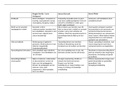
Politicians Public managers
T
● akes political decisions ● S upposed to maintain their neutrality and should not
● Design the policy directions engage in politics when taking decisions
of their consistency ● Their personal opinions should not interfere with their
● Elected officials daily tasks
● Policy making ● Appointed civil servants
● Ideology ● Policy making + implementation
● Principal ● Expertise
● Values ● Agent
● Publicity ● Facts
● Goals ● Discretion
● Means
3
The difference between ‘public administration’ and ‘Public Administration’
● Public Administration: the discipline that studies how the public sector does serve the public good
through developing and implementing public policies and what is needed to conduct this
business in an efficient, effective legitimate and rational way to optimise serving the public good
○ The study of requiring the knowledge of the 4 disciplines
● public administration: a practice
○ Meaning serving the public good
○ Administrative apparatus, includes the people who work in it and the work it does
To what extent is Public Administration considered a distinct academic discipline?
● May or may not be a separate discipline from political science
● Draws from areas of political science, economics, social science and management sciences or
law
● Many times companied under a different department not one of its own
● Causing disputes about what PA should study
● However, it seeks to understand problems occurring in the public sector to improve PA and
applies the knowledge to practise → It is an applied science
What makes a state?
1. Population . S
3 overeignty
2. Territory 4. Government (we focus on this)
The main reasons behind people’s willingness to transfer authority to governments
● All regime types need some organisational capacity or an administrative apparatus (ie public
administration)
● Nature of humankind
○ Our way to organise ourselves by establishing hierarchical relations in the best interest of all
○ Some seek power while others seek the protections that this power provides. Its in
humanity’s best interest to form primitive or more extensive kinds of government
○ Rulers will be considered legitimate as long as they take care of the interests of the ruled
● Collective problems need to be tackled in group- →Collective action
○ Many problems are shared by groups of individuals (need for cooperation and organisation)
● Evolution of civilization
○ Emergence of city states with some form of city government
● Emergence of government = religious conviction
○ Chosen by the divine power to enforce divine laws
● Forced on by other people
● Now: provision of collective goods to resolve collective problems forms the basic legitimacy of
any modern day government
What is the free rider problem?
● People are seen as free riders enjoying the outcomes of public goods while minimising their
contribution to such goods
● Problem increases with the size of an organisation or state
● Noticeable effect of individual contributions decreases while benefits for each individual do not
increase
● To reduce the free rider problem → taxes regulations enforced by law administrative control and
justice system
● Ex: Climate change // avoidance of taxes //wastecollection problem
Public goods vs Private goods
● Individuals do not contribute to common goods because it will not have a noticeable effect on the
establishment of such goods
● Public goods are enjoyed if they are produced or initiated by others irrespective of their own
individual contribution
● Main function of a government is to provision of public goods
1
,● Two types
○ Nonexcludable (free to use):individuals cannot denyeach other the opportunity to consume
a good
○ Nonrival in consumption:1 individual’s consumptionof a good does not affect another’s
opportunity to consume the good
● Excluable: those paying are the only ones that can enjoy it
● Good rival: limited amount
● National defence is a pure public good
Public goods - crowding out
● Crowding out effect:when a government provides alot of a certain good, the private sector will
provide less
● Full crowd-out is rare
○ Ex: defence?
● Partial crowd out is much more common because:
○ Non contributors to the public good are taxed to finance the good
○ Individuals derive utility from their own contribution as well as from the total amount of the
public good
○ Ex: eduction, healthcare
Is the good rival in consumption?
Is the good Yes No
xcludable?
e
Yes Private good (Ice cream) Impure public good (cable TV)
No Impure public good (crowded sidewalk) Pure public good (defence)
How does Wilson distinguish an administration from other parts of government?
● Wilson: advocated that politics and administration should be differentiated: the broad plans of
government action are not administrative; the detailed execution of such plans is administrative
→ Corrupted, took time to select the administration
● Before: Administration was left as a practical detail regarding how law should work
(effectively/smoothly)
● 19th CE: difficulties in governmental action → need systematic adjustment
Wilson’s key points
● Wilson defines PA as “government in action”
● The study of PA was put aside and much of the attention focused on other topics
● Need to study PA because the structures of the state were becoming more complex
● Science of PA = context dependent as administrative structures vary among countries
● Characteristics
○ The field of PA is a field of business (he paved the way to new public management)
○ He argues for a clear diction between politics and administration
○ Protect the administration against the corrupting influence of politicians
○ At that time, political and ethnic loyalties were more important for the recruitment of officials
than expertise in the US
○ Wilson talks of an Americanization of administration, an elected government and the
perception of government as a franchise not a monopoly.
○ The Old Continent struggled with revolutions and created perfect machinery, indispensable,
smooth, paternal, powerful and unquestionable.
● Constitutional histories of chief modern nations go through three phases:
○ 1. Absolute rulers + agreeing administration
○ 2. Popular control in which administration is neglected
○ 3. Sovereign people develop administration
2
, Difference between politics and administration - Is there a neutral bureaucrat?
● Administration lies outside the sphere of politics
○ Politics set the tasks
○ Administration is the activity of the state in the individual and small things
● Distinction between constitutional and administrative questions:
○ governmental adjustments which are essential to constitutional principle
○ instrumental to the possibly changing purposes of a wisely adapting convenience.
● Method
○ Democracy is to be equipped for carrying administration
○ Filter the study of administration through our constitutions
○ Inspiration from other european countries as end goals of administration are same
○ Scholars can borrow ideas, but implementation depends on the context
Key takeaway:Distinction between politics + administration→ politicians were corrupted
Politicians Public managers
T
● akes political decisions ● S upposed to maintain their neutrality and should not
● Design the policy directions engage in politics when taking decisions
of their consistency ● Their personal opinions should not interfere with their
● Elected officials daily tasks
● Policy making ● Appointed civil servants
● Ideology ● Policy making + implementation
● Principal ● Expertise
● Values ● Agent
● Publicity ● Facts
● Goals ● Discretion
● Means
3