AQA A-LEVEL PSYCHOLOGY: PAPER 1 FULL COURSE
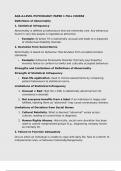
Definitions of Abnormality
1. Statistical Infrequency
Abnormality is defined as behaviours that are extremely rare. Any behaviour
found in very few people is regarded as abnormal.
Example: IQ below 70 is statistically unusual and leads to a diagnosis
of intellectual disability disorder.
2. Deviation from Social Norms
Abnormality is based on behaviour that deviates from accepted societal
standards.
Example: Antisocial Personality Disorder (formerly psychopathy)
involves failure to conform to lawful and culturally accepted behaviour.
Strengths and Limitations of Definitions of Abnormality
Strength of Statistical Infrequency
Real-life application: Used in clinical assessments by comparing
patient behaviours to statistical norms.
Limitations of Statistical Infrequency
1. Unusual ≠ Bad: High IQ (>130) is statistically abnormal but not
considered a disorder.
2. Not everyone benefits from a label: If an individual is happy and
fulfilled, labeling them as "abnormal" may cause unnecessary distress.
Limitations of Deviation from Social Norms
1. Cultural Relativity: What is deemed "abnormal" varies across
cultures, leading to cultural bias in diagnosis.
2. Human Rights Abuses: Historically, social norm deviation has been
used to control marginalized groups (e.g., diagnosing runaway slaves
as mentally ill).
3. Failure to Function Adequately
Occurs when an individual is unable to cope with daily life, fails to conform to
interpersonal rules, or behaves irrationally/dangerously.
, 4. Deviation from Ideal Mental Health
Defined as failure to meet criteria for good mental health.
Marie Jahoda (1958) Six Criteria for Ideal Mental Health:
1. Positive self-attitude
2. Self-actualization (fulfilling potential)
3. Resistance to stress
4. Personal autonomy
5. Accurate perception of reality
6. Adapting to the environment
Strengths and Limitations
Strength of Failure to Function Adequately
Recognizes Patient's Perspective: Captures lived experience of
mental illness.
Limitations of Failure to Function Adequately
1. Overlap with Deviation from Social Norms: Alternative lifestyles
may be mislabeled as "failing to function."
2. Subjectivity: Distress is difficult to measure objectively.
Strength of Deviation from Ideal Mental Health
Comprehensive: Covers most aspects of mental health.
Limitations of Deviation from Ideal Mental Health
1. Cultural Relativity: Jahoda's criteria are Western-centric.
2. Unrealistic Standards: Few people achieve all criteria at all times.
Characteristics of Mental Disorders
Phobias
Behavioural: Panic, avoidance of phobic stimulus.
Emotional: Anxiety/fear, unreasonable responses.
Definitions of Abnormality
1. Statistical Infrequency
Abnormality is defined as behaviours that are extremely rare. Any behaviour
found in very few people is regarded as abnormal.
Example: IQ below 70 is statistically unusual and leads to a diagnosis
of intellectual disability disorder.
2. Deviation from Social Norms
Abnormality is based on behaviour that deviates from accepted societal
standards.
Example: Antisocial Personality Disorder (formerly psychopathy)
involves failure to conform to lawful and culturally accepted behaviour.
Strengths and Limitations of Definitions of Abnormality
Strength of Statistical Infrequency
Real-life application: Used in clinical assessments by comparing
patient behaviours to statistical norms.
Limitations of Statistical Infrequency
1. Unusual ≠ Bad: High IQ (>130) is statistically abnormal but not
considered a disorder.
2. Not everyone benefits from a label: If an individual is happy and
fulfilled, labeling them as "abnormal" may cause unnecessary distress.
Limitations of Deviation from Social Norms
1. Cultural Relativity: What is deemed "abnormal" varies across
cultures, leading to cultural bias in diagnosis.
2. Human Rights Abuses: Historically, social norm deviation has been
used to control marginalized groups (e.g., diagnosing runaway slaves
as mentally ill).
3. Failure to Function Adequately
Occurs when an individual is unable to cope with daily life, fails to conform to
interpersonal rules, or behaves irrationally/dangerously.
, 4. Deviation from Ideal Mental Health
Defined as failure to meet criteria for good mental health.
Marie Jahoda (1958) Six Criteria for Ideal Mental Health:
1. Positive self-attitude
2. Self-actualization (fulfilling potential)
3. Resistance to stress
4. Personal autonomy
5. Accurate perception of reality
6. Adapting to the environment
Strengths and Limitations
Strength of Failure to Function Adequately
Recognizes Patient's Perspective: Captures lived experience of
mental illness.
Limitations of Failure to Function Adequately
1. Overlap with Deviation from Social Norms: Alternative lifestyles
may be mislabeled as "failing to function."
2. Subjectivity: Distress is difficult to measure objectively.
Strength of Deviation from Ideal Mental Health
Comprehensive: Covers most aspects of mental health.
Limitations of Deviation from Ideal Mental Health
1. Cultural Relativity: Jahoda's criteria are Western-centric.
2. Unrealistic Standards: Few people achieve all criteria at all times.
Characteristics of Mental Disorders
Phobias
Behavioural: Panic, avoidance of phobic stimulus.
Emotional: Anxiety/fear, unreasonable responses.