Molecular Genetics Organelles
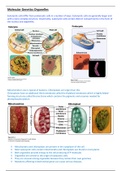
Eukaryotic cells differ from prokaryotic cells in a number of ways. Eukaryotic cells are generally larger and
with a more complex structure. Importantly, eukaryotic cells contain distinct compartments in the form of
the nucleus and organelles.
Mitochondria’s size is typical of bacteria. Chloroplasts are larger than this.
Chloroplasts have an additional third membrane called the thylakoid membrane which is highly folded
forming structures called Stroma Grana which contains the pigments and enzymes needed for
photophosphorylation.
0 Mitochondria and chloroplasts are present in the cytoplasm of the cell.
0 Most eukaryotic cells contain mitochondria and chloroplasts are found in most plants.
0 Both organelles provide energy to the cell producing ATP molecules
0 Organelles are central to the origin of eukaryotic cells.
0 They are unusual among organelles because they contain their own genomes
0 Mutations affecting mitochondrial genes can cause serious diseases.
,Inheritance of mitochondria & chloroplasts
In sexually reproducing organisms, they are usually
inherited only from one sex.
In animal’s mitochondria are inherited from the mother
(but some exceptions exist).
Uniparental transmission has the purpose of avoiding
genomic heterogeneity in mitochondria
A bottle neck of mitochondria may account for the
homoplasmy at conception
Origin of mitochondria and chloroplasts
Mitochondria are thought to have been present in the last common ancestor of all eukaryotes.
Chloroplasts are thought to have been present at the base of the plant phylogeny.
Some species however, have lost their mitochondria or chloroplasts later in their evolution but some
mitochondria genes are still present in their nuclear genomes.
It is possible that other
organelles were derived
derived from events of
endosymbiosis but have since
lost their genomes
DNA exchanges
0 Mitochondria and chloroplasts have exchanged genetic material with the nucleus
0 Many mitochondrial and chloroplast genes have migrated to the nucleus
0 Organelles are thus dependent on nuclear protein synthesis for basic functions
Mitochondria are dependent on nuclear transcription
In many organisms key mitochondria genes for replication and gene
expression have migrated to the nucleus.
In blue, are proteins encoded in the nucleus and translated in the
cytoplasm and then transported to the mitochondria
DNA polymerase necessary for DNA replication is more similar to
that of bacteria than the eukaryotic versions.
, Chloroplast
Genome organization
0 Cells can have multiple chloroplasts per cell.
0 Each chloroplast might contain multiple genome copies
0 Genomes vary in size between species from 80000 to 600000 base pairs
0 Usually circular double stranded DNA
0 Highly coiled
0 No histone proteins nor histone-like proteins
0 Chloroplasts encoded RubisCO is probably the most abundant protein on Earth.
Typical vascular plant chloroplast contain:
0 rRNAs
0 tRNAs
0 ribosomal proteins
0 genes involved in photosynthesis
Chloroplast genes
0 Many genes are arranged in operons like in bacteria
0 Gene order of many genes is shared with E. coli
0 Chloroplast genomes may contain large amounts of non-coding DNA and many genes have
introns as genes in the nuclear genome.
0 Chloroplasts encode Ribulose- 1,5-biphosphate carboxylase-oxygenase (RubisCO) which
makes up 50% of plants protein content and is probably the most abundant protein on
Earth.
Gene expression in chloroplasts
0 Transcription and translation in chloroplasts is similar to those of eubacteria
0 Genes are transcribed in groups like bacteria operons
0 Proteins and RNAs involved in transcription and translation are most similar to eubacteria
0 Antibiotics which inhibit protein synthesis in mitochondria and eubacteria inhibit protein
synthesis in chloroplasts
Importance of chloroplast mitochondria in phylogenetics
0 Mitochondria are widely used for phylogenetic studies in metazoan species.
0 Chloroplast DNA evolves more slowly than mitochondria and nuclear genomes
0 Chloroplasts are used to assess phylogenetic relationships among plant species
Although some chloroplast genomes can contain a lot of non-coding DNA and some genes can
have introns like eukaryotic nuclear genomes, on the whole chloroplasts share most of their
characteristics with other bacteria genomes.
, Mitochondria
Genome organization
0 A single cell can contain multiple mitochondria
0 A single mitochondria can contain several copies of the genome
0 Genome size can vary from 6kbp to several million bp in some plants
0 Genomes are associated with proteins with some similar properties to histones as the nuclear
genome is.
0 Most of the 900 proteins found in mitochondria are encoded in the nucleus, translated in
cytoplasmic ribosomes and then imported into the mitochondria
Mitochondria genes
0 Gene number varies from 40-50 genes encoding proteins important for:
0 Respiration and oxidative phosphorylation
0 Transcription
0 Translation
0 RNA processing
0 Import of proteins into the cell
0 Proteins involved in translation are most similar to the bacteria genes
0 Ribosome structures are different from those of bacteria and eukaryotes
0 Mitochondria genomes can be very different between taxa:
0 Genome organisation
0 Gene expression
Mitochondria genomes are variable
0 In animals and fungi: single, coiled circular DNA molecule
0 In plants: multiple circular DNA molecules are the norm
0 Some species contain mitochondria with a single linear DNA molecule.
Gene expression in mitochondria
0 Transcription and translation varies among organisms
0 Full strand transcription, operon structures, single gene transcription
0 Fungi and plant mitochondria genes may contain introns.
Human mitochondrial genome Yeast mitochondrial genome
0 78000bp - Six times as large as in
0 16000bp humans
0 No unstranslated areas 0 High non-coding DNA content
0 Single promoter per strand 0 Many introns
0 Two long transcripts are cleaved 0 UTRs and intergene spacers
Plant mitochondrial genomes
0 Great variation in size
0 Can have multiple circular genomes
0 High repeat DNA content
Eukaryotic cells differ from prokaryotic cells in a number of ways. Eukaryotic cells are generally larger and
with a more complex structure. Importantly, eukaryotic cells contain distinct compartments in the form of
the nucleus and organelles.
Mitochondria’s size is typical of bacteria. Chloroplasts are larger than this.
Chloroplasts have an additional third membrane called the thylakoid membrane which is highly folded
forming structures called Stroma Grana which contains the pigments and enzymes needed for
photophosphorylation.
0 Mitochondria and chloroplasts are present in the cytoplasm of the cell.
0 Most eukaryotic cells contain mitochondria and chloroplasts are found in most plants.
0 Both organelles provide energy to the cell producing ATP molecules
0 Organelles are central to the origin of eukaryotic cells.
0 They are unusual among organelles because they contain their own genomes
0 Mutations affecting mitochondrial genes can cause serious diseases.
,Inheritance of mitochondria & chloroplasts
In sexually reproducing organisms, they are usually
inherited only from one sex.
In animal’s mitochondria are inherited from the mother
(but some exceptions exist).
Uniparental transmission has the purpose of avoiding
genomic heterogeneity in mitochondria
A bottle neck of mitochondria may account for the
homoplasmy at conception
Origin of mitochondria and chloroplasts
Mitochondria are thought to have been present in the last common ancestor of all eukaryotes.
Chloroplasts are thought to have been present at the base of the plant phylogeny.
Some species however, have lost their mitochondria or chloroplasts later in their evolution but some
mitochondria genes are still present in their nuclear genomes.
It is possible that other
organelles were derived
derived from events of
endosymbiosis but have since
lost their genomes
DNA exchanges
0 Mitochondria and chloroplasts have exchanged genetic material with the nucleus
0 Many mitochondrial and chloroplast genes have migrated to the nucleus
0 Organelles are thus dependent on nuclear protein synthesis for basic functions
Mitochondria are dependent on nuclear transcription
In many organisms key mitochondria genes for replication and gene
expression have migrated to the nucleus.
In blue, are proteins encoded in the nucleus and translated in the
cytoplasm and then transported to the mitochondria
DNA polymerase necessary for DNA replication is more similar to
that of bacteria than the eukaryotic versions.
, Chloroplast
Genome organization
0 Cells can have multiple chloroplasts per cell.
0 Each chloroplast might contain multiple genome copies
0 Genomes vary in size between species from 80000 to 600000 base pairs
0 Usually circular double stranded DNA
0 Highly coiled
0 No histone proteins nor histone-like proteins
0 Chloroplasts encoded RubisCO is probably the most abundant protein on Earth.
Typical vascular plant chloroplast contain:
0 rRNAs
0 tRNAs
0 ribosomal proteins
0 genes involved in photosynthesis
Chloroplast genes
0 Many genes are arranged in operons like in bacteria
0 Gene order of many genes is shared with E. coli
0 Chloroplast genomes may contain large amounts of non-coding DNA and many genes have
introns as genes in the nuclear genome.
0 Chloroplasts encode Ribulose- 1,5-biphosphate carboxylase-oxygenase (RubisCO) which
makes up 50% of plants protein content and is probably the most abundant protein on
Earth.
Gene expression in chloroplasts
0 Transcription and translation in chloroplasts is similar to those of eubacteria
0 Genes are transcribed in groups like bacteria operons
0 Proteins and RNAs involved in transcription and translation are most similar to eubacteria
0 Antibiotics which inhibit protein synthesis in mitochondria and eubacteria inhibit protein
synthesis in chloroplasts
Importance of chloroplast mitochondria in phylogenetics
0 Mitochondria are widely used for phylogenetic studies in metazoan species.
0 Chloroplast DNA evolves more slowly than mitochondria and nuclear genomes
0 Chloroplasts are used to assess phylogenetic relationships among plant species
Although some chloroplast genomes can contain a lot of non-coding DNA and some genes can
have introns like eukaryotic nuclear genomes, on the whole chloroplasts share most of their
characteristics with other bacteria genomes.
, Mitochondria
Genome organization
0 A single cell can contain multiple mitochondria
0 A single mitochondria can contain several copies of the genome
0 Genome size can vary from 6kbp to several million bp in some plants
0 Genomes are associated with proteins with some similar properties to histones as the nuclear
genome is.
0 Most of the 900 proteins found in mitochondria are encoded in the nucleus, translated in
cytoplasmic ribosomes and then imported into the mitochondria
Mitochondria genes
0 Gene number varies from 40-50 genes encoding proteins important for:
0 Respiration and oxidative phosphorylation
0 Transcription
0 Translation
0 RNA processing
0 Import of proteins into the cell
0 Proteins involved in translation are most similar to the bacteria genes
0 Ribosome structures are different from those of bacteria and eukaryotes
0 Mitochondria genomes can be very different between taxa:
0 Genome organisation
0 Gene expression
Mitochondria genomes are variable
0 In animals and fungi: single, coiled circular DNA molecule
0 In plants: multiple circular DNA molecules are the norm
0 Some species contain mitochondria with a single linear DNA molecule.
Gene expression in mitochondria
0 Transcription and translation varies among organisms
0 Full strand transcription, operon structures, single gene transcription
0 Fungi and plant mitochondria genes may contain introns.
Human mitochondrial genome Yeast mitochondrial genome
0 78000bp - Six times as large as in
0 16000bp humans
0 No unstranslated areas 0 High non-coding DNA content
0 Single promoter per strand 0 Many introns
0 Two long transcripts are cleaved 0 UTRs and intergene spacers
Plant mitochondrial genomes
0 Great variation in size
0 Can have multiple circular genomes
0 High repeat DNA content