**C1 Opportunities and Risks**
**DSE notes in bitesize**
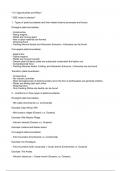
1 - Types of plate boundaries and their related internal processes and forces
Divergent plate boundaries:
- Constructive
- Rising magma
- Plates are moving apart
- New crustal materials are formed
- Tensional force
- Faulting (Normal faults) and Volcanism (Intrusive + Extrusive) can be found
Convergent plate boundaries:
- Destructive
- Falling magma
- Plates are moving towards
- Denser plate (Oceanic plate) are subducted underneath the lighter one
- Compressional force
- Faulting (Reverse faults), Folding, and Volcanism (Intrusive + Extrusive) can be found
Transform plate boundaries:
- Conservative
- No volcanic activities
- Most damaging type of plate boundary since the foci of earthquakes are generally shallow
- Plates are sliding past each other
- Shearing force
- Only Faulting (Strike-slip faults) can be found
2 - Landforms in three types of plate boundaries
Divergent plate boundaries:
- Rift valley (Continental v.s. Continental)
Example: East African Rift
- Mid-oceanic ridges (Oceanic v.s. Oceanic)
Example: Mid-Atlantic Ridge
- Volcanic islands (Oceanic v.s. Oceanic)
Example: Iceland and Easter island
Convergent plate boundaries:
- Fold mountains (Continental v.s. Continental)
Example: the Himalayas
- Fold mountains (with volcanoes) + Ocean trench (Continental v.s. Oceanic)
Example: The Andes
- Volcanic island arc + Ocean trench (Oceanic v.s. Oceanic)
, Example: Java Island and Japan
Transform plate boundaries:
- Transform faults
Example: San Andreas Fault
3 - Impacts of three tectonic hazards
When you think of the impacts or e ects of the hazards, you may consider the following aspects
to construct your answer:
IMPACTS
I - Infrastructure
M - Mobility of people (Transport network?)
P - Property ($)
A - Another hazards (Will it trigger any other hazards?)
C - Casualties
T - Technology (How it makes impact on the communication network?)
**Earthquakes:**
Economic loss, loss of property, Injuries and casualties, destruction to infrastructure, e.g.
communication links, re, disturbance to transport network, power cuts/ failure (blackouts), ...etc
**Primary e ect**
Collapse of buildings and other structures
Damage power lines
**Secondary e ect**
Soil liquefaction
Destroy buildings foundation -> land subsidence
Landslide
Triggers weathered materials move downslope
- > bury buildings
Form quake lakes if there is river at the foot of the mountain-> ooding
**Volcanic eruptions:**
Economic loss, loss of property, Injuries and casualties, destruction to infrastructure, e.g.
communication links, re, disturbance to transport network, power cuts/ failure (blackouts), ...etc
**Primary (Direct) e ect**
ff ff ff fi ff fl
**DSE notes in bitesize**
1 - Types of plate boundaries and their related internal processes and forces
Divergent plate boundaries:
- Constructive
- Rising magma
- Plates are moving apart
- New crustal materials are formed
- Tensional force
- Faulting (Normal faults) and Volcanism (Intrusive + Extrusive) can be found
Convergent plate boundaries:
- Destructive
- Falling magma
- Plates are moving towards
- Denser plate (Oceanic plate) are subducted underneath the lighter one
- Compressional force
- Faulting (Reverse faults), Folding, and Volcanism (Intrusive + Extrusive) can be found
Transform plate boundaries:
- Conservative
- No volcanic activities
- Most damaging type of plate boundary since the foci of earthquakes are generally shallow
- Plates are sliding past each other
- Shearing force
- Only Faulting (Strike-slip faults) can be found
2 - Landforms in three types of plate boundaries
Divergent plate boundaries:
- Rift valley (Continental v.s. Continental)
Example: East African Rift
- Mid-oceanic ridges (Oceanic v.s. Oceanic)
Example: Mid-Atlantic Ridge
- Volcanic islands (Oceanic v.s. Oceanic)
Example: Iceland and Easter island
Convergent plate boundaries:
- Fold mountains (Continental v.s. Continental)
Example: the Himalayas
- Fold mountains (with volcanoes) + Ocean trench (Continental v.s. Oceanic)
Example: The Andes
- Volcanic island arc + Ocean trench (Oceanic v.s. Oceanic)
, Example: Java Island and Japan
Transform plate boundaries:
- Transform faults
Example: San Andreas Fault
3 - Impacts of three tectonic hazards
When you think of the impacts or e ects of the hazards, you may consider the following aspects
to construct your answer:
IMPACTS
I - Infrastructure
M - Mobility of people (Transport network?)
P - Property ($)
A - Another hazards (Will it trigger any other hazards?)
C - Casualties
T - Technology (How it makes impact on the communication network?)
**Earthquakes:**
Economic loss, loss of property, Injuries and casualties, destruction to infrastructure, e.g.
communication links, re, disturbance to transport network, power cuts/ failure (blackouts), ...etc
**Primary e ect**
Collapse of buildings and other structures
Damage power lines
**Secondary e ect**
Soil liquefaction
Destroy buildings foundation -> land subsidence
Landslide
Triggers weathered materials move downslope
- > bury buildings
Form quake lakes if there is river at the foot of the mountain-> ooding
**Volcanic eruptions:**
Economic loss, loss of property, Injuries and casualties, destruction to infrastructure, e.g.
communication links, re, disturbance to transport network, power cuts/ failure (blackouts), ...etc
**Primary (Direct) e ect**
ff ff ff fi ff fl