Lecture 9: Narcolepsy and the orexins
Aims
• Outline the characteristics of narcolepsy.
• Provide an overview of roles and functions of orexin/hypocretin-containing
neurons in rodents.
• Consider links with other animal models and clinical findings.
Narcolepsy
• Neurological disorder characterized by chronic sleepiness.
• Rare brain disorder: incidence of 1 in 2000 people.
(30,000 sufferers in the UK)
• Usually appears between ages of 15 and 35 years.
• Two types of narcolepsy:
– Narcolepsy type 1 (NT-1): classic or typical
– Narcolepsy type 2 (NT-2): less known
Narcolepsy Symptoms
1. Excessive daytime sleepiness with irresistible sleep attacks during the day.
2. Cataplexy: brief episodes of muscle weakness/ paralysis precipitated by strong
emotions such as laughter or surprise). Paralysis often starts in the neck or fac,
then it goes to the limbs and finally to the trunk. The person enters this paralysis
but preserves consciousness
,Symptoms indicative of abnormal rapid eye movement (REM) sleep. REM sleep is
typically preceded by SWS or NREM sleep which have 4 stages and then lead to REM
sleep, but in narcolepsy this does not happen, people can go from wakefulness to REM
sleep directly.
-REM sleep can occur at any time of day
-Elements of REM sleep can mix into wake
3. Sleep paralysis: abnormal episode of REM sleep atonia.
4. Hypnagogic hallucinations or dream-like images that occur at sleep onset.
Neurobiological bases of narcolepsy
Narcolepsy has been studied for about 150 years but it has not been until 20-25 years
ago that there was a breakthrough on what might be the underlying causes of
narcolepsy. This came up with the discovery of hypocretins or orexins.
Hypocretins/Orexins:
- Discovered late in the 90s
- Published by two different independent labs around the same time (this is why
they have two different names)
- produced in the hypothalamus and some similarities to the incretin family of
peptides (secretins): this is how they got the name hypocretins
- The name orexins comes from orexis which is Greek word for appetite. This
comes from the presumed role that these peptides, orexins, had in regulating
food and energy balance
Hypocretins/Orexins
• Two carboxy-terminally amidated neuropeptides of related sequence.
Orexin A and Orexin B; Hcrt-1 and Hcrt-2
, • Function via two G-protein-coupled receptors.
• Differentially distributed throughout the brain
• As NPs, orexins act in a diffuse manner over a longer duration
• Strongly conserved peptides.
• Genes encoding prepro-orexin found in puffer fish and various frog
species.
• Indicates that gene arose early in chordate lineage, so they have a quite
fundamental role
Orexin A and B come from a common precursor called Prepro-orexin, which then gets
cut to form the two peptides. Then it binds to the G protein coupled receptors OX1R
and OX2R. Orexin A can bind with approximately the same affinity to OX1R and OX2R
but Orexin B primarily binds OX2R with high affinity.
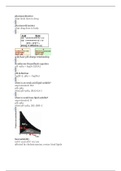
Below we can see the sequence of orexins across different species and it Is a very
conserved sequence.
Orexin cells: Location and Projections
• Synthesized by a few 1000 cells in the brain
• By neurons in the Lateral Hypothalamus
• So orexin is found mostly in the brain although there is some in peripheral
tissues but orexigenic neurons are only found in the lateral hypothalamus.
• The receptors are also found in the brain: they are produced and used in the
brain.
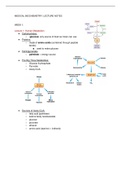
• The image below shows a coronal section of a mouse brain. The bright dots
show the places where orexin is produced. Visualization of neurons containing
prepro-orexin mRNA in the adult rat hypo- and subthalamic areas by in situ
hybridization
Aims
• Outline the characteristics of narcolepsy.
• Provide an overview of roles and functions of orexin/hypocretin-containing
neurons in rodents.
• Consider links with other animal models and clinical findings.
Narcolepsy
• Neurological disorder characterized by chronic sleepiness.
• Rare brain disorder: incidence of 1 in 2000 people.
(30,000 sufferers in the UK)
• Usually appears between ages of 15 and 35 years.
• Two types of narcolepsy:
– Narcolepsy type 1 (NT-1): classic or typical
– Narcolepsy type 2 (NT-2): less known
Narcolepsy Symptoms
1. Excessive daytime sleepiness with irresistible sleep attacks during the day.
2. Cataplexy: brief episodes of muscle weakness/ paralysis precipitated by strong
emotions such as laughter or surprise). Paralysis often starts in the neck or fac,
then it goes to the limbs and finally to the trunk. The person enters this paralysis
but preserves consciousness
,Symptoms indicative of abnormal rapid eye movement (REM) sleep. REM sleep is
typically preceded by SWS or NREM sleep which have 4 stages and then lead to REM
sleep, but in narcolepsy this does not happen, people can go from wakefulness to REM
sleep directly.
-REM sleep can occur at any time of day
-Elements of REM sleep can mix into wake
3. Sleep paralysis: abnormal episode of REM sleep atonia.
4. Hypnagogic hallucinations or dream-like images that occur at sleep onset.
Neurobiological bases of narcolepsy
Narcolepsy has been studied for about 150 years but it has not been until 20-25 years
ago that there was a breakthrough on what might be the underlying causes of
narcolepsy. This came up with the discovery of hypocretins or orexins.
Hypocretins/Orexins:
- Discovered late in the 90s
- Published by two different independent labs around the same time (this is why
they have two different names)
- produced in the hypothalamus and some similarities to the incretin family of
peptides (secretins): this is how they got the name hypocretins
- The name orexins comes from orexis which is Greek word for appetite. This
comes from the presumed role that these peptides, orexins, had in regulating
food and energy balance
Hypocretins/Orexins
• Two carboxy-terminally amidated neuropeptides of related sequence.
Orexin A and Orexin B; Hcrt-1 and Hcrt-2
, • Function via two G-protein-coupled receptors.
• Differentially distributed throughout the brain
• As NPs, orexins act in a diffuse manner over a longer duration
• Strongly conserved peptides.
• Genes encoding prepro-orexin found in puffer fish and various frog
species.
• Indicates that gene arose early in chordate lineage, so they have a quite
fundamental role
Orexin A and B come from a common precursor called Prepro-orexin, which then gets
cut to form the two peptides. Then it binds to the G protein coupled receptors OX1R
and OX2R. Orexin A can bind with approximately the same affinity to OX1R and OX2R
but Orexin B primarily binds OX2R with high affinity.
Below we can see the sequence of orexins across different species and it Is a very
conserved sequence.
Orexin cells: Location and Projections
• Synthesized by a few 1000 cells in the brain
• By neurons in the Lateral Hypothalamus
• So orexin is found mostly in the brain although there is some in peripheral
tissues but orexigenic neurons are only found in the lateral hypothalamus.
• The receptors are also found in the brain: they are produced and used in the
brain.
• The image below shows a coronal section of a mouse brain. The bright dots
show the places where orexin is produced. Visualization of neurons containing
prepro-orexin mRNA in the adult rat hypo- and subthalamic areas by in situ
hybridization