UNIVERSITY OF THE WITWATERSRAND SCHOOL
v v v v
OF CIVIL AND ENVIRONMENTAL ENGINEERING
v v v v v
CIVN 3017A
v
SYSTEMS ANALYSIS AND OPTIMIZATION
v v v
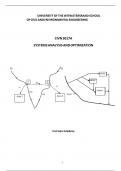
Q1 Q2
Industry
Industry
1 x3 2
x1 x2
Irrigation
0.5
0.5 Stream
Areav1 Areav2
Prof John G Ndiritu
v v v
1
,CIVN3017AvSYSTEMSvANALYSISvANDvOPTIMIZATIONv COURSEvOUTLINEvANDvGUIDELINES
CoursevCo-ordinator: ProfvJvGvNdiritu
Email:
onev: +27(011)v717v7134
CoursevLecturerv: ProfvJvGvNdiritu
Coursevbackgroundvandvpurpose
Manyvengineeringvprojectsvarevcomplexvandveffectivevandvefficientvplanning,vdesign,voperationvandvma
nagementvofvthesevprojectsvrequiresvcarefulvdecisionvmakingvthatvisvoftenvbasedvonvquantitativevanaly
sesvandvnon-
quantifiablevbutvimportantvconsiderations.vThisvcoursevintroducesvthevmethodsvappliedvforvquantitativ
evanalysis.vThesevcanvbroadlyvbevgroupedvasvproblemvformulationvandvproblemvoptimization.vProblemv
formulationvisvbasedvonvthevfundamentalvlawsvofvphysicsvandvresourcevquantificationvthatvunderlievthe
v analysisvandvdesignvmethodsvlearntvinvmanyvothervcoursesvinvthevCivilvandvEnvironmentalvEngineeringv
curriculum.vOptimizationvmeansvusingvthevleastvresourcesvtovachievevthevmostvbenefitvwhichvisvonevofv
thevobjectivesvofvgoodvengineeringvandvdecision-
makingvpractice.vProblemvoptimizationvisvbasedvonvmathematicalvtechniquesvthatvhavevbeenvdevelope
dvinvthevlastv7vtov8vdecades.vThisvcoursevintroducesvthevprinciplesvofvproblemvformulationv(systemsvana
lysis)vforvoptimizationvandvthevcommonlyvappliedvoptimizationvmethods.vManyvpracticalvproblemsvinv
olvevconsiderablevuncertaintiesvandvapproachesvforvoptimizingvdecisionvmakingvinvthesevsituationsvarev
alsovlearntvinvthisvcourse.vThisvcoursevintendsvtovprovidevthevstudentsvwithvanvunderstandingvofvthevne
edvforvsystemsvanalysisvandvoptimizationvmethodsvinvCivilvandvEnvironmentalvEngineering.vThevcoursevai
msvtovenablevthevstudentsvtovhavevavfundamentalvunderstandingvofvsystemsvanalysisvandvoptimizationva
ndvbevablevtovapplyvthesevapproachesvtovproblemsvofvavsimilarvnaturevtovthosevtheyvarevlikelyvtovdealvwi
thvinvtheirvcareersvasvcivilvand/orvenvironmentalvengineers.
CoursevOutcomes
Atvthevendvofvthisvcourse,vthevstudentvshouldvbevablevto:
a. Explainvwhyvsystemsvmodelling,vanalysisvandvsimulationvarevimportantvforvthevsolutionvofvcivilv
andvenvironmentalvengineeringvproblems.
b. Describev thev basicv principlesv andv componentsv ofv anv optimizationv problemv andv formulatev
simplevoptimizationvproblems
c. Describev thev mathematicalv foundationv ofv linearv programmingv andv formulatev linearv pr
ogrammingvproblems
d. Formulatevandvsolvevlinearvprogrammingvproblemsvusingvthevgraphicalvmethodvandvthevsimplexv
methodvincludingvthevdualvsimplexvandvthevBig-Mvmethod
e. Setvup,vsolvevandvcarryvoutvsensitivityvanalysisvofvlinearvprogrammingvproblemsvonvspreadsheet
f. Applyvdynamicvprogrammingvtovsolvevmulti-stagevoptimizationvproblems.
g. SolvevshortestvpathvproblemsvusingvDijkstra’svmethodvandvmaximumvflowvproblemsvusingvFord-
Fulkersonvmethodvandvlinearvprogramming
h. FormulatevandvsolvevschedulingvproblemsvusingvthevCriticalvPathvmethodvlocatingvthevcriticalvp
athvandvthevfloats
i. Describevthevprinciplesvthatvunderlievthevgeneticvalgorithmvmethod.
2
, j. Formulatevandvsolvevsimplevoptimizationvproblemsvusingvthevgeneticvalgorithmvmethodvonvspr
eadsheet.
k. Comparevthevstrengthsvandvlimitationsvofvlinearvprogramming,vdynamicvprogrammingvandvthev
geneticvalgorithmvandvbevablevtovselectvthevappropriatevmethodvforvdifferentvtypesvofvoptimiz
ationvproblems.
l. CitevexamplesvofvCivilvandvEnvironmentalvEngineeringvproblemsvwhosevsolutionvinvolvesvlargev
uncertainties.
m. Carryvoutvdecisionvanalysisvwithoutvexperimentationvandvwithvexperimentation.
n. Formulatevandvsolvevsimplevdecisionvanalysisvproblems.
o. FormulatevandvoptimizevthevoperatingvpolicyvofvsimplevprocessesvthatvcanvbevmodelledvasvMar
kovvchainsvusingvexhaustivevenumerationvandvLinearvProgrammingvorvPolicyvImprovementvmet
hod.
p. Formulatevandvsolvevanvopenv–
endedvCivilvorvEnvironmentalvEngineeringvoptimizationvproblemvandvpresentvthisvinvthevformvo
v
fvavreport.
CoursevContent
Thisvcoursevincludesvthevfollowingvtopics:
1) Basicvsystemsvanalysis:vthevneedvforvsystemsvanalysis;vsystemsvandvprocesses;vcomponentsvofvav
system;vsystemvmodellingvandvanalysis.
2) Introductionvtovoptimisation:vthevneedvforvoptimisation;vformulatingvoptimisationvproblems.
3) LinearvProgrammingv(LP):vgraphicalvsolution;vthevSimplexvmethod;vLPvusingvsoftware.
4) DynamicvProgramming:vCharacteristicsvofvdynamicvprogramming,vfundamentalvapproachvtovsolvingv
dynamicvprogrammingvproblems.
5) NetworkvModels:vShortestvPathvProblems,vMaximumvFlowvProblems,vCriticalvPathvmethod.
6) GeneticvAlgorithms:vHowvthevGAvoptimizes,vstepsvofvthevGA,vmanualvillustrationvofvthevGA,vapplyingv
GAvusingvsoftware.
7) Decisionvmakingvundervuncertainty:vThevneedvforvdecisionvmakingvundervuncertainty,vDecisionv
makingvwithvandvwithoutvexperimentation,vDecisionvTrees.
8) MarkovvChains:vDescriptionvandvcharacteristicsvofvMarkovvChains,vmodellingvprocessesvasvMarkovv
Chains.
9) Markovvdecisionvprocesses:vOptimizingvprocessesvmodelledvasvMarkovvChainsvbyvexhaustivev
enumeration,vbyvLinearvProgrammingvorvbyvthevPolicyvImprovementvmethod.
AssumedvPriorvKnowledge
Numericalvanalysis,vProbabilityvTheoryvandvStatisticsvforvEngineers
AssessmentvofvECSAvOutcomes
ECSAvOutcomesvarevassessedvasvfollows:
3
, ➢ ECSAvOutcomev1:vProblemvsolving:vthroughvCoursev Outcomesvb,v c,v d,vf,v g,vh,vj,v k,vm,vn,v ov andvpv –
Test,vExaminationvandvProject
➢ ECSAvOutcomev2:vApplicationvofvscientificvandvengineeringvknowledgevthroughvCoursevOutcomesv
c,vI,vandvov–vTestvandvExamination:
➢ ECSAv Outcomev 5:v Engineeringv methods,v skillsv andv tools,v includingv Informationv Technologyvth
roughvCoursevOutcomesvd,ve,vjvandvpv–vProject,vassignments,vclassvexercises.
➢ ECSAvOutcomev7:vImpactvofvengineeringvactivityvthroughvCoursevOutcomesva,vlvandvpv–
v Project,vExamination,vClassvexamples
➢ ECSAvOutcomev9:vIndependentvlearningvabilityvthroughvCoursevOutcomesvhvandvpv–
v ProjectvandvExamination.
Teaching
DuevtovthevCOVID19vpandemic,vallvteachingvinv2020vwillvbevonline.vPowerPointvpresentationsvwillvbevau
diovnarratedvtovenhancevthevlearningvprocess.
Texts
a. Coursevpack
b. RaovS,vEngineeringvOptimization:vTheoryvandvPractice.v4thvEditionv2009,vJohnvWiley.
c. F.Sv Hillierv andv G.J.v Lieberman,v Introductionv tov operationsv research,v 9thv Edition,v 2010,v TatavM
cGraw-Hill.
d. HamdyvA.vTaha,vOperationsvResearch,vAnvintroduction,v8thvEdition,v2007,vPrentice-Hall.
e. OssenbruggenvPaulvJ,vSystemsvanalysisvforvcivilvengineers,v1984,vJohnvWileyv&vSons.
f. Graemev Dandy,v Davidv Walker,v Trevorv Daniellv andv Robertv Warner,v Planningv andv Designv ofv En
gineeringvSystems,v2ndvEdition,v2008,vTaylorv&vFrancis.
Assessment
Test: 20v%
Project 30v%
Exam: 50v%
Assessmentvcriteria:
Assessmentvwillvbevbasedvonvthevlevelvtovwhichvthevstudentvhasvmetvthevcoursevoutcomes.vAnvoverallv
markvequalvtovorvgreatervthanv50%vwillvbevtakenvtovindicatevthatvthesevoutcomesvhavevbeenvadequatelyv
met.
AssessmentvofvECSAvoutcomes
Thevoutcomesvwillvbevassessedvbyvavproject,vassignments,vavtestvandvanvexamination.
DuevPerformancevRequirements:
Submissionvtovanvacceptablevstandardvandvonvtimevofvselectedvassignments.vSatisfactoryvperformancevi
nvthevproject.
CalculatorsvinvExaminations:
Anyvcalculatorvwithoutvspreadsheetvfunctionalityvmayvbevused
4
v v v v
OF CIVIL AND ENVIRONMENTAL ENGINEERING
v v v v v
CIVN 3017A
v
SYSTEMS ANALYSIS AND OPTIMIZATION
v v v
Q1 Q2
Industry
Industry
1 x3 2
x1 x2
Irrigation
0.5
0.5 Stream
Areav1 Areav2
Prof John G Ndiritu
v v v
1
,CIVN3017AvSYSTEMSvANALYSISvANDvOPTIMIZATIONv COURSEvOUTLINEvANDvGUIDELINES
CoursevCo-ordinator: ProfvJvGvNdiritu
Email:
onev: +27(011)v717v7134
CoursevLecturerv: ProfvJvGvNdiritu
Coursevbackgroundvandvpurpose
Manyvengineeringvprojectsvarevcomplexvandveffectivevandvefficientvplanning,vdesign,voperationvandvma
nagementvofvthesevprojectsvrequiresvcarefulvdecisionvmakingvthatvisvoftenvbasedvonvquantitativevanaly
sesvandvnon-
quantifiablevbutvimportantvconsiderations.vThisvcoursevintroducesvthevmethodsvappliedvforvquantitativ
evanalysis.vThesevcanvbroadlyvbevgroupedvasvproblemvformulationvandvproblemvoptimization.vProblemv
formulationvisvbasedvonvthevfundamentalvlawsvofvphysicsvandvresourcevquantificationvthatvunderlievthe
v analysisvandvdesignvmethodsvlearntvinvmanyvothervcoursesvinvthevCivilvandvEnvironmentalvEngineeringv
curriculum.vOptimizationvmeansvusingvthevleastvresourcesvtovachievevthevmostvbenefitvwhichvisvonevofv
thevobjectivesvofvgoodvengineeringvandvdecision-
makingvpractice.vProblemvoptimizationvisvbasedvonvmathematicalvtechniquesvthatvhavevbeenvdevelope
dvinvthevlastv7vtov8vdecades.vThisvcoursevintroducesvthevprinciplesvofvproblemvformulationv(systemsvana
lysis)vforvoptimizationvandvthevcommonlyvappliedvoptimizationvmethods.vManyvpracticalvproblemsvinv
olvevconsiderablevuncertaintiesvandvapproachesvforvoptimizingvdecisionvmakingvinvthesevsituationsvarev
alsovlearntvinvthisvcourse.vThisvcoursevintendsvtovprovidevthevstudentsvwithvanvunderstandingvofvthevne
edvforvsystemsvanalysisvandvoptimizationvmethodsvinvCivilvandvEnvironmentalvEngineering.vThevcoursevai
msvtovenablevthevstudentsvtovhavevavfundamentalvunderstandingvofvsystemsvanalysisvandvoptimizationva
ndvbevablevtovapplyvthesevapproachesvtovproblemsvofvavsimilarvnaturevtovthosevtheyvarevlikelyvtovdealvwi
thvinvtheirvcareersvasvcivilvand/orvenvironmentalvengineers.
CoursevOutcomes
Atvthevendvofvthisvcourse,vthevstudentvshouldvbevablevto:
a. Explainvwhyvsystemsvmodelling,vanalysisvandvsimulationvarevimportantvforvthevsolutionvofvcivilv
andvenvironmentalvengineeringvproblems.
b. Describev thev basicv principlesv andv componentsv ofv anv optimizationv problemv andv formulatev
simplevoptimizationvproblems
c. Describev thev mathematicalv foundationv ofv linearv programmingv andv formulatev linearv pr
ogrammingvproblems
d. Formulatevandvsolvevlinearvprogrammingvproblemsvusingvthevgraphicalvmethodvandvthevsimplexv
methodvincludingvthevdualvsimplexvandvthevBig-Mvmethod
e. Setvup,vsolvevandvcarryvoutvsensitivityvanalysisvofvlinearvprogrammingvproblemsvonvspreadsheet
f. Applyvdynamicvprogrammingvtovsolvevmulti-stagevoptimizationvproblems.
g. SolvevshortestvpathvproblemsvusingvDijkstra’svmethodvandvmaximumvflowvproblemsvusingvFord-
Fulkersonvmethodvandvlinearvprogramming
h. FormulatevandvsolvevschedulingvproblemsvusingvthevCriticalvPathvmethodvlocatingvthevcriticalvp
athvandvthevfloats
i. Describevthevprinciplesvthatvunderlievthevgeneticvalgorithmvmethod.
2
, j. Formulatevandvsolvevsimplevoptimizationvproblemsvusingvthevgeneticvalgorithmvmethodvonvspr
eadsheet.
k. Comparevthevstrengthsvandvlimitationsvofvlinearvprogramming,vdynamicvprogrammingvandvthev
geneticvalgorithmvandvbevablevtovselectvthevappropriatevmethodvforvdifferentvtypesvofvoptimiz
ationvproblems.
l. CitevexamplesvofvCivilvandvEnvironmentalvEngineeringvproblemsvwhosevsolutionvinvolvesvlargev
uncertainties.
m. Carryvoutvdecisionvanalysisvwithoutvexperimentationvandvwithvexperimentation.
n. Formulatevandvsolvevsimplevdecisionvanalysisvproblems.
o. FormulatevandvoptimizevthevoperatingvpolicyvofvsimplevprocessesvthatvcanvbevmodelledvasvMar
kovvchainsvusingvexhaustivevenumerationvandvLinearvProgrammingvorvPolicyvImprovementvmet
hod.
p. Formulatevandvsolvevanvopenv–
endedvCivilvorvEnvironmentalvEngineeringvoptimizationvproblemvandvpresentvthisvinvthevformvo
v
fvavreport.
CoursevContent
Thisvcoursevincludesvthevfollowingvtopics:
1) Basicvsystemsvanalysis:vthevneedvforvsystemsvanalysis;vsystemsvandvprocesses;vcomponentsvofvav
system;vsystemvmodellingvandvanalysis.
2) Introductionvtovoptimisation:vthevneedvforvoptimisation;vformulatingvoptimisationvproblems.
3) LinearvProgrammingv(LP):vgraphicalvsolution;vthevSimplexvmethod;vLPvusingvsoftware.
4) DynamicvProgramming:vCharacteristicsvofvdynamicvprogramming,vfundamentalvapproachvtovsolvingv
dynamicvprogrammingvproblems.
5) NetworkvModels:vShortestvPathvProblems,vMaximumvFlowvProblems,vCriticalvPathvmethod.
6) GeneticvAlgorithms:vHowvthevGAvoptimizes,vstepsvofvthevGA,vmanualvillustrationvofvthevGA,vapplyingv
GAvusingvsoftware.
7) Decisionvmakingvundervuncertainty:vThevneedvforvdecisionvmakingvundervuncertainty,vDecisionv
makingvwithvandvwithoutvexperimentation,vDecisionvTrees.
8) MarkovvChains:vDescriptionvandvcharacteristicsvofvMarkovvChains,vmodellingvprocessesvasvMarkovv
Chains.
9) Markovvdecisionvprocesses:vOptimizingvprocessesvmodelledvasvMarkovvChainsvbyvexhaustivev
enumeration,vbyvLinearvProgrammingvorvbyvthevPolicyvImprovementvmethod.
AssumedvPriorvKnowledge
Numericalvanalysis,vProbabilityvTheoryvandvStatisticsvforvEngineers
AssessmentvofvECSAvOutcomes
ECSAvOutcomesvarevassessedvasvfollows:
3
, ➢ ECSAvOutcomev1:vProblemvsolving:vthroughvCoursev Outcomesvb,v c,v d,vf,v g,vh,vj,v k,vm,vn,v ov andvpv –
Test,vExaminationvandvProject
➢ ECSAvOutcomev2:vApplicationvofvscientificvandvengineeringvknowledgevthroughvCoursevOutcomesv
c,vI,vandvov–vTestvandvExamination:
➢ ECSAv Outcomev 5:v Engineeringv methods,v skillsv andv tools,v includingv Informationv Technologyvth
roughvCoursevOutcomesvd,ve,vjvandvpv–vProject,vassignments,vclassvexercises.
➢ ECSAvOutcomev7:vImpactvofvengineeringvactivityvthroughvCoursevOutcomesva,vlvandvpv–
v Project,vExamination,vClassvexamples
➢ ECSAvOutcomev9:vIndependentvlearningvabilityvthroughvCoursevOutcomesvhvandvpv–
v ProjectvandvExamination.
Teaching
DuevtovthevCOVID19vpandemic,vallvteachingvinv2020vwillvbevonline.vPowerPointvpresentationsvwillvbevau
diovnarratedvtovenhancevthevlearningvprocess.
Texts
a. Coursevpack
b. RaovS,vEngineeringvOptimization:vTheoryvandvPractice.v4thvEditionv2009,vJohnvWiley.
c. F.Sv Hillierv andv G.J.v Lieberman,v Introductionv tov operationsv research,v 9thv Edition,v 2010,v TatavM
cGraw-Hill.
d. HamdyvA.vTaha,vOperationsvResearch,vAnvintroduction,v8thvEdition,v2007,vPrentice-Hall.
e. OssenbruggenvPaulvJ,vSystemsvanalysisvforvcivilvengineers,v1984,vJohnvWileyv&vSons.
f. Graemev Dandy,v Davidv Walker,v Trevorv Daniellv andv Robertv Warner,v Planningv andv Designv ofv En
gineeringvSystems,v2ndvEdition,v2008,vTaylorv&vFrancis.
Assessment
Test: 20v%
Project 30v%
Exam: 50v%
Assessmentvcriteria:
Assessmentvwillvbevbasedvonvthevlevelvtovwhichvthevstudentvhasvmetvthevcoursevoutcomes.vAnvoverallv
markvequalvtovorvgreatervthanv50%vwillvbevtakenvtovindicatevthatvthesevoutcomesvhavevbeenvadequatelyv
met.
AssessmentvofvECSAvoutcomes
Thevoutcomesvwillvbevassessedvbyvavproject,vassignments,vavtestvandvanvexamination.
DuevPerformancevRequirements:
Submissionvtovanvacceptablevstandardvandvonvtimevofvselectedvassignments.vSatisfactoryvperformancevi
nvthevproject.
CalculatorsvinvExaminations:
Anyvcalculatorvwithoutvspreadsheetvfunctionalityvmayvbevused
4