BIO2001 – Cell Biology
Cell membranes ............................................................................................................... 2
Microscopy....................................................................................................................... 4
Cell walls .......................................................................................................................... 6
Membrane proteins.......................................................................................................... 8
Endo- and exocytosis ...................................................................................................... 13
The cytoskeleton ............................................................................................................ 17
Cell motility .................................................................................................................... 21
Mitochondria and chloroplasts ....................................................................................... 22
Cell signalling ................................................................................................................. 27
, Cell membranes
Cell membranes are crucial to a cell. They are a dynamic fluid structure containing a lipid
bilayer impermeable to water soluble molecules and membrane proteins that mediate all
other functions of the membrane: like signalling and transportation.
• Plasma membrane: encloses the cell, defines its boundaries and maintains the
essential differences between the cytosol and the extracellular environment.
• Organelle membrane: maintain the differences between the contents of the
organelle and the cytosol.
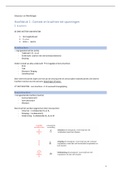
Lipids: (about 50% of the mass of a cell membrane) are amphiphilic
molecules meaning they have a hydrophilic/polar head and a
hydrophobic/nonpolar end. They can move within their bilayer (fluid
mosaic model). Lipid bilayers are asymmetric: the lipid composition
of the two separate monolayers is strikingly different. They often
differ in charge, which is very important in signalling (bringing extracellular signals inside the
cell).
• Phospholipids: most abundant, their polar head contains a phosphate group and
their tale is made of two hydrocarbon tails (fatty acids). One tail can have cis-double
bonds, which makes it unsaturated and creates a kink in the tail. The other does not
contain double bonds and is therefore saturated. Difference in
length and saturation influences how the phospholipids are
packed together. This, as well as temperature, influences
fluidity of the membrane. (higher temperature means more
movement of lipids)
o Phosphoglycerides (animal cells) contain a glycerol,
phosphate group and another head group (like choline)
and two long chain fatty acids.
o Sphingolipids contain sphingosine instead of glycerol. Serves as a cell
receptor site.
• Glycolipids: have sugars attached instead of a phosphate-linked head group. Are
found exclusively in the monolayer facing away from the cytosol. Are important for
extracellular interactions. Protects the cell and prevents it from becoming sticky,
giving it a hydrophobic coting.
• Sterols:
o Cholesterol: a ring structure with one polar hydroxyl group and a short
nonpolar hydrocarbon chain. It decreases mobility and tightest the packing of
lipids, which makes the membrane less deformable and less affected by
temperature changes.
o Sterols from plants are up taken by the cell and not released in the blood
stream.
Membrane fluidity has to be carefully regulated, since it can influence transport processes
and enzyme activities when reaching a certain threshold level.
Cell membranes ............................................................................................................... 2
Microscopy....................................................................................................................... 4
Cell walls .......................................................................................................................... 6
Membrane proteins.......................................................................................................... 8
Endo- and exocytosis ...................................................................................................... 13
The cytoskeleton ............................................................................................................ 17
Cell motility .................................................................................................................... 21
Mitochondria and chloroplasts ....................................................................................... 22
Cell signalling ................................................................................................................. 27
, Cell membranes
Cell membranes are crucial to a cell. They are a dynamic fluid structure containing a lipid
bilayer impermeable to water soluble molecules and membrane proteins that mediate all
other functions of the membrane: like signalling and transportation.
• Plasma membrane: encloses the cell, defines its boundaries and maintains the
essential differences between the cytosol and the extracellular environment.
• Organelle membrane: maintain the differences between the contents of the
organelle and the cytosol.
Lipids: (about 50% of the mass of a cell membrane) are amphiphilic
molecules meaning they have a hydrophilic/polar head and a
hydrophobic/nonpolar end. They can move within their bilayer (fluid
mosaic model). Lipid bilayers are asymmetric: the lipid composition
of the two separate monolayers is strikingly different. They often
differ in charge, which is very important in signalling (bringing extracellular signals inside the
cell).
• Phospholipids: most abundant, their polar head contains a phosphate group and
their tale is made of two hydrocarbon tails (fatty acids). One tail can have cis-double
bonds, which makes it unsaturated and creates a kink in the tail. The other does not
contain double bonds and is therefore saturated. Difference in
length and saturation influences how the phospholipids are
packed together. This, as well as temperature, influences
fluidity of the membrane. (higher temperature means more
movement of lipids)
o Phosphoglycerides (animal cells) contain a glycerol,
phosphate group and another head group (like choline)
and two long chain fatty acids.
o Sphingolipids contain sphingosine instead of glycerol. Serves as a cell
receptor site.
• Glycolipids: have sugars attached instead of a phosphate-linked head group. Are
found exclusively in the monolayer facing away from the cytosol. Are important for
extracellular interactions. Protects the cell and prevents it from becoming sticky,
giving it a hydrophobic coting.
• Sterols:
o Cholesterol: a ring structure with one polar hydroxyl group and a short
nonpolar hydrocarbon chain. It decreases mobility and tightest the packing of
lipids, which makes the membrane less deformable and less affected by
temperature changes.
o Sterols from plants are up taken by the cell and not released in the blood
stream.
Membrane fluidity has to be carefully regulated, since it can influence transport processes
and enzyme activities when reaching a certain threshold level.