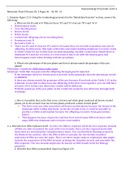
1. Myths that I have heard about campus are that any student who walks under the bells
of the bell tower is doomed and will not complete their undergraduate degree in four years. This
misfortune was kind of crazy when I first heard it because it didn’t sound real to begin with.
Another myth I’ve heard is on some Fridays, students may encounter a young man in a green
morph suit making his rounds on campus. The myth is that he walks into crowded places and
shouts “Happy Friday.” I have never seen this on campus and this myth seems very strange. I
would not expect these myths to be reinforced because these myths are what keep campus
culture fun and vibrant. Without some of these myths many students wouldn’t be excited to learn
more about Ball State. These myths set the stage for many current and incoming students.
2. Symbolic construction is my favorite because it spoke to me about how I think about
communication. Symbols can range and form from anything such as an office size and design,
how employees dress, and trophy displays. This reinforced my thinking of organizational
communication because they both stand for something other than themselves. Just like the
culture of an organization can have symbols such as jargon, vocabulary, and conversation. The
parallels are the same.
3. The type of artifacts that I might analyze in my research are dress codes and office décor. I
think these are two artifacts that tie strongly into an organization’s culture. Dress codes are used
to communicate to employees what the organization considers appropriate work attire. Dressing
appropriately can affect company morale, productivity, and the organization's image and
reputation. Dress codes can significantly affect an organization’s culture. I also stated office
décor because this is a huge maker of culture. Whether you optimize lighting, choose a colorful
palette, or make use of aromas, these all are essential to defining an organization’s culture,
creativity, and innovation.
of the bell tower is doomed and will not complete their undergraduate degree in four years. This
misfortune was kind of crazy when I first heard it because it didn’t sound real to begin with.
Another myth I’ve heard is on some Fridays, students may encounter a young man in a green
morph suit making his rounds on campus. The myth is that he walks into crowded places and
shouts “Happy Friday.” I have never seen this on campus and this myth seems very strange. I
would not expect these myths to be reinforced because these myths are what keep campus
culture fun and vibrant. Without some of these myths many students wouldn’t be excited to learn
more about Ball State. These myths set the stage for many current and incoming students.
2. Symbolic construction is my favorite because it spoke to me about how I think about
communication. Symbols can range and form from anything such as an office size and design,
how employees dress, and trophy displays. This reinforced my thinking of organizational
communication because they both stand for something other than themselves. Just like the
culture of an organization can have symbols such as jargon, vocabulary, and conversation. The
parallels are the same.
3. The type of artifacts that I might analyze in my research are dress codes and office décor. I
think these are two artifacts that tie strongly into an organization’s culture. Dress codes are used
to communicate to employees what the organization considers appropriate work attire. Dressing
appropriately can affect company morale, productivity, and the organization's image and
reputation. Dress codes can significantly affect an organization’s culture. I also stated office
décor because this is a huge maker of culture. Whether you optimize lighting, choose a colorful
palette, or make use of aromas, these all are essential to defining an organization’s culture,
creativity, and innovation.