Test Bank for
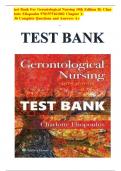
Financial Accounting
for MBAs 8th Edition
by Easton
Complete and
Comprehensive
Guide
, Module 1
Financial Accounting for MBAs
Learning Objectives – Coverage by question
True/False Multiple Choice
LO1 – Explain and assess the four main business
activities.
LO2 – Identify and discuss the users and suppliers of
1- 4 1, 2
financial statement information.
LO3 – Describe and examine the four financial
5-10 3-19
statements, and define the accounting equation.
LO4 – Explain and apply the basics of profitability
11-13 20-25
analysis.
LO5 – Assess business operations within the context
14 26, 27
of a competitive environment.
LO6 – Access reports filed with the SEC (Appendix
1A).
LO7 – Describe the accounting principles and
regulations that frame financial statements (Appendix 15 28-30
1B).
These questions are available to assign in myBusinessCourse.
,Module 1: Financial Accounting for MBAs
True/False
Topic: Users of Financial Statement Information
LO: 2
1. Shareholders demand financial information primarily to assess profitability and risk whereas bankers
demand information primarily to assess cash flows to repay loan interest and principal.
Answer: True
Rationale: While both shareholders and bankers are interested in all the information companies
provide, shareholders care about more about a company’s profitability and bankers care more about
solvency and creditworthiness.
Topic: Publicly Available Financial Reports
LO: 2
2. Publicly traded companies are required to provide quarterly financial reports directly to the public.
Answer: False
Rationale: Companies provide electronic versions of quarterly financial statements to the SEC, which
posts them to the Internet for the public to access them.
Topic: Users of Financial Statement Information
LO: 2
3. Publicly traded companies provide financial information primarily to satisfy the SEC and the tax authorities
(that is, the Internal Revenue Service).
Answer: False
Rationale: Demand for information extends to many users; the regulators such as the SEC and the IRS
are only one class of users.
Topic: SEC Filings
LO: 2
4. Publicly traded companies must provide to the Securities Exchange Commission annual audited financial
statements (10-K reports) and quarterly audited financial statements (10-Q reports).
Answer: False
Rationale: Quarterly reports do not need to be audited.
Topic: Balance Sheet
LO: 3
5. If a company reports retained earnings of $175.3 million on its balance sheet, it must also report $175.3
million in cash.
Answer: False
, Rationale: The accounting equation requires total assets to equal total liabilities plus stockholders’
equity. That does not imply, however, that liability and equity accounts relate directly to specific assets.
Financial Accounting
for MBAs 8th Edition
by Easton
Complete and
Comprehensive
Guide
, Module 1
Financial Accounting for MBAs
Learning Objectives – Coverage by question
True/False Multiple Choice
LO1 – Explain and assess the four main business
activities.
LO2 – Identify and discuss the users and suppliers of
1- 4 1, 2
financial statement information.
LO3 – Describe and examine the four financial
5-10 3-19
statements, and define the accounting equation.
LO4 – Explain and apply the basics of profitability
11-13 20-25
analysis.
LO5 – Assess business operations within the context
14 26, 27
of a competitive environment.
LO6 – Access reports filed with the SEC (Appendix
1A).
LO7 – Describe the accounting principles and
regulations that frame financial statements (Appendix 15 28-30
1B).
These questions are available to assign in myBusinessCourse.
,Module 1: Financial Accounting for MBAs
True/False
Topic: Users of Financial Statement Information
LO: 2
1. Shareholders demand financial information primarily to assess profitability and risk whereas bankers
demand information primarily to assess cash flows to repay loan interest and principal.
Answer: True
Rationale: While both shareholders and bankers are interested in all the information companies
provide, shareholders care about more about a company’s profitability and bankers care more about
solvency and creditworthiness.
Topic: Publicly Available Financial Reports
LO: 2
2. Publicly traded companies are required to provide quarterly financial reports directly to the public.
Answer: False
Rationale: Companies provide electronic versions of quarterly financial statements to the SEC, which
posts them to the Internet for the public to access them.
Topic: Users of Financial Statement Information
LO: 2
3. Publicly traded companies provide financial information primarily to satisfy the SEC and the tax authorities
(that is, the Internal Revenue Service).
Answer: False
Rationale: Demand for information extends to many users; the regulators such as the SEC and the IRS
are only one class of users.
Topic: SEC Filings
LO: 2
4. Publicly traded companies must provide to the Securities Exchange Commission annual audited financial
statements (10-K reports) and quarterly audited financial statements (10-Q reports).
Answer: False
Rationale: Quarterly reports do not need to be audited.
Topic: Balance Sheet
LO: 3
5. If a company reports retained earnings of $175.3 million on its balance sheet, it must also report $175.3
million in cash.
Answer: False
, Rationale: The accounting equation requires total assets to equal total liabilities plus stockholders’
equity. That does not imply, however, that liability and equity accounts relate directly to specific assets.