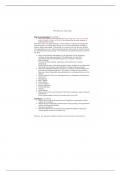
PSYC206 Exam 1 Study Guide
What is social psychology? covers Week 1
What is the definition of social psychology? The scientific study of the ways in which
people’s thoughts, feelings, and behaviors are influenced by the actual, imagined, or
implied presence of others
What does it mean to say that psychology is a science? What is it important to recognize that
social psychology is a scientific study? Science is a set of values and methods. Its skeptical,
objective, public, open-minded. Psychology is a science that can be sub-divided
into specialties such as “abnormal psychology” (the study of mental illness)
or “developmental psychology” (the study of how people develop across the
life span
What are the similarities and differences in the approaches of social psychology,
sociology, and personality psychology? Personality psych: the study of the
characteristics that make individuals unique. Level of Analysis: individual
behavior/feelings
Sociology: the study of groups, organization, and societies levels of analysis:
culture/group
Social Psych: the study of individuals thoughts, feelings, and behaviors are influenced by
other people level of analysis: individual behavior/ feelings within group/culture
What is the fundamental attribution error? How is it related to social psychological and
personality psychological perspectives? The tendency to explain our own and others
behaviors in terms of personality and underestimate (or even disregard) the power of the
situation.
What are construals? The way in which people perceive, comprehend, and interpret our
social world
Hindsight bias
Basic v applied
Need to belong
Levels of analysis
Internal/ dispositionl
External/situational
Attitudes
Social influence
What are the two basic social motivations? Self esteem maintenance: desire to feel good
ab themselves
Social cognition approach: desire to be accurate ab the social world
Methodology covers Week 2
What are the five steps in the research process? Hypothesize, operationalize, method,
evaluate, revise/ replicate
What are the types of descriptive methods used in social psychology? Non experimental
methods and experimental methods
Systematic and objective
What is the difference between theoretical and operational definitions? Theoretical
variable: general concept you are interested in
Disclaimer – this study guide is designed to organize your study time and may not be exhaustive
, PSYC206 Exam 1 Study Guide
Operational variable: how you measure that concept
What is the difference between correlational and experimental research? Correlational
research: involves measuring the association between 2 variables and how they go
together
Experimental: manipulating one thing to see if it causes another
What are the three possible relationships in a correlational study? Positive, negative, no
correlation
What is random assignment? Assigning participants to receive different cnditions of an
experiment by chance Experimental control? Hold other factors constant Why are they
important?
What are independent variables? Dependent variables?
What is internal validity? Ability to draw conclusions about casual relationships from
study results. Nothing but the iv can impact the dv. What are confounds? An extraneous
variable that systematically varies with the independent variable. How do they impact
internal validity? Negatively/ harm it
What is external validity? Can results of a study be generalized to other situations and
other people. How do you maximize external validity? Replicate the study
What is the difference between science and pseudoscience? Psuedoscinece lacks some of
the key components that are essential to scientific research. What are some ways to detect
pseudoscience? vague imprecise language/ stats, overconfident, anecdotes, small/limited
samples, no conflicting evidence
Social cognition covers Week 3
What is social cognition? The study of how people think of the social world
What is the difference between automatic and controlled thought? Automatic: a behavior
or process has one or more of the following feature: unintentional, uncontrollable,
occurring outside of conscious awareness, and cognitively efficient. Quick and w.o
control
Controlled: effortful and deliberate
What are the “four horsemen of automatic thought”?
Non conscious: we are not aware
Effortless
Unintentional
Involuntary
What is a schema? Mental structures that organize our knowledge ab the social world
What are the benefits and costs of schemas? Can contribute to stereotypes and can be
limiting and can be influenced by it but help us understand new confusing situations and
fill in gaps
How does culture influence schemas? Individualism: self focused independent analytic
thought
Collectivism: group-focused, interdependent, holistic thoughy
What is accessibility? What are the three types of accessibility? The extent to which a
concept is at the forefront of somones mind
Chronic: u were attacked by dog now scared of it
Related to current goal: u were studying animal aggression
Disclaimer – this study guide is designed to organize your study time and may not be exhaustive
, PSYC206 Exam 1 Study Guide
Priming: temporarily accessible from recent experience. read news article ab dog attacks,
automatic thinking
What are heuristics? A mental shortcut or rule of thumb that reduces complex mental
problems to more simple rule based decisions AKA cognitive bias What is the bias blind
spot? Thinking that my judgements and decisions are rational and logical but others are
biased Confirmation bias? Seeking out evidence that support existing beliefs
What is the availability heuristic? Judging likelihood of event by how easily it comes to mind ex,
ppl scared of airplanes bc of accidents but they rarely happen Representativeness heuristic? The
likelihood of an object belonging to a category is evaluated based on the extent to which objects
appear similar to ones mental representation of the category What is base-rate information?
when base-rate information (e.g., the actual percentage of athletes in the
area and therefore the probability that this person actually is an athlete)
Attitudes and persuasion covers Week 4
What is an attitude? Psychological tendency that is expressed by evaluating a particular
entity w some degree of favor or disfavor. What is attitude valence: how positive or
negative, strength: how weak or strong and ambivalence: both positive and negative
attitudes towards one object
What is the difference between affectively-based: based on people’s feelings and valence,
cognitively-based: based more on peoples beliefs ab the object, and behaviorally-based
attitudes: based more on peoples observations of their own behavior?
What are the three ways that attitudes are measured? Direct measurement (self report,
likert scaled) indirect measurement (physiological measures, heart rate, eye tracker, skin
response) Implicit measures (reaction based measures, IAT) What are some limitations
and strengths of each form of measurement? Respondent carelessness, social desirability,
agreement bias
What did LaPiere’s study about his travels with a Chinese couple find? Why is that
important?
What is the Theory of Planned Behavior? Attitudes predict deliberate behavior when
people have time and energy to form a behavioral intention( plan to behave in a certain
way) What predicts behavioral intentions? Subjective norms: perceptions of other peoples
attitudes towards the behavior, perceived control: perceptions of ease/difficulty, attitude
towards a specific behavior
What is the difference between specific and general attitudes? general attitude is scared of
heights but specific attitude towards mountain hiking is good . What do each predict?
What is the elaboration likelihood model? A explanation of the two ways in which
persuasive communications can cause attitude change
What are the two routes to persuasion? Central: involves careful listening Peripheral:
shallow thinking Under what conditions is each route more likely to occur? Central route
is useful during important decisions. Peripheral when quick decisions Which route leads
to more durable attitude change? central
What is need for cognition? How much people like to think How is it related to the
elaboration likelihood model? High NFC less influenced by peripheral
Disclaimer – this study guide is designed to organize your study time and may not be exhaustive
What is social psychology? covers Week 1
What is the definition of social psychology? The scientific study of the ways in which
people’s thoughts, feelings, and behaviors are influenced by the actual, imagined, or
implied presence of others
What does it mean to say that psychology is a science? What is it important to recognize that
social psychology is a scientific study? Science is a set of values and methods. Its skeptical,
objective, public, open-minded. Psychology is a science that can be sub-divided
into specialties such as “abnormal psychology” (the study of mental illness)
or “developmental psychology” (the study of how people develop across the
life span
What are the similarities and differences in the approaches of social psychology,
sociology, and personality psychology? Personality psych: the study of the
characteristics that make individuals unique. Level of Analysis: individual
behavior/feelings
Sociology: the study of groups, organization, and societies levels of analysis:
culture/group
Social Psych: the study of individuals thoughts, feelings, and behaviors are influenced by
other people level of analysis: individual behavior/ feelings within group/culture
What is the fundamental attribution error? How is it related to social psychological and
personality psychological perspectives? The tendency to explain our own and others
behaviors in terms of personality and underestimate (or even disregard) the power of the
situation.
What are construals? The way in which people perceive, comprehend, and interpret our
social world
Hindsight bias
Basic v applied
Need to belong
Levels of analysis
Internal/ dispositionl
External/situational
Attitudes
Social influence
What are the two basic social motivations? Self esteem maintenance: desire to feel good
ab themselves
Social cognition approach: desire to be accurate ab the social world
Methodology covers Week 2
What are the five steps in the research process? Hypothesize, operationalize, method,
evaluate, revise/ replicate
What are the types of descriptive methods used in social psychology? Non experimental
methods and experimental methods
Systematic and objective
What is the difference between theoretical and operational definitions? Theoretical
variable: general concept you are interested in
Disclaimer – this study guide is designed to organize your study time and may not be exhaustive
, PSYC206 Exam 1 Study Guide
Operational variable: how you measure that concept
What is the difference between correlational and experimental research? Correlational
research: involves measuring the association between 2 variables and how they go
together
Experimental: manipulating one thing to see if it causes another
What are the three possible relationships in a correlational study? Positive, negative, no
correlation
What is random assignment? Assigning participants to receive different cnditions of an
experiment by chance Experimental control? Hold other factors constant Why are they
important?
What are independent variables? Dependent variables?
What is internal validity? Ability to draw conclusions about casual relationships from
study results. Nothing but the iv can impact the dv. What are confounds? An extraneous
variable that systematically varies with the independent variable. How do they impact
internal validity? Negatively/ harm it
What is external validity? Can results of a study be generalized to other situations and
other people. How do you maximize external validity? Replicate the study
What is the difference between science and pseudoscience? Psuedoscinece lacks some of
the key components that are essential to scientific research. What are some ways to detect
pseudoscience? vague imprecise language/ stats, overconfident, anecdotes, small/limited
samples, no conflicting evidence
Social cognition covers Week 3
What is social cognition? The study of how people think of the social world
What is the difference between automatic and controlled thought? Automatic: a behavior
or process has one or more of the following feature: unintentional, uncontrollable,
occurring outside of conscious awareness, and cognitively efficient. Quick and w.o
control
Controlled: effortful and deliberate
What are the “four horsemen of automatic thought”?
Non conscious: we are not aware
Effortless
Unintentional
Involuntary
What is a schema? Mental structures that organize our knowledge ab the social world
What are the benefits and costs of schemas? Can contribute to stereotypes and can be
limiting and can be influenced by it but help us understand new confusing situations and
fill in gaps
How does culture influence schemas? Individualism: self focused independent analytic
thought
Collectivism: group-focused, interdependent, holistic thoughy
What is accessibility? What are the three types of accessibility? The extent to which a
concept is at the forefront of somones mind
Chronic: u were attacked by dog now scared of it
Related to current goal: u were studying animal aggression
Disclaimer – this study guide is designed to organize your study time and may not be exhaustive
, PSYC206 Exam 1 Study Guide
Priming: temporarily accessible from recent experience. read news article ab dog attacks,
automatic thinking
What are heuristics? A mental shortcut or rule of thumb that reduces complex mental
problems to more simple rule based decisions AKA cognitive bias What is the bias blind
spot? Thinking that my judgements and decisions are rational and logical but others are
biased Confirmation bias? Seeking out evidence that support existing beliefs
What is the availability heuristic? Judging likelihood of event by how easily it comes to mind ex,
ppl scared of airplanes bc of accidents but they rarely happen Representativeness heuristic? The
likelihood of an object belonging to a category is evaluated based on the extent to which objects
appear similar to ones mental representation of the category What is base-rate information?
when base-rate information (e.g., the actual percentage of athletes in the
area and therefore the probability that this person actually is an athlete)
Attitudes and persuasion covers Week 4
What is an attitude? Psychological tendency that is expressed by evaluating a particular
entity w some degree of favor or disfavor. What is attitude valence: how positive or
negative, strength: how weak or strong and ambivalence: both positive and negative
attitudes towards one object
What is the difference between affectively-based: based on people’s feelings and valence,
cognitively-based: based more on peoples beliefs ab the object, and behaviorally-based
attitudes: based more on peoples observations of their own behavior?
What are the three ways that attitudes are measured? Direct measurement (self report,
likert scaled) indirect measurement (physiological measures, heart rate, eye tracker, skin
response) Implicit measures (reaction based measures, IAT) What are some limitations
and strengths of each form of measurement? Respondent carelessness, social desirability,
agreement bias
What did LaPiere’s study about his travels with a Chinese couple find? Why is that
important?
What is the Theory of Planned Behavior? Attitudes predict deliberate behavior when
people have time and energy to form a behavioral intention( plan to behave in a certain
way) What predicts behavioral intentions? Subjective norms: perceptions of other peoples
attitudes towards the behavior, perceived control: perceptions of ease/difficulty, attitude
towards a specific behavior
What is the difference between specific and general attitudes? general attitude is scared of
heights but specific attitude towards mountain hiking is good . What do each predict?
What is the elaboration likelihood model? A explanation of the two ways in which
persuasive communications can cause attitude change
What are the two routes to persuasion? Central: involves careful listening Peripheral:
shallow thinking Under what conditions is each route more likely to occur? Central route
is useful during important decisions. Peripheral when quick decisions Which route leads
to more durable attitude change? central
What is need for cognition? How much people like to think How is it related to the
elaboration likelihood model? High NFC less influenced by peripheral
Disclaimer – this study guide is designed to organize your study time and may not be exhaustive